
Steps to Planning Guest Transportation for Events
Steps to Planning Guest Transportation for Events
Following our previous article, which outlined excellent ideas for planning guest transportation for events, this article focuses on the crucial steps involved. Guest transportation is a vital element that cannot be underestimated in ensuring the success of any event, whether it’s a major conference or an executive summit. Behind every successful event lies meticulous and well-thought-out logistics that guarantee guests arrive safely and on time, enhancing their overall experience and leaving a lasting positive impression.
Transportation is more than just providing vehicles; it’s a complex process that begins with assessing the actual needs of attendees, continues with developing sound management plans that include contingency plans, and culminates in integrating effective technology to ensure seamless communication and coordination. It also requires selecting the right transportation partner and continuously adapting to challenges that may arise, including managing difficult traffic and dealing with budget constraints.
This article covers the systematic steps and essential strategies that event organizers need to implement a smooth and efficient transportation process, supported by lessons learned from prominent case studies and best practices for measuring results and gathering feedback for continuous improvement.
Assessing Transportation Needs
The first step in transportation planning for any event is assessing the number of attendees. This assessment helps determine the required transportation volume, whether it involves a few vans or a larger fleet of buses.
Factors such as the type of event, venue location, and the distance between key locations like hotels and airports and the event venue should be considered. Understanding the expected number of guests also helps in selecting the appropriate vehicle types, from individual sedans to large buses for groups.
Developing a Transportation Management Plan
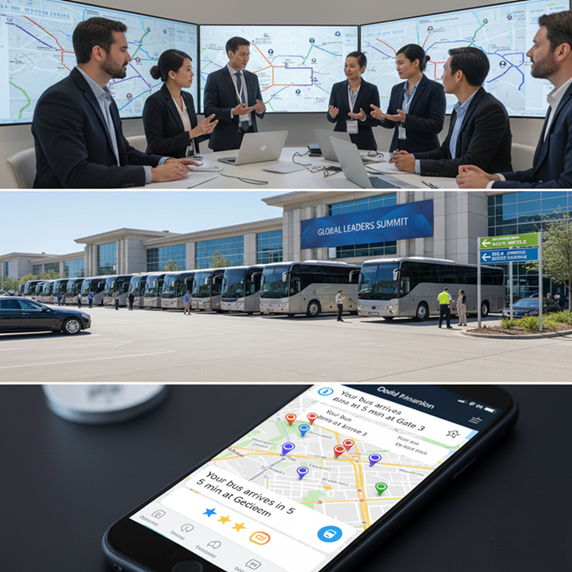
Developing a transportation management plan is crucial to ensuring safe and timely travel for all guests. This plan should outline the logistical, operational, and contingency aspects needed to address any potential delays or unforeseen circumstances. Integrate technology to facilitate communication with attendees, providing them with essential information such as pickup times, locations, and bus schedules. Place clear signage and directions at key points to minimise confusion and ensure guests know their destination.
Choosing the Right Transportation Partner
Selecting the right transportation provider is essential for the smooth operation of the event’s logistics. Look for companies with a proven track record of managing similar corporate events and a reliable fleet capable of meeting diverse needs.
Evaluate the transportation provider’s accreditation, insurance coverage, and driver professionalism to ensure a high level of service. Flexible transportation options, from luxury sedans to luxury buses, are essential to meet diverse guest expectations.
Communication and Coordination
Effective communication is crucial throughout the transportation process. Keep all stakeholders, including organisers, drivers, and attendees, informed of schedules and any changes. Designate a contact person for attendees to ask questions or raise concerns during the event. This approach fosters a sense of organisation and helps manage expectations effectively.
Monitoring and Adjusting Plans
Continuously monitor the transportation plan during the event to ensure it runs smoothly. Be prepared to make adjustments, such as electric buses or car-sharing arrangements, in line with sustainability goals and considering the concerns of environmentally conscious attendees.
Traffic Management
Effective traffic management is critical to ensuring smooth entry and exit from events. This includes anticipating traffic flow and potential congestion, especially during peak hours. Comprehensive traffic analysis can help planners understand the volume and distribution of traffic generated by events, enabling them to develop strategies to mitigate congestion. The use of service patrols can also improve traffic management by providing real-time updates and faster incident response during events.
Budget Constraints
Budget constraints are another common challenge in transportation planning. Accurate cost estimation, taking into account all potential expenses, including fuel, driver fees, and parking permits, is essential to avoid overspending. Planners are advised to allocate a portion of the budget for unforeseen expenses, as unexpected incidents can frequently occur during an event. By recognizing these challenges and implementing proactive solutions, event organisers can create a seamless transportation experience that contributes to the overall success of their events.
Measurable Results and Feedback
Measuring the success of event guest transportation strategies is crucial for continuous improvement and ensuring a positive attendee experience. Effective measurement and feedback can significantly enhance the planning and execution of future events.
The Importance of Feedback Collection
Gathering feedback is essential for understanding participant experiences and identifying areas for improvement.
- Surveys: Sending out surveys shortly after an event allows for capturing impressions while they’re still fresh in attendees’ minds. Platforms like SurveyMonkey or Google Forms make it easy to create customized surveys with rating scales and open-ended questions, such as “What transportation options did you use?” and “How can we improve our transportation services?”
- Listening to Social Media: Monitoring hashtags and comments related to the event on social media platforms provides a comprehensive view of attendees’ feelings and experiences regarding transportation options, helping planners understand audience perceptions.
- One-on-one conversations: Engaging in discussions with key stakeholders or VIPs from the audience can provide a deeper understanding of their transportation experiences, allowing planners to obtain nuanced insights that might not appear in broader surveys.
- Employee Input: Gathering insights from employees involved in transportation logistics can highlight gaps. Operational aspects and areas for improvement that may not be obvious to event organisers.
Analysing Measurable Results
In addition to qualitative observations, quantitative metrics are crucial for evaluating the effectiveness of transportation strategies.
- Usage Rates: Analysing the number of attendees who used the provided transportation services compared to alternative options helps assess the effectiveness of transportation planning and its alignment with guest needs.
- Satisfaction Scores: Tracking transportation satisfaction scores through survey responses allows organizers to gauge attendee satisfaction and identify specific areas for improvement.
- On-Time Performance: Measuring the on-time performance of transportation services against scheduled times can help identify efficiency issues and guide improvements for future events.
Continuous Improvement
Collected observations should be systematically analysed and documented in a post-event report, which serves as a guide for future planning. The key components of this report should include an executive summary, data metrics and visualisation, specific achievements and challenges, and actionable recommendations for improving transportation strategies at future events. This continuous evaluation process helps refine practices and increase the overall effectiveness of event guest transportation, while also supporting sustainability goals.
By effectively measuring results and incorporating feedback, event organisers can improve guest transportation experiences, increasing satisfaction and encouraging future attendance.
Conclusion
In conclusion, it is clear that planning guest transportation is not merely a secondary logistical task but a cornerstone of the overall event’s success and the creation of a positive and memorable guest experience. By adopting a systematic approach, starting with a thorough needs assessment and a comprehensive management plan, and culminating in selecting the right partner and effective communication, event organisers can overcome common challenges such as traffic management and budget constraints.
Leveraging lessons learned from case studies and translating them into concrete business strategies, along with a commitment to continuous monitoring and adjustment of plans, ensures operational flexibility. Most importantly, measuring results and gathering feedback remains crucial. Surveys, social media monitoring, and quantitative metrics (such as satisfaction scores and usage rates) provide invaluable data for continuous improvement in future events.
By incorporating these systematic steps, event organisers not only ensure smooth and safe transportation, but also contribute to achieving sustainability goals, enhancing overall satisfaction and encouraging greater attendance in the future.


Comments