
Measuring the Real Impact of Workshops on Employee Performance
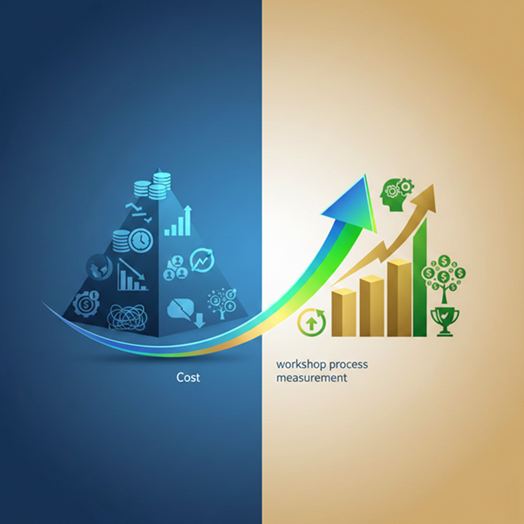
From Cost to Return: The Ultimate Guide to Measuring the Real Impact of Workshops on Employee Performance
Workshops and human resource development are among the largest expenditure items in the annual budgets of both large and small companies. However, studies indicate that nearly 70% of training investments go to waste due to a lack of follow-up mechanisms and impact measurement. In today’s business environment of 2026, it is no longer acceptable to treat “professional development” as a luxury or a mere “morale booster,” but rather as a financial asset subject to accountability and analysis.
Measuring the real impact of training workshops on employee performance is a crucial aspect of organizational development. It focuses on the effectiveness of training programs designed to enhance skills, foster collaboration, and align individual goals with broader business objectives. These workshops range from skills development to diversity training.
The importance of accurately measuring the outcomes of training workshops lies in their ability to influence key performance indicators, including productivity, employee engagement, and return on investment. Various methodologies, such as pre- and post-training assessments, feedback mechanisms, and long-term impact tracking, are used to evaluate the effectiveness of training initiatives.
The Economic Philosophy of Workshops: Why Measure?
Before delving into the equations, we must understand why we strive for “measurement.” In management, the rule is: “What cannot be measured cannot be managed.” When a company spends $50,000 on a workshop for its leaders, it is not buying “information,” but rather a “change in behavior” that, in turn, leads to “financial results.”
Measurement achieves three strategic objectives:
- Justification: Convincing the board of directors of the next year’s budget.
- Optimization: Identifying which workshops were effective and which were a waste of time.
- Alignment: Ensuring that training serves the company’s overarching goals (such as increasing market share or reducing waste).
Read also: Innovative Ideas for Successful Professional Development Workshops
A Deep Breakdown of the Kirkpatrick Model
The Kirkpatrick Model is the world’s most widely recognized framework for evaluating the effectiveness of training and educational programs. Developed by Donald Kirkpatrick in 1959, the model measures the impact of training through four sequential levels: Reaction (satisfaction), Learning (knowledge acquisition), Behavior (skill application), and Outcome (the final return on investment for the organization).
Level 1: Reaction
Don’t underestimate this level. While it doesn’t measure performance, it does measure “readiness to learn.” If an employee is unhappy with the quality of the training room or bored with the instructor, their mind will be closed to information.
Measurement tools: Instant feedback surveys, interactive live applications.
Level 2: Learning
Here, we measure the amount of knowledge transferred from the trainer’s mind to the employee’s mind.
Proposed technique: Pre- and post-testing. If an employee’s score before the workshop is 40% and after is 90%, the workshop successfully transferred knowledge but did not guarantee its application.
Level 3: Behavior
This is the critical level. Did the employee use the new skills in their daily work?
Example: If the employee was trained in time management, did the number of late emails decrease?
Measurement tools: Direct supervisor feedback, peer assessment (360-degree feedback).
Level 4: Results
The direct correlation between the workshop and company metrics (reduced costs, increased sales, faster employee turnover).
Calculating Return on Investment (ROI)
Let’s move to the accounting side. To accurately calculate ROI, we must first determine the total costs, which include:
- Trainer or organizing company fees.
- Cost of renting venues and equipment.
- The cost of “lost opportunity” (employee salaries for hours spent at the workshop instead of working).
- Printed materials and logistics.
Benefits Calculation:
Suppose a “preventive maintenance” workshop resulted in a 10% reduction in machine breakdowns. If breakdowns cost the company $200,000 annually, the realized benefit is $20,000.
Real-Life Case Study: Tawaya Pharmaceuticals
Intervention: Organize a workshop for Tawaya Pharmaceuticals managers to discuss company problems, develop plans to solve them, and increase sales.
Measurement after 6 months: The percentage of closed deals increased.
This increase led to a rise in net profit.
The return on investment here exceeded 700%.
Result: The workshop was no longer a “burden” on the company’s budget; instead, it became the primary driver of growth in the third quarter.
See photos of a workshop organized for managers at Tawaya Pharmaceuticals in Saudi Arabia.
The Intangible Impact: The Hidden Power of Workshops
Not every return is immediately visible on your bank statement. There are what we call “intangible assets” that workshops leave behind:
- Employee Engagement: Statistics show that employees who receive ongoing training are 40% less likely to leave. The cost of replacing a resigning employee can be up to 1.5 times their annual salary. So, workshops save money through “retention.”
- Organizational Agility: Workshops enable teams to cope with sudden market changes (such as the emergence of a new technology). This “adaptability” is invaluable during times of crisis.
- Employer Branding: Companies known for their strong workshops attract top talent without having to spend exorbitant amounts on recruitment advertising.
Obstacles That Kill Return on Investment
Why Could an Expensive Workshop Fail?
- Lack of Post-Workshop Support: Learning is a process, not an event. If there is no coaching system after the workshop, the employee will lose 80% of the learning the information learned for one month (Ebbinghaus’ forgetting curve).
- Improper application of content: Some workshops present “academic” theories that cannot be applied in the local job market or the specific nature of the company’s work.
- Company culture resistant to change: If an employee learns a new management style and returns to find their manager practicing “micromanagement,” they will become frustrated and stop applying it.
Technological tools to assist in measurement (2026)
In today’s world, we no longer rely on pen and paper. There are tools that facilitate the work of organizers:
- Advanced Learning Management Systems (LMS): Such as Moodle or SAP Litmos, which track the learning process before and after the workshop.
- Big Data analytics: To link workshop attendance data with employee performance data in the company’s CRM or ERP system.
- Pulse surveys: Sending one question per week to the employee via Slack or Teams to measure the extent to which they are applying what they have learned.
A Practical Guide for Managers: How to Ensure Returns Before the Workshop Begins
Before you sign the check to the organizing company, ask yourself these five questions:
- What Key Performance Indicator (KPI) do we expect to improve after this workshop?
- Are the selected employees truly the best fit (or are they simply being rewarded)?
- How will we measure the change 90 days from now?
- Do the employees have the tools and time to implement what they learn?
- Who is responsible for monitoring the “behavioral impact” within the department?
Conclusion
The shift from a “cost” to a “return” perspective in workshops represents a shift from traditional to strategic management. A workshop is not a time-out; it’s a way to “recharge” the organization’s intellectual and professional batteries.
A company that masters the art of measuring impact not only ensures the growth of its employees but also its survival and success in a market that is unforgiving to the weak and underdeveloped. Always remember: education is expensive, but ignorance and repeating mistakes are far more costly.
Read also: Challenges of managing hybrid meetings or workshops


Comments