
Criteria for Selecting Restaurants and Services for Business Dinners and Official Receptions
Criteria for Selecting Restaurants and Services for Business Dinners and Official Receptions
Official receptions and business dinners are among the most important strategic components in the world of business management, diplomatic relations, and corporate governance. Meetings held around the dining table are not merely social occasions for hospitality; they are a direct extension of the executive work environment, a vital platform for building first impressions, discussing investment deals, and forging long-term partnerships. Any shortcomings in logistical planning or errors in venue selection can negatively impact the organizer’s image, regardless of the importance of the topics discussed.
Selecting restaurants and services for these high-profile meetings requires a comprehensive approach that considers the most minute operational and protocol details. This includes everything from privacy and ambiance to service and logistics, and extends to sophisticated menu design that caters to the cultural and dietary diversity of the guests.
Learn more about how restaurant bookings are part of the success of major events.
First: Privacy, Atmosphere, and Acoustics
Privacy is the first and most important criterion when organizing an executive dinner or formal reception. High-level conversations require a secure and quiet environment that allows for the discussion of strategic decisions and sensitive information without disturbance or intrusion.
Private Dining Rooms (PDRs):
The venue must provide completely separate, soundproof, and visually isolated rooms from the rest of the restaurant. Ideally, these rooms should have private entrances and exits, or pathways that ensure VIPs can access the venue with ease and complete privacy, avoiding crowded areas.
Controlling the Atmosphere and Acoustic Environment:
Acoustic engineering plays a crucial role in the success of the meeting. The usual restaurant noise must be completely absent within the room. This requires selecting venues that meet sound-absorbing standards and offer the ability to control the volume of background music or turn it off completely, ensuring clear communication among all attendees at the table without the need for loud voices.
Lighting, Decor, and Interior Design:
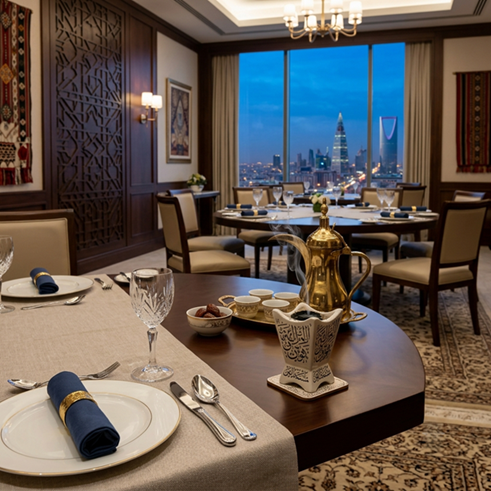
The hall design should be elegant and simple, without being ostentatious, with balanced and comfortable lighting that allows for reading documents or presentations if needed. The overall decor should reflect a professional style that aligns with the event’s identity and the prestige of the attending guests.
Read also: Catering Services for High-Level Delegations
Second: Service Standards and Hotel Professionalism
The efficiency of the service team at the restaurant or catering company determines the smooth running of the event. Excellent service is characterized by speed and precision, ensuring guests experience no operational disruptions.
Invisible Service:
The hospitality staff assigned to formal events are trained in the art of serving food and beverages without interrupting conversations. This includes knowing the ideal timing for clearing plates, pouring drinks, and serving meals simultaneously to all attendees.
Adherence to International Protocol and Etiquette:
The service team must be fully aware of the established protocols for formal receptions. For example, serving the guest of honor first, then proceeding to the other guests according to their status and position, while adhering to the established order of serving dishes from the left and drinks from the right.
Staff-to-Guest Ratio:
At formal business banquets, the traditional staffing arrangement is insufficient. A specific number of staff members must be assigned to each group of guests (e.g., one head waiter and one assistant for every four to six guests) to ensure prompt responses to all requests without delay.
Third: Menu Design and Meeting Dietary and Cultural Requirements
The menu at formal receptions is not solely about taste; it also adheres to precise logistical and protocol standards to ensure guest comfort and a smooth event.
Ease of Eating and Avoiding Confusion:
Dishes that require significant effort to eat, or those that might cause mess or spills (such as whole-shell seafood, dishes with heavy sauces, or meats with large bones) are excluded. It is always preferable to use dishes that are meticulously prepared and cut in a way that allows guests to eat comfortably while participating in discussions.
Balance and Set Menus:
Using set menus is the ideal option for a business dinner, as they typically consist of 3 to 5 courses (appetizer, main course, dessert). This ensures a consistent pace of food service for all guests and avoids getting bogged down in individual choices that could consume a significant portion of the meeting time.
Respecting Dietary and Cultural Restrictions:
Professionalism dictates gathering all information related to the dietary requirements of delegates and guests well in advance of the event. This includes ensuring the availability of approved alternatives (vegan, gluten-free, and free from allergens such as nuts or certain dairy products), while also adhering to religious and cultural standards in the preparation and serving of food and beverages, in accordance with halal food requirements and local regulations.
Fourth: On-Site Logistics and Technical Preparations
Catering services at formal events are intertwined with supporting technical and logistical arrangements, ensuring that all the needs of the corporate gathering are met under one roof.
Presentation and Communication Infrastructure:
Many business banquets require a brief presentation or demonstration before or during the dinner. Therefore, it is essential to ensure the venue is equipped with suitable high-definition LED screens, modern technical connections, and a wireless internet network. High-speed, secure Wi-Fi, plus a mini wireless microphone system if the number of attendees is large.
Pre-dinner Reception Area:
The venue should ideally offer a dedicated reception area (foyer or cocktail area) through which guests can pass before proceeding to the main dining table. This space provides an opportunity for initial introductions, greetings, and light welcome drinks in an informal setting before the scheduled business session begins.
Fifth: Logistics, Access Management, and Security
The quality of the venue is further enhanced by the ease with which guests can arrive at and depart without encountering any logistical obstacles.
Valet Parking and Executive Transportation:
The restaurant or venue should offer prompt and complimentary valet parking for guests, with clearly marked routes and secure access for motorcades and luxury executive vehicles. Dedicated and secure parking near the hall’s exit is also recommended.
Strategic Geographic Location:
The chosen restaurant should be located in a quiet, central area, easily accessible from the delegations’ accommodations, major hotels, and business centers. It’s important to avoid peak hours and traffic congestion to ensure strict adherence to the approved visit schedule.
Security Arrangements and Permits:
For VIPs or official government delegations, the venue must have full flexibility to coordinate with the organizing entity’s security teams. This includes the ability to conduct pre-screening of the venue and close off surrounding pathways to guarantee maximum safety and security.
Conclusion
Organizing a business dinner or official reception is more than just serving fine cuisine; it’s a comprehensive administrative and logistical process aimed at providing a comfortable, secure, and high-quality working environment that serves the organization’s strategic objectives. Maintaining a balance between complete privacy, efficient hospitality staff, meticulous menu selection and coordination, and seamless integration with technical and logistical resources are the key criteria that transform an event from a simple banquet into a professional success that enhances the organization’s reputation and creates a lasting corporate impression.


Comments