
Mistakes in Exhibition Stand Design and Execution
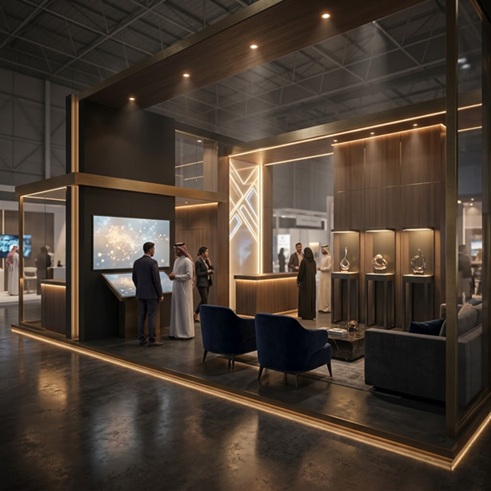
Mistakes in Exhibition Stand Design and Execution: How They Drain Budgets and Cause Participation to Fail—And How to Avoid Them
Participating in trade exhibitions and conferences in Saudi Arabia represents one of the most significant marketing investments for companies and organizations. Amidst the Kingdom’s unprecedented economic boom and the goals of Vision 2030, exhibition venues have become highly competitive arenas for showcasing investment strength and superior quality.
Yet, many companies fall into the trap of prioritizing “visual flashiness” at the expense of functional and marketing effectiveness. They may spend vast sums on constructing an exhibition stand, only to find—once the event begins—that visitor turnout is low or that their intended objectives remain unmet.
In this article, we examine—through a risk-analysis lens—the most common errors in the design and execution of exhibition stands that can lead to the failure of your participation. We also provide practical, actionable solutions to help you avoid these pitfalls and ensure the highest possible return on investment (ROI).
First: Errors in Structural and Engineering Design
Inefficient Space Utilization and Poor Visitor Flow
One of the most significant architectural blunders in exhibition stand design is creating overly complex internal pathways or obstructing key front-facing areas with unnecessary barriers.
The Problem: If visitors feel crowded or find it difficult to enter and exit the space, they will immediately move on to a competitor’s stand.
How to Avoid It: Adopt the “free flow” principle. Ensure the entrance to your stand is wide and open, and organize the space into distinct zones: a quick-access reception area, a product display section, and private seating areas for business discussions.
Lack of a Clear Visual Identity from a Distance
Some designs rely on intricate details that are only visible up close, while overlooking the importance of making the booth, or stand, visible from the exhibition’s main aisles.
The Problem: VIPs and business professionals may fail to recognize your brand as they walk through the venue.
How to avoid this? Ensure you have a prominent logo or an advertising tower, complemented by professional, well-distributed lighting—within permitted height limits—so that anyone in the hall can easily locate your booth and find their way to you.
Failure to Consider Lighting Distribution and Power Outlets
Poor lighting can create the impression that your products are of low quality, while overly intense, glaring light can deter visitors.
The Problem: An abundance of exposed wiring or an over-reliance on the venue’s general overhead lighting.
How to avoid this? Create an electrical plan in advance, in coordination with your contractor. Use spotlights to highlight key products, and incorporate concealed LED lighting to add an aesthetic touch and a sense of balanced sophistication.
Read also: Trade Show Booth Design Elements for Greater Success
Second: Errors in Marketing Messaging and Visual Communication
Absence of a Direct Message (What does your company offer?)
Many designers make the mistake of displaying only the company name and logo, without clarifying the nature of the business or the value it provides.
The Problem: A visitor passes by your booth and wonders, “What does this company sell?” If they don’t find the answer within three seconds, they will simply keep walking.
How to avoid this? Use a clear, concise tagline beneath your logo that accurately describes your business—for example, “Advanced Logistics Solutions for the Retail Sector”—rather than relying solely on your brand name.
Overcrowding and Visual Chaos
Attempting to showcase all your products and services within a limited booth space makes the area look more like a warehouse than a sophisticated exhibition platform.
The Problem: It distracts visitors and prevents them from focusing on your core offering.
How to avoid this? Focus on your “hero product” or most significant service. Embrace a minimalist design aesthetic; in the world of trade shows, “less is more.”
Third: Mistakes Regarding Printed Materials, Promotional Gifts, and Display Stands
Excessive Reliance on Traditional Printed Materials
Some companies still print thousands of heavy catalogs and brochures, distributing them indiscriminately.
The Problem: This leads to high costs, and these materials often end up in the trash before the visitor even leaves the exhibition.
How to avoid this? Shift toward smart, sustainable alternatives. Use QR codes on your displays, allowing visitors to scan and download digital files (interactive PDFs) directly to their phones. Keep only a small number of high-quality, premium catalogs on hand—reserved exclusively for serious prospects.
Haphazard Placement of Roll-up Banners
Adding roll-up banners or portable displays to your booth in an unplanned manner after the main setup is complete. The problem: Detracting from the booth’s overall appearance, obstructing circulation paths, and blocking the view of key displays or screens.
How to avoid this? All display elements and stands should be integrated into the core design—built-in from the start—rather than added as an afterthought.
Offering promotional giveaways that fail to reflect the brand’s value
Distributing cheap pens or generic keychains that offer no practical utility to the target audience.
The problem: Wasting marketing budget without leaving a lasting impression on decision-makers.
How to avoid this? Choose high-value, practical items—such as portable chargers, premium stationery, or innovative products relevant to your industry—featuring your logo in an elegant, subtle manner.
Read also: Four Principles for Choosing the Ideal Size for Exhibition Booths
Fourth: Operational Errors and Human Resource Management
A booth’s success does not end with its design and execution; people are the primary driving force behind the experience.
Neglecting staff training
Having a team that is unfamiliar with the company’s products or distracted by their smartphones while inside the booth.
The problem: Creating an immediate negative impression on visitors and business professionals, leading to the loss of genuine investment opportunities.
How to avoid this? Conduct a workshop before the exhibition to prepare your team, clearly define roles (e.g., greeting, technical explanation, closing deals), and establish strict behavioral guidelines for the booth area.
Lack of a system for collecting and documenting lead information
Collecting paper business cards in boxes without noting the client’s level of interest.
The Problem: Difficulty in following up after the exhibition and losing track of potential sales opportunities.
How to avoid this? Use smartphone apps to scan business cards and categorize each contact immediately (e.g., highly interested client, potential lead, or supplier). This ensures quick and easy follow-up once the event concludes.
Practical and Rapid Solutions to Overcome Common Exhibition Booth Challenges
To avoid operational and design pitfalls during an exhibition, here are some common challenges, their direct impact, and how to address them:
Challenge 1: Congested internal aisles and poor visitor flow
Negative Impact: A sense of overcrowding or difficulty moving around causes visitor discomfort, prompting them to leave the booth quickly and move on to neighboring stands without learning about your services.
Operational Solution: Adopt an open-front booth layout, positioning reception desks and private seating areas toward the edges or the rear. This ensures smooth traffic flow and easy entry and exit.
Challenge 2: Over-reliance on printed materials and heavy catalogs
Negative Impact: This results in significant financial waste within the printing budget. Furthermore, these materials become a burdensome weight that most visitors and business professionals prefer to discard before leaving the venue. Implementation Strategy: Transition fully toward smart digital solutions by placing QR codes in prominent locations and utilizing interactive screens that allow visitors to download offers and catalogs in PDF format directly to their mobile devices.
Challenge 3: Poor or Improper Lighting
Negative Impact: Displayed products and services appear dull and unappealing, creating an impression of a lack of professionalism and attention to detail.
Implementation Strategy: Engage a lighting designer to strategically position spotlights on key exhibits and products to highlight their quality. Complement this with warm, skillfully integrated LED accent lighting in corners to add a touch of luxury and visual comfort.
Challenge 4: Absence of a Marketing Message or Business Identity
Negative Impact: Visitors may pass by the booth without understanding the nature of the company’s business or the value it offers—causing you to lose a large segment of potential customers in a matter of seconds.
Implementation Strategy: Craft a concise, compelling marketing tagline and display it beneath the main logo in a highly visible, elevated position. This should clearly explain the company’s business and capture the interest of your target audience at first glance.
Conclusion: A Booth as an Investment, Not Just Decoration
Designing and executing an exhibition booth is more than just an engineering task or an aesthetic display; it is a critical marketing and investment tool that reflects the stature of your organization and its standing in the market. Avoiding common pitfalls—such as poor space allocation, visual clutter, and an over-reliance on tired, conventional methods—is the first step toward ensuring your participation yields successful deals and partnerships. Plan intelligently, focus on the visitor experience, and transform your exhibition stand into a key destination that business professionals and entrepreneurs simply cannot afford to overlook.


Comments