
How Colors and Lighting Engage a Visitor’s Consciousness
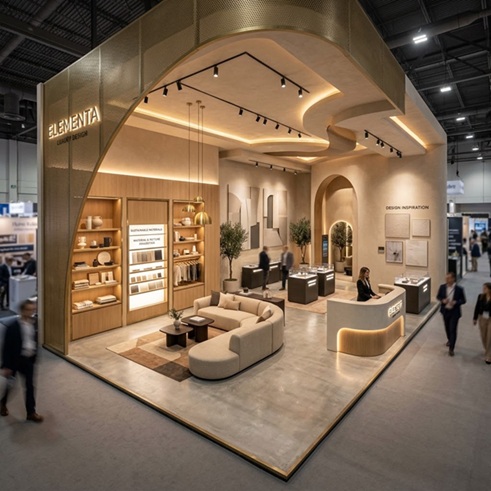
How Colors and Lighting Engage a Visitor’s Consciousness
Have you ever wondered why you feel a sense of calm and serenity the moment you step into a modern art gallery, yet feel an urge to move and get active the instant you enter a sportswear store? Is this merely a coincidence, or is there a hidden architecture at play—subtly influencing your senses, guiding your movements, and shaping your thoughts without you even realizing it?
In reality, buildings and spaces are more than just walls and ceilings designed to shelter us from the elements; they are dynamic, sensory environments that proactively affect the human nervous system. Colors, lighting, and spatial design converge to form a silent language—one perceived by the visitor’s visual and conscious mind—which is instantly translated into emotional, behavioral, and physiological responses.
In contemporary research, this phenomenon is known as “Architectural Psychology” or “Neuro-design.” Understanding how to manipulate these three elements grants designers and business owners a powerful ability to capture a visitor’s attention, extend the duration of their stay, and steer them toward a positive, profound experience.
Read also: How to Measure the True Success of an Exhibition Booth
First: The Language of Color and Its Direct Psychological Impact
Colors are not merely an aesthetic choice; they are electromagnetic waves with varying frequencies that the brain receives and interprets as feelings and emotions. When a visitor enters any space, color is the very first element the subconscious mind perceives—within a fraction of a second.
Warm Colors: Stimulating the Senses and Energy
Warm colors include red, yellow, and orange. Characterized by longer wavelengths, these colors appear to advance toward the eye, thereby increasing levels of activity and alertness.
Red: Accelerates the heart rate and increases the breathing rate. It is frequently used in fast-food establishments or temporary exhibition spaces, as it encourages visitors to make quick, impulsive decisions without extensive deliberation.
Yellow and Orange: Foster feelings of joy and optimism while stimulating social interaction. These are commonly found in interactive spaces, creative hubs, and areas that require vitality and innovation.
Cool Colors: Calm, Focus, and Spaciousness
Cool colors—such as blue, green, and violet—are characterized by shorter wavelengths, which provide visual comfort to the eye and help soothe the nervous system.
Blue: Instills a sense of confidence, security, and professionalism. It is an ideal choice for financial institutions, hospitals, and corporate offices that require a high degree of balance and mental focus.
Green: Directly associated with nature and growth. It helps reduce stress levels and alleviate eye strain, making it highly effective in shared workspaces, relaxation centers, and wellness facilities.
Neutral Colors and Visual Balance
Shades such as white, gray, and beige serve as a form of “visual breathing room” within a space. It allows other colors to stand out without distracting the visitor, while lending the space an air of purity and modernity.
Second: Lighting—The Sculptor of Space and Guide of Attention
If colors are the body of a space, then lighting is its soul, bringing details to life. Lighting serves more than just the functional purpose of enabling vision; it acts as a guiding and dramatic tool, highlighting what the visitor should see while concealing what is unnecessary.
Natural Light and Biological Harmony
Natural light (sunlight) plays a pivotal role in regulating the human circadian rhythm. In spaces that incorporate large glass openings and natural light, visitors tend to feel refreshed, energized, and less stressed. Natural light boosts the production of serotonin—a hormone associated with happiness—fostering an emotional connection to the space and encouraging visitors to linger longer.
Color Temperature
Measured in Kelvin (K), color temperature directly influences a visitor’s mood:
Warm Light (2700K – 3000K): Leaning toward yellow, this creates a sense of warmth, comfort, and intimacy. It is often used in cafés, hotels, and fine-dining restaurants to cultivate an inviting atmosphere that encourages relaxation and extended stays.
Neutral and Cool Light (4000K – 6500K): Leaning toward white and blue, this stimulates the production of hormones that enhance alertness and focus. It is particularly prominent in offices, universities, and trade exhibitions—settings that demand close attention and precise observation.
Lighting Contrast and Directing the Gaze
By employing spotlights, a designer can manipulate a visitor’s awareness, instinctively guiding their gaze toward specific exhibits or focal points. When the background remains relatively dim while a product is brightly illuminated, the human mind is naturally drawn to the illuminated focus, eliciting the highest levels of engagement and concentration.
Third: Spatial Geometry and Movement Flow
Space serves as the stage upon which colors and lighting interact. The way a space is partitioned, the height of its ceilings, and the fluidity of its pathways dictate how a visitor moves and whether they feel a sense of freedom or constraint within the environment.
The Impact of Ceiling Height (The Myers-Levine Effect)
Architectural studies have demonstrated that ceiling height influences human thought processes:
- High Ceilings: Stimulate creative, free-flowing thinking and provide a sense of liberty and expansiveness. These are ideal for architectural landmarks, museums, and innovation hubs.
- Low Ceilings: Encourage detailed thinking and focus on specific tasks; they foster a sense of containment and security, making them well-suited for enclosed meeting rooms and reading areas.
Spatial Navigation and Movement Flow
The human mind inherently dislikes distraction and confusion. When a person enters a space where the paths are ambiguous, their subconscious mind experiences a mild form of tension known as “cognitive strain.” Therefore, a successful design is one that provides “intuitive paths.” By incorporating gentle curves into walls or subtle transitions in flooring, visitors can be guided seamlessly from one area to another without the need for extensive signage. This fluid movement makes visitors feel as though the space is responding to their instinctive desires.
The Balance Between Empty and Filled Space (Negative Space)
Empty spaces—or what is known as “negative space”—are not wasted areas; rather, they are essential elements that allow the eye and the mind to breathe. Overcrowding a space with furniture or displays creates visual clutter, which quickly drives visitors away. Conversely, a well-balanced use of space enhances the value of the objects present and gives visitors the opportunity to take in what they see at a measured, comfortable pace.
Fourth: The Integrative Symphony (Harmony Among Elements)
None of these elements functions in isolation; the true magic emerges when color, lighting, and space harmonize and integrate with one another.
Imagine a spacious area with high ceilings, bathed in warm natural light streaming through expansive windows. The walls are painted in a soothing shade of green, complemented by indoor plants and tastefully spaced furniture. In such a setting, the visitor’s nervous system receives a perfectly coherent set of signals:
- Space: Offers a sense of freedom and openness.
- Light: Provides vitality and a welcoming, intimate atmosphere.
- Color: Instills a sense of comfort and psychological calm.
This harmony fosters what is known in psychology as a “flow state”—a condition in which visitors lose track of time and become completely immersed in the experience of the space. This, in turn, forges a deep emotional connection, compelling them to return time and time again.
An Important Article on How to Choose the Right Exhibition Organizing Company
In Conclusion:
Thoughtful investment in understanding the mechanisms that capture a visitor’s consciousness—and positively command their attention through the harmonious interplay of color, lighting, and spatial geometry—is by no means an architectural luxury or a mere aesthetic flourish. Rather, it is a distinct discipline and an authentic art form, rooted in the depths of human psychology and the nature of the human nervous system.
An intelligent, innovative space does not assert its presence through force or boisterous spectacle; instead, it whispers—gently and seamlessly—to the visitor’s conscious and subconscious mind. It guides them on a comprehensive sensory and emotional journey—a voyage where vision intertwines with feeling, and light finds its perfect balance with shadow.
Whether you are designing a retail space to enhance the customer experience, an art gallery intended to spark curiosity and reflection, a workspace that fosters productivity and innovation, or even a private residence seeking comfort and tranquility—always remember: you are not merely drafting a layout of silent walls and ceilings, nor defining an abstract physical void. You are, in fact, establishing an integrated system that shapes emotions, weaves memories, and influences the behaviors and daily decisions of everyone who steps into that space.


Comments