
Managing Suppliers and Execution Partners for Major Events
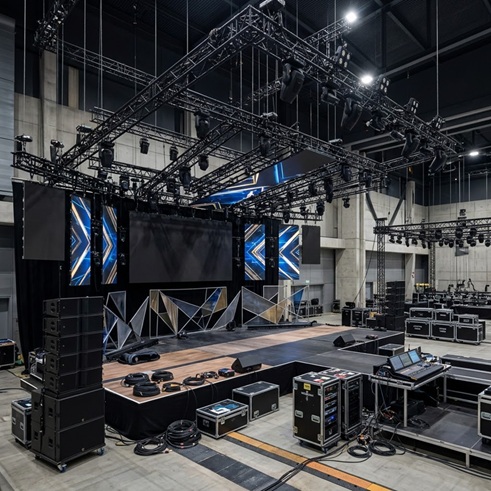
Managing Suppliers and Execution Partners for Major Events
The industry of large-scale events and international conferences has evolved far beyond simple gatherings or entertainment activities; it has transformed into a comprehensive, strategic sector managed with a level of precision that rivals—and often exceeds—the management of major engineering projects. At the heart of this complex landscape lies the “management of suppliers and execution partners”—the vital nerve center upon which the success or failure of an entire event hinges. When organizing a massive festival, a global summit, or an international exhibition that draws tens of thousands of visitors, one is not dealing with a single, isolated team, but rather an intricate ecosystem comprising dozens of contractors and sub-suppliers—specialists in areas such as set design, lighting engineering, large-scale display technologies, catering and hospitality, and logistics.
The primary challenge for event and procurement managers lies not merely in selecting the best partners on paper, but in the exceptional ability to synchronize these diverse operations so that they function in perfect harmony, without a single operational discord. A minor oversight—such as a delay by a lighting contractor, a sudden malfunction in a primary display screen, or a disruption in the catering supply schedule—can unravel months of marketing and media planning in a matter of minutes. This comprehensive guide is designed to provide professionals with frameworks for contract governance, rigorous quality standards, and robust risk management mechanisms, ensuring an exceptional, seamless execution.
First: Criteria for Selecting Suppliers and Testing Equipment Quality Prior to the Event
The first and most critical step in orchestrating a successful large-scale event begins at the planning stage—specifically, through intelligent procurement practices and the meticulous selection of execution partners. Choosing suppliers haphazardly, based solely on the lowest price, is a “ticking time bomb” that threatens the entire project.
Advanced Evaluation and Selection Criteria
Track Record and Relevant Experience: Evaluating a supplier should go beyond competitive pricing; it must include an examination of their history in executing events of similar scale and technical complexity. A decor contractor capable of setting up a small booth might falter completely when tasked with constructing a main stage for 5,000 attendees, which entails complex structural requirements and stringent safety standards.
Financial and Operational Viability: Ensure that the supplier possesses sufficient cash flow and workforce capacity to meet project requirements, without relying entirely on the advance payment from your event to fund their ongoing operations.
Infrastructure and Human Capital: Does the supplier own their own equipment, or do they rely exclusively on sub-renting? Furthermore, what are the qualifications of the engineers and technicians who will be deployed to the site?
Equipment Quality Testing and Pre-event Simulation
Under no circumstances should one wait until the actual installation phase at the event venue to verify that the equipment is in proper working order. This requires:
- Factory/Warehouse Acceptance Testing: Conducting on-site visits to the warehouses of lighting and display screen contractors—weeks before the equipment is transported—to inspect its operational condition and verify that it meets the technical specifications stipulated in the contract.
- Technical Compatibility Testing: In large-scale events, sound systems, digital displays, and central lighting control systems must interact seamlessly. A “mini technical rehearsal”—conducted in a virtual environment or at the supplier’s workshop—is essential to test communication protocols and compatibility, ensuring that no software glitches or interference occur during live broadcasts or performances.
- Safety and Security Certifications: Verifying that the materials used for decor are fire-resistant and ensuring that all electrical connections comply with both international and local occupational safety standards.
Read also: How to Choose Exhibition and Conference Organizing Companies
Second: Developing a Minute-by-Minute Schedule (Run of Show) for Assembly and Dismantling
Precise time management is the dividing line between chaos and professionalism. At large venues, the work of various technical teams often overlaps; for instance, while the decor team installs woodwork and facades, the lighting team may be rigging fixtures, and the IT team may be laying network cables. Without a rigorous, minute-by-minute schedule, congestion and conflicts will inevitably arise, hindering the workflow.
Load-in & Load-out Scheduling
Phased Timeline Breakdown: The load-in period must be divided into precise time segments:
- Phase 1: Major structures and heavy loads (core set pieces and overhead rigging).
- Phase 2: Technical infrastructure (electrical wiring, lighting cabling, and metal frameworks for screens).
- Phase 3: Fine-tuning and interior elements (furniture, decorative lighting, and signage).
- Phase 4: Dress rehearsals and final integration.
Logistics Corridors: Designate specific routes and time slots for the entry and exit of supply trucks to prevent congestion at loading bays; also, schedule the use of large freight elevators within the conference venue.
Operational Run of Show
While a traditional technical schedule focuses on the sequence of events on stage, the organizational load-in and load-out schedule must document:
- The exact time (hour and minute) for the arrival of each supply truck.
- The person responsible for receiving the shipment and signing the inspection report.
- The deadline for completing each designated section, ensuring it is ready for inspection by the project manager.
- Buffer Time: Allocate additional time (15% to 20% of the total duration) to accommodate any unforeseen delays in transit or installation.
Third: Contract Governance and Intelligent Legal Drafting
Relationships with suppliers and implementation partners should not be built on blind trust or verbal promises; rather, they must be managed through robust legal governance that protects the rights of the contracting parties and ensures that all involved adhere to the highest performance standards. A well-structured, airtight contract serves as the primary shield against disputes and operational setbacks.
Essential Elements in Supply and Service Contracts
- Precise Definition of the Scope of Work: Avoid vague or overly broad language. Based on engineering drawings and standard specifications, the contract must explicitly define the type of displays (resolution, brightness, and dimensions), the quality of decorative materials, and the quantity and standard specifications for meals (in the case of catering services).
- Key Performance Indicators (KPIs): Link financial payments to the achievement of clear, specific quality standards—for example, successfully passing a technical inspection 24 hours before the deadline, or ensuring the site is completely cleared of construction debris by a specified time.
- Intellectual Property and Licensing Terms: Ensure that suppliers hold the necessary legal licenses to display visual content on screens or utilize engineering designs, thereby preventing any legal claims that could damage the reputation of the event.
Fourth: Risks, Indemnities, and On-Site Availability of Spare Parts
No matter how meticulous the planning, the possibility of emergencies remains in large-scale events. The difference between a professional organizer and a novice lies in their preparedness to handle such crises without the attendees even noticing.
Risk Management and Rapid Response Strategies
- Risk Assessment Matrix: Proactively identify potential risks—such as the failure of a primary lighting unit, a sudden power outage, damage to decorative elements during installation, or delays in the arrival of catering vehicles due to traffic—and evaluate both the likelihood of their occurrence and their potential impact.
- Operational Redundancy and Failover: For critical technical systems—such as display screens, control servers, and audio equipment—contracts must mandate the implementation of “Hot Standby Systems” that automatically take over in the event of a failure.
Critical Spare Parts and On-Site Strategic Inventory
A key component of supply governance is requiring a “strategic inventory of spare parts” to be maintained on-site throughout the duration of the event. This includes:
- Display Screens: Provision of additional modules, power supply units, and controllers—amounting to 5%–10% of the total display area—along with a dedicated, on-site technician available throughout the event to perform immediate replacements.
- Lighting and Audio: Additional fixtures of the same model and specifications, power converters, and extra cabling, with all items pre-tested for operational readiness.
- Catering and Hospitality: Contingency plans for the provision of supplementary, quick-prep meals, or the engagement of an approved backup vendor who can be mobilized on short notice should the primary vendor fail to meet quality or quantity requirements.
Service Level Agreement (SLA) Penalties and Liquidated Damages
To ensure accountability, contracts must include clear provisions for financial compensation and deterrent penalties in the event of failure to meet deadlines or technical specifications:
- Deductions of a specified percentage of the total contract value for every hour of delay in achieving site readiness.
- The vendor’s obligation to bear all additional costs incurred in rectifying faults or procuring urgent replacements during an emergency.
- Terms for the immediate termination of a contract and the forfeiture of letters of guarantee shall apply in the event of proven gross negligence or tampering with safety and security specifications.
Read also: How to Select Sponsors for Your Next Event
Conclusion: Toward a Comprehensive and Sustainable Organizational Environment
Managing suppliers and implementation partners for large-scale events is not merely a routine administrative task; it is a leadership art that integrates logistical engineering, legal governance, and crisis management. When an event manager succeeds in drafting robust contracts, enforcing rigorous inspection standards, establishing precise, minute-by-minute schedules, and securing a safety net—complete with spare parts and contingency plans—they do more than just protect the current event; they build a sustainable institutional reputation and earn the absolute trust of sponsors and the audience alike. Investing in high-quality advance planning and procurement governance is, ultimately, the surest path toward an exceptional event that leaves a lasting impact.


Comments