
Print Distribution Strategy
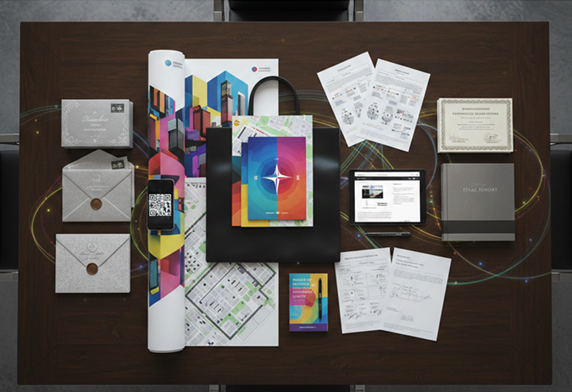
Print Distribution Strategy: How to Transform Distribution from a Logistical Process into a Comprehensive Emotional Experience
In today’s event world, there’s a common misconception that the value of printed materials ends the moment they leave the printing press. The truth is, “paper” is merely raw material; “distribution” is the soul that gives this material its function. Strategic distribution flow is not simply a manual delivery process, but a strategy that enhances the present experience. It’s the art of determining when and how the audience encounters your brand, and how information flows into their minds without overwhelming them with information.
Having briefly touched upon print distribution strategies in our previous article (Factors Determining Print Type), we dedicate this article to exploring them in greater detail and depth.
First: The Teasing Phase – Building Momentum
The event truly begins the moment the invitee experiences the first tangible evidence of it. In this phase, distribution is not about “informing” but about “enticing.”
The Psychology of Texture and Luxury Mailing
When a luxurious paper invitation arrives via traditional mail, it breaks the noise of the digital world. Distribution here relies on the “value of exclusivity.” Using cotton-textured paper or embossing sends an unspoken message: “This event is worth your time.” The goal is to transform the invitation from a mere “information” into a “memorable keepsake” to place on a desk, keeping the event fresh in the invitee’s mind daily.
Posters and Geographical Distribution
Distributing posters in shopping centers or busy streets follows a strategy of “repeated visual reminders.” Here, distribution must be clever in terms of height and viewing angle to ensure the message is seen during moments of “waiting” (such as hotel elevators or reception areas), creating visual familiarity with the event’s identity before it even begins.
Second: Distribution Upon Arrival (Onboarding Phase) – The Art of Orientation
The moment attendees enter the event venue is the most critical; anxiety levels are at their highest due to unfamiliarity with the space. Here, distribution becomes a “reassurance tool.”
Anatomy of the Welcome Kit
The welcome kit is not designed merely as a container for printed materials, but as a “roadmap.” The distribution within the kit should follow a logical order:
- At the top: The concise agenda (as this is the first thing attendees need to know where to go).
- In the middle: A map of the venue and room details.
- At the bottom: Promotional materials and souvenirs (which they will review later).
Body Language and Handover Protocol
The distribution process at the registration desk is the first human interaction. Handing over materials should be done with eye contact, along with a brief explanation of the contents. This type of distribution minimizes attendees’ questions and reduces the workload for information staff later on.
Third: Distribution During Sessions (Engagement Phase) – Managing Attention
The biggest organizational mistake is distributing all the working papers and handouts at the beginning of the day. This leads to what is called “pre-consumption,” where attendees are preoccupied with reading the papers instead of listening to the speaker.
Just-in-Time Distribution
In professional workshops, worksheets are distributed the moment the facilitator announces the exercise. This timing ensures:
- Complete Focus: Participants are not distracted by content that hasn’t yet been covered.
- An Element of Surprise: Maintaining the audience’s curiosity for upcoming segments.
- Physical Interaction: The act of distributing the worksheets breaks the monotony of prolonged sitting and revitalizes the room.
Supplementary Materials and Additional Resources
If there is a detailed handout or technical study, the best time to distribute it is as the attendees are leaving the room. Here, distribution acts as an “extension of the imagination,” allowing participants to delve deeper into the material after absorbing the theoretical aspects within the workshop.
Fourth: Follow-up Phase – Creating a Lasting Impact
The event may end physically, but it continues mentally through the materials that remain with the attendees. Distribution at this stage aims to foster appreciation and transform the experience from a fleeting one to a lasting one.
Certificates of Attendance: From Paper to “Accessories”
Distributing high-quality printed certificates of attendance at the end of the event (or mailing them later) is a powerful marketing tool. Attendees who receive a physical certificate are more likely to keep it, photograph it, and share it on social media, thus indirectly distributing your brand to a new audience.
The Final Wrap-up
Sending a printed report containing event recommendations or a summary of the highlights to attendees’ offices a week after the event refreshes their memories. This type of delayed distribution demonstrates the organizer’s professionalism and confirms that the event wasn’t just a one-day affair.
Fifth: The Hidden Logistics Behind the Distribution Flow
To ensure the success of these stages, a logistical “engine” must operate smoothly behind the scenes:
Inventory and Space Management
Printed materials in warehouses should be organized according to their “distribution time.” “Reception” materials should be displayed prominently, while “workshop” materials should be stored near the relevant venues. Poor logistical distribution leads to staff confusion and delays in the timely arrival of materials.
Green Distribution and Sustainability
With the global trend towards sustainability, distribution engineering must be balanced with waste reduction. Smart distribution means:
- Distributing printed summaries while providing the full material via QR code.
- Using recyclable paper and distributing quantities based on the actual number of attendees to avoid excess materials ending up in the trash.
Quality and Control
Distributing material with a printing error or crumpled paper is not just a technical blunder; it’s distributing a negative image that is immediately imprinted on the attendee’s mind upon contact with the printed material. In marketing psychology, printed materials act as silent ambassadors; if the paper is worn or the printing is faded, the implicit message conveyed is the problem with attending events is a lack of attention to detail, an impression that automatically reflects on the overall quality of the event’s scientific or organizational content.
Therefore, a “real-time inspection” protocol must be implemented, where each distribution unit undergoes a quick visual check by the delivery team before reaching the attendee. A final “checkpoint” at the distribution points ensures that any copies damaged during transport or storage are discarded. Furthermore, spelling errors in speaker names or the schedule break the “trust” between the organizer and the audience, diverting the attendees’ attention from enjoying the event to searching for flaws.
Investing in production quality and content proofreading is only complete with ensuring “safety in circulation.” A printed material that reaches the guest in its best possible condition reflects deep respect for their time and appreciation for their presence, transforming paper from a mere means of conveying information into a tool for brand building and establishing professionalism. Always remember that the attendee may forget what you said, but they will keep the document you handed them; let it be a testament to your expertise, not your haste.
Your Partners in Creating Impact: Integrated Solutions for Every Event
We offer a comprehensive event management system, from strategic planning and visual identity development to crowd management and cutting-edge technology solutions. We handle every logistical detail, equip venues with state-of-the-art audiovisual systems, and guarantee high-quality printing. Our mission is to transform your vision into a professional and impressive reality, providing a seamless event experience that ensures maximum attendee satisfaction and strengthens your brand’s market position.
Conclusion: Paper as a Bridge to Communication
The Distribution Flow strategy transforms printed materials from a logistical burden into a competitive advantage. When you think of distribution as an engineering process, you’re not just giving attendees a “paper,” but a “guide,” a “tool,” and a “memory.” True success lies in ensuring that attendees feel every document they receive arrived at precisely the right time, fulfilling a need for information or overcoming a spatial obstacle.


Comments