
A Guide to Choosing a Vehicle Fleet for Events
A Guide to Choosing a Vehicle Fleet for Events
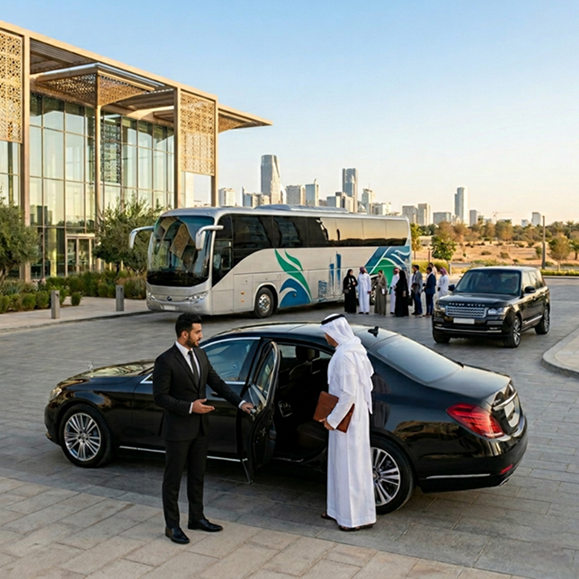
Transportation management at major events is one of the most crucial pillars upon which the success or failure of an event rests. Transportation is not merely a means of moving bodies from point A to point B; it is the first tangible impression a guest forms of the event. The journey from the airport or hotel to the event venue sets the tone for the entire experience. This is where the role of a savvy organizer becomes paramount in selecting a fleet that is directly proportional to the type of event and the message they wish to convey. Misjudging the size or type of fleet can lead to organizational disasters, such as overcrowding or VIPs feeling slighted due to being provided with transportation that is not befitting their status. This negatively impacts the final evaluation of the event, regardless of the quality of its content.
Conferences and Executive Summits
At conferences targeting decision-makers and business leaders, the focus shifts decisively from quantity to quality. Those attending these conferences consider time a precious asset; therefore, the vehicle fleet must function as a mobile office, providing privacy and tranquility.
Why Executive Cars? This class of vehicle, such as the Mercedes-Benz E-Class or BMW 5 Series, offers the perfect balance between luxury and practicality. While not as extravagant as a limousine, it conveys an impression of seriousness and professionalism.
- Privacy as a Marketing Element: By providing your guests with a soundproof vehicle equipped with high-speed internet, you implicitly signal your respect for their busy schedule. This enhances your brand value as an organizer who appreciates the guest’s productivity, not just their presence.
- Driver Protocol: At executive conferences, the driver is not merely a vehicle operator but also a protocol officer. The driver must master the art of silence, except when absolutely necessary, and be familiar with official hotel entrances and emergency exits, thus providing the guest with a sense of complete security.
Read also: Choosing the Best Luxury Car Rental Services for Businessmen
Mega Exhibitions and Conferences – Mass Transportation Strategy
Trade exhibitions and international conferences present a significant logistical challenge related to crowd management. Here, “mass transportation” via modern buses becomes the optimal strategic option for managing massive crowd flows.
- Buses as a crowd management tool: The primary goal here is to prevent traffic congestion around exhibition centers. Using large buses (50 passengers) or minibuses (20-30 passengers) reduces the number of smaller vehicles in the area surrounding the event, facilitating entry and exit.
- Marketing opportunities on wheels: The decision here is purely marketing-driven; the bus is a mobile billboard traversing the city streets. “Bus wrapping” the buses with the exhibition logo and sponsor images creates significant visual awareness among the general public, not just the participants.
- The onboard experience: The journey from the hotel to the exhibition (which may take 30 minutes) can be transformed into an information session. Using internal screens to display the day’s agenda or welcome messages from sponsors turns waiting time in traffic into a valuable investment for the visitor.
Dinners and Grand Openings
When it comes to parties, red carpet events, and grand openings, the only standard is “creating the moment.” At these events, the car is part of the visual spectacle, not just a means of transportation.
- Embodying Ultimate Luxury: Arriving in an S-Class, Range Rover, or Rolls-Royce gives guests a sense of exclusivity and high regard. This feeling is the primary driver of guest loyalty and positive engagement with the event.
- The Car’s Relationship to Visual Identity: The choice of color for the fleet (often royal black or silver) should complement the luxurious décor of the venue. The visual harmony between the fleet of cars parked at the entrance and the interior design conveys a sense of high professionalism and attention to detail.
- Red Carpet Management: This type of event requires meticulous coordination between venue security and transportation organizers. Cars must arrive in a carefully planned sequence, giving each guest ample time to disembark and pose for photos, without creating a chaotic scene that detracts from the grandeur of the arrival.
Technical and Operational Criteria for Fleet and Supplier Selection
Beyond vehicle type, there are technical and operational criteria that the fleet must meet to ensure smooth execution:
Age and Condition of Vehicles
Vehicles older than three years should never be accepted at official events. Mechanical condition and interior cleanliness (cabin odor, seat quality) are small but crucial details in a guest’s evaluation of the experience.
Fleet Management Systems
The organizer should have a dashboard displaying the real-time location of vehicles via GPS. This facilitates rerouting vehicles in case of sudden traffic congestion or emergency transport requests.
Sustainability and Modern Trends
The shift towards electric vehicles (EVs) has become a marketing imperative for companies committed to sustainability. Including EVs in your fleet sends a strong message that your event is environmentally friendly and adheres to the latest global standards.
Operational Requirements
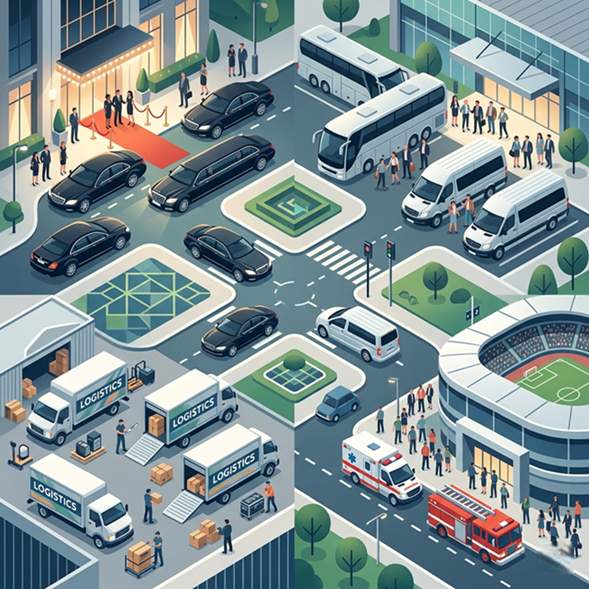
Understanding the specific operational requirements of the event is critical. The type of vehicles chosen must align with the tasks they will perform, the environments in which they will operate, and the required level of reliability. For example, an urban delivery event might benefit from small, fuel-efficient trucks capable of navigating busy streets, while an outdoor festival might require larger vehicles able to transport equipment across rough terrain.
Vehicle Suitability
The suitability of each vehicle to the driver’s job and overall operational needs is a crucial consideration. Questions such as the vehicle’s intended use, the number of passengers, and necessary features (like accessibility options) should guide this step in determining the best option. Vehicles that best meet efficiency requirements while minimizing unnecessary costs.
Cost Considerations
The budget plays a crucial role in vehicle fleet selection. Fleet managers should consider not only the initial purchase costs but also ongoing expenses such as fuel, maintenance, and potential resale value. The lifecycle costs of each vehicle should be analyzed to ensure the selection aligns with the financial criteria for efficiency.
Size and Fuel Efficiency
Vehicle size is another important factor. Fleet managers should assess the volume of cargo or the number of passengers that need to be transported. Additionally, fuel efficiency is critical to minimizing operating costs, especially during large events where transportation requirements may be extensive.
Maintenance and Compliance
Establishing a maintenance program is essential to ensure all vehicles remain roadworthy throughout the event. This includes pre- and post-trip inspections, annual compliance checks, and preventative maintenance procedures. Maintaining accurate maintenance records is critical for demonstrating compliance during audits and inspections, which is particularly important for commercial fleets. By considering these factors, event organizers can optimize their vehicle fleet options, ensuring the smooth execution of the event and adherence to budget constraints.
Logistical Planning and Scheduling
Successful fleet selection hinges on rigorous scheduling that considers all variables:
- Route Study: Roads leading to the event venue should be examined at various peak times several days in advance to determine actual travel times.
- Contingency Plan: A “reserve fleet” of 10-15% of the total fleet should be available to handle any mechanical breakdowns or sudden increases in guest numbers.
- Transportation Operations Room: A single point of contact between drivers, organizers, and guests is essential to ensure seamless information flow and rapid response.
Read also: Unique Ideas for Planning Event Guest Transportation
Conclusion
Choosing a vehicle fleet is not simply a matter of contracting with a rental company; it’s a strategic decision that links logistics and marketing. When you select the right vehicle for the right event, you’re not just transporting your guests, but also elevating your organization’s image to new levels of professionalism and excellence. Always remember that the journey begins at the car door, and first impressions last.

Comments