
Strategies for Organizing Internal Employee Events
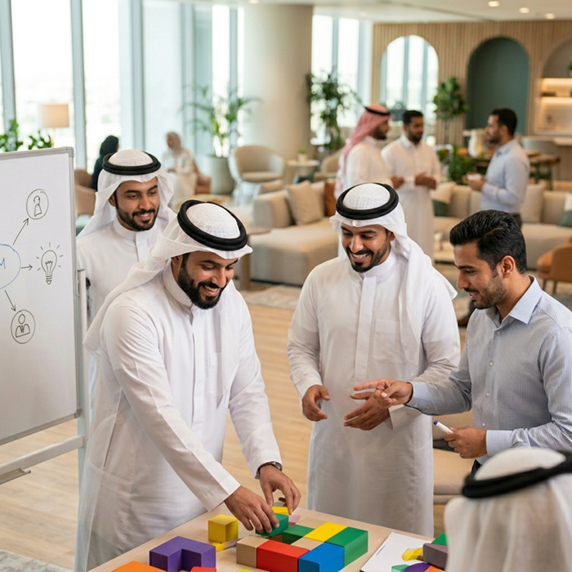
Strategies for Organizing Internal Employee Events: A Guide to Building Corporate Loyalty
In the fast-paced business environment of Saudi Arabia, internal employee events are no longer a mere “luxury” or corporate indulgence. They have become an effective strategic tool for building a strong work culture and fostering employee loyalty. With increasing competition for talent, it has become imperative for large organizations and companies to invest in these events to transform the work environment into a cohesive community striving to achieve the goals of Vision 2030.
The Importance of Internal Events in Enhancing Productivity
The importance of internal events extends beyond simply breaking the daily routine; they are the primary driver of what is known as “employee engagement.” When employees feel valued by the organization through the organization of meaningful events, this positive spirit is directly reflected in their performance and quality.
- Enhancing Horizontal and Vertical Communication: These events break down barriers between senior management and employees.
- Building Team Spirit: Through activities that require collaboration outside the formal work environment.
- Reducing Employee Turnover: Employees who feel a sense of belonging to a motivating work environment are less likely to consider leaving.
Read also: Organizing Bank Events in Saudi Arabia
Types of Internal Employee Events in Saudi Companies
Events vary depending on their purpose and timing. Some of the most prominent include:
Group Iftar and Suhoor Gatherings
These events are a cornerstone of Saudi culture, contributing to strengthening social bonds among colleagues in a spiritual and traditional atmosphere, away from work pressures.
Recognition and Achievement Ceremonies
The annual “Recognition Day” is one of the most anticipated events for employees. It celebrates outstanding performance or long years of service, fostering a sense of appreciation.
Interactive Workshops and Non-Traditional Training
Instead of closed training rooms, companies are now organizing workshops in open spaces or resorts, combining learning and entertainment (edutainment).
Sports Events and Family Day
Dedicating a day for employees to gather with their families for sports or recreational activities contributes to building a positive image of the organization as a “big family.”
Logistics: The Hidden Engine Behind the Success of Internal Events
The fundamental difference between an ordinary event that goes unnoticed and an exceptional one that remains etched in the memories of employees lies in the “genius of logistical details.” Logistics is the backbone that supports the event’s vision, hence the importance of professional planning that delves deeply into the following aspects:
Choosing the Right Location: More Than Just Space
Location selection is not limited to the availability of a hall; it extends to reflecting the event’s identity and objectives.
- Suitability and Capacity: The location must be appropriate for the number of attendees to ensure smooth flow; a cramped hall leads to overcrowding, while an overly large hall disrupts interaction.
- Infrastructure: Is the hall equipped with advanced sound systems that ensure clear communication from every corner? Does it offer intelligent lighting distribution that supports the atmosphere for interaction or focus, depending on the type of activity?
- Accessibility and Services: Adequate parking and easy location navigation via Google Maps are factors that enhance employee satisfaction before the event begins. It is also essential to ensure the availability of comfortable and accessible facilities for everyone. Catering Management:
The Language of Hospitality and Appreciation
In Saudi corporate culture, food and beverages are symbols of appreciation and celebration, making quality not an option but a necessity.
- Cultural and Dietary Diversity: In a work environment with diverse talent from various nationalities, the menu must reflect this diversity, including healthy, vegetarian, international, and local options. This conveys the impression that the company cares about each individual’s preferences.
- Serving Procedures: “Serving protocols” play a crucial role, whether it’s an open buffet or continuous finger food service. They must be elegant, clean, and efficient to prevent overcrowding, thus enhancing employee well-being and comfort.
Technical and Visual Equipment: Crafting an Immersive Experience
In the age of digital transformation, technology has become the tool that lends an air of modernity and professionalism to events.
- Visual Presentation: The use of giant, high-resolution LED screens ensures everyone engages with presentations or inspiring videos, sending powerful visual messages that reinforce the company’s identity.
- Professional Documentation: Providing a professional photography and videography team not only documents the event but also produces creative content that can later be used on the company’s social media platforms, thus supporting the employer brand.
- Smart Solutions: Providing simultaneous interpretation systems and technical connectivity for live streaming (if the company has other branches) ensures an inclusive experience and that no employee is excluded, regardless of their language or work location.
How Do Internal Events Contribute to Supporting the Employer Brand?
In modern marketing, the employee is the company’s first marketer. When employees share photos and videos from their internal events on platforms like LinkedIn, they send a powerful message to investors and external talent that the company has a healthy and attractive work environment. This is called Employer Branding, and it is an integral part of sustainable growth strategies.
Organizational Challenges and How to Overcome Them
Despite the numerous benefits of internal events, organizers often face challenges that can hinder the achievement of desired goals. Here’s how to turn these challenges into opportunities for success:
The Dilemma of Low Attendance and Engagement
Low turnout is one of the biggest concerns for HR departments, often due to poor timing or conflicts with peak work periods.
- The Strategic Solution: This requires a careful review of the company’s operational schedule; it’s illogical to organize the large events to be held at the end of the fiscal quarter or during the launch of a major project.
- Implementation: Choose times that make employees feel comfortable, such as afternoons at the end of the work week. Involve employees in choosing activities through quick surveys. This increases their “pre-engagement” with the event and makes them look forward to it as a welcome break, not an added burden.
Managing High Budgets and Costs
Some finance departments fear depleting their budgets on short-term events, especially when considering the costs of venue bookings, catering, and technical equipment.
- Strategic Solution: The key lies in proactive, long-term planning. Booking early allows for competitive pricing and a wider range of options.
- Implementation: Hiring specialized event management companies is not an additional cost. Rather, it’s a smart investment to control expenses. These companies have a wide network of suppliers and can offer comprehensive packages that include transportation, hospitality, and logistics at wholesale prices. This ensures the highest quality at the lowest possible cost, while avoiding the waste resulting from poor individual planning.
Read also: Types of Corporate Banking Events
Conclusion
In conclusion, modern management must recognize that investing in internal employee events is not merely a public relations budget item, but a fundamental investment in “human capital,” which is the true engine and the sole guarantee for any organization aspiring to leadership and excellence in a volatile and competitive market. Building bridges of trust between employees and their organizations begins with these shared moments that transcend the confines of offices and computer screens.
The transformation we seek in work environments requires a holistic perspective. Through sound planning that considers the smallest logistical details and professional execution that embodies the organization’s values, these events transform from mere fleeting social gatherings into an integrated strategic engine. This engine not only improves team morale but also integrates individual efforts into a unified force to achieve the company’s overarching vision, aligning with the ambitious national directions of the Kingdom of Saudi Arabia to enhance the efficiency of its human resources.
The message conveyed by a successful internal event is one of appreciation and recognition for every individual within the organization, and it is the fuel that drives employees to give their utmost with innovation and passion. Ultimately, companies that prioritize “people” through organized and well-thought-out initiatives are the ones that will succeed in building a sustainable corporate legacy, capable of facing challenges and moving towards new and unprecedented horizons of success and prosperity.


Comments