
The Role of Hybrid Events in Successful Corporate Meetings
The Role of Hybrid Events in Successful Corporate Meetings
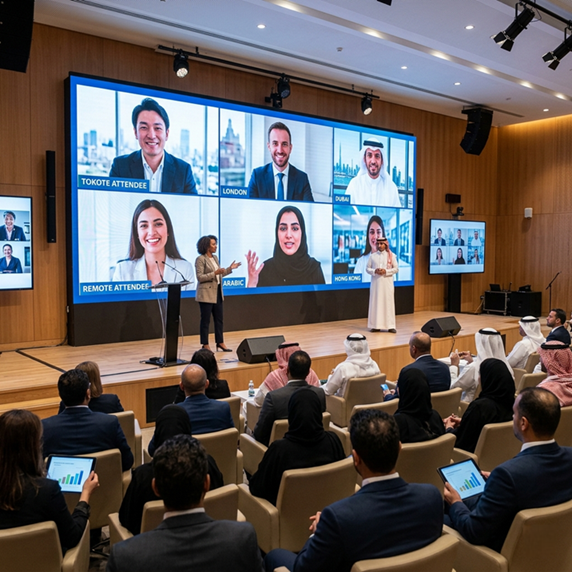
Hybrid events, which combine in-person and virtual participation, have become a pivotal element in corporate meetings, offering organizations an innovative approach to enhancing engagement and accessibility. This format emerged in response to the evolving demands of global business, driven by technological advancements and the need for flexible communication. Notably, the COVID-19 pandemic spurred the widespread adoption of hybrid meetings, demonstrating their potential to connect participants from diverse backgrounds while addressing the safety and logistical concerns associated with traditional meetings.
The significance of hybrid events lies in their ability to combine the advantages of both in-person and digital formats, allowing organizations to reach broader audiences, reduce costs, and promote inclusivity. Companies have reported a significant increase in participation and engagement, as hybrid formats enable remote attendees to contribute effectively alongside their on-site counterparts.
Benefits of Hybrid Events
Hybrid events combine the advantages of both in-person and virtual events, offering numerous benefits that enhance the overall experience for both organizers and attendees.
Wider Reach and Greater Accessibility
One of the most significant advantages of hybrid events is their ability to expand audience reach. By removing geographical barriers, organizers can connect with a global audience, enabling participation from individuals who might otherwise face difficulties attending in person, such as financial constraints, health issues, or limited mobility.
For example, an event that initially attracted 200 participants in two US cities saw a remarkable 2100% increase in 40 countries after incorporating a virtual component. This expansion promotes diversity and inclusion, as hybrid events make it easier for different demographics to engage with content and participate in discussions.
Enhanced Engagement
Participation is a key element for the success of any event, and hybrid events excel in this area. The use of advanced technologies enables real-time interactions between on-site and virtual participants, creating a dynamic atmosphere that encourages active engagement.
Features such as live polls, interactive Q&A sessions, and multimedia presentations keep attendees engaged and connected to the experience, regardless of their location. Furthermore, integrating communication tools and gamification elements can foster a sense of belonging among participants.
Cost-Effectiveness
From a financial perspective, hybrid events offer a cost-effective solution for organizers. By inviting virtual attendees, event organizers can significantly reduce expenses related to venue rentals, hospitality, and accommodation while still delivering a high-quality experience.
This scalability allows for greater operational flexibility, enabling them to accommodate a larger audience without incurring substantial additional costs. This financial efficiency also allows organizers to allocate resources to enhance content quality and speaker engagement.
Increased Flexibility and Safety
Hybrid events also offer greater flexibility in contingency planning, ensuring safety during challenging times, such as those brought about by public health crises. Thanks to the hybrid model, organizers can easily switch between in-person and virtual attendance as needed, allowing for smoother adaptation to changing circumstances. This flexibility can lead to increased registrations and overall attendee satisfaction, as participants can choose the format that best suits their needs and comfort level.
Ongoing Learning Opportunities
Finally, hybrid events are effective marketing and analytics tools, providing valuable data on attendee engagement and preferences. This data can inform event design and future strategies, allowing organizers to continuously refine their approach and enhance the attendee experience.
By adopting the hybrid model, organizations can unlock the full potential of their events, fostering community engagement and knowledge sharing among diverse audiences.
Read also: How Hybrid Events Have Proven a Continuous Success
Challenges of Hybrid Events
In addition to the unique advantages offered by hybrid events, they also present a number of challenges that organizers must address to ensure a successful experience for both in-person and virtual attendees.
Technical Complexities
One of the most significant challenges of hybrid events is leveraging technology to create a seamless experience. Utilizing state-of-the-art audio-visual equipment is crucial for delivering high-quality content to both audiences. However, the more technology is used, the greater the risk of technical glitches that could disrupt the event. Therefore, organizers should prepare by providing a robust technological infrastructure that includes backup internet connections, backup systems for streaming services, and a dedicated technical support team available during the event to address any issues that may arise.
Budget Considerations
Hybrid events typically require a larger budget than traditional in-person or only virtual events. Costs may accumulate from multiple sources, including venue rentals, technology setup, and staffing requirements for both in-person and virtual events.
It is essential for event organizers to be strategic with their spending to ensure that every expenditure item aligns with the overall event objectives and delivers clear value, especially since hybrid formats expand audience reach and sponsorship opportunities.
Venue Selection and Logistics
Choosing the right venue is a critical challenge. The venue must be suitable for in-person attendance and equipped with the necessary technological infrastructure to support hybrid functions, such as a strong internet connection and appropriate audiovisual equipment.
Furthermore, logistical considerations arise regarding accommodating both audiences, including seating arrangements and visibility for in-person attendees. Ensuring effective audience engagement with the presented content.
Audience Engagement
Maintaining audience engagement, whether in person or virtually, can be challenging. Effective engagement tools, such as live polls, Q&A sessions, and interactive features, are essential to bridging the gap between these two groups.
However, implementing these tools requires careful planning and integration into the streaming platform to create a seamless experience. Furthermore, ensuring both audiences feel valued and participate equally in discussions can be difficult, necessitating thoughtful design of the event’s interactive components.
Overcoming Geographical Barriers
While hybrid events aim to expand audience reach, they introduce geographical challenges. The physical location significantly impacts costs and accessibility. Larger urban venues may be more expensive but are often more accessible to a wider audience. Conversely, smaller or remote venues may reduce costs but increase travel difficulties for attendees, complicating logistics and potentially limiting participation.
An important article outlining the essential requirements for organizing hybrid corporate events
Conclusion
In conclusion, hybrid events are no longer just an alternative option. But a strategic necessity for ambitious organizations seeking to expand their global reach while maintaining a strong local presence. Success in this endeavor requires a delicate balance between technological efficiency and genuine, in-person hospitality, which is the essence of innovation in today’s business sector.
This is where the role of AL-WOFOD emerges as a strategic partner that fully understands the complexities of this type of event organization. With our extensive experience in organizing hybrid events, we offer advanced technical and logistical solutions that help your organization avoid unexpected technical challenges or a lack of interaction between physical and virtual attendees. We guarantee seamless integration between digital platforms and the physical event environment, transforming challenges into opportunities for excellence and ensuring your event reflects the prestige of your delegation and your professional aspirations.
Investing in professional organization is not merely about completing a fleeting event; it’s about building your organization’s reputation and solidifying its culture in the minds of attendees, wherever they may be.


Comments