
Final Touches on Event Logo Design
Final Touches on Event Logo Design
Designing an event logo is a creative journey that begins with understanding the event’s identity and culminates in embodying it in a visual symbol that conveys its message. However, this journey isn’t complete simply by sketching the idea. It requires a final stage of refinement and adjustment to ensure the logo’s ability to withstand the challenges of technical and visual use. Finalizing the event logo design bridges the gap between artistic vision and practical reality, transforming drafts into a comprehensive marketing tool characterized by flexibility and professionalism.
Logo Variations
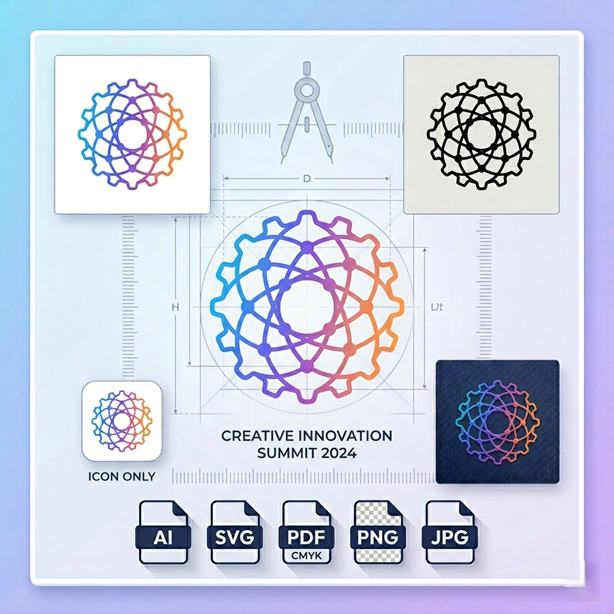
Creating a range of logos can be beneficial for different use cases. For example, a comprehensive logo might include the event name and a distinctive graphic, while a simplified version might use only the symbol in smaller sizes, such as social media profile pictures. This approach helps maintain brand identity across different platforms.
File Formats and Technical Delivery Assets
Choosing the right file format is fundamental to ensuring the logo’s flexibility and quality across various applications. The delivery process isn’t limited to a single format; a comprehensive suite of extensions is essential to meet the following needs:
- Vector Layouts: These are the most important formats to have (such as AI, EPS, and SVG). These files are highly scalable to any size without loss of clarity or pixelation, making them ideal for designing large billboards and modern websites.
- Web-Ready Files: PNG is preferred when a transparent background is required for integrating the logo into presentations or websites, while JPG is suitable for smaller images that don’t require transparency.
- Print-Ready Files: To ensure accurate color matching, the logo should be saved as a high-quality PDF in CMYK color space, the standard format used by printing houses for producing printed materials, textiles, and promotional gifts.
Saving the final logo in these diverse formats ensures the brand is ready to appear professionally across all media, from smartphone screens to building facades.
Design Improvements
Feedback from stakeholders or experts can contribute to improving the logo design. Common features identified in assessments may lead to adjustments in colors, fonts, or layout. The logo should also be tested for versatility, ensuring it looks good in both color and black and white versions, and across various promotional materials, including signage and apparel.
Read also: Steps to Designing Your Event Logo
Brand Consistency
Brand building isn’t just about creating an attractive logo; its true strength lies in consistency and continuity across all points of contact with the audience. Maintaining a cohesive visual identity requires a set of artistic “constitutions” known as Brand Guidelines. These guidelines ensure that the identity doesn’t lose its essence or become diluted over time or with different designers and platforms.
The Essential Pillars of Brand Identity Consistency
This guide must go beyond superficial descriptions and delve into precise technical details that give the brand a unified corporate character:
- Precise Color Scheme: Simply identifying a color by name is insufficient. Color codes (Hex, RGB, CMYK) must be used to ensure consistent tonal values across displays and printed materials, preventing visual distortion.
- Type Design (Types): Define primary and secondary font families, specifying their sizes and weights (Bold, Light) and how they should be distributed in headings and text to create a comfortable and familiar reading rhythm.
- Negative Spaces and Spacing: Establish strict rules for the “safety zone” surrounding the logo—the area where no visual element should be placed—to ensure the logo stands out and doesn’t overlap with other elements.
- Permissible Variations: Define when to use the logo vertically or horizontally, and how to handle cut-out or monochrome versions, providing designers with flexibility without compromising the brand’s integrity.
Embodiment of Identity Through Practical Examples
These guidelines gain their true value when theoretical principles are translated into tangible mockups. Providing comprehensive practical examples contributes to:
- Unifying the Digital Experience: Demonstrating the logo’s appearance across app interfaces, websites, and social media icons.
- Physical Embodiment: Showcasing the identity on printed materials, commemorative plaques, and signage at the event venue.
- Reducing Creative Waste: Saving marketing teams time by providing ready-made mockups for proper use, thus minimizing the potential for implementation errors.
- The Golden Rule: Consistency breeds familiarity, and familiarity builds trust. The more consistently your brand appears at the same level and quality across all platforms, the more it reinforces its image as a professional and trustworthy entity in the public mind.
Logo Launch
After the logo design is finalized, its launch should be accompanied by strategic marketing efforts to generate excitement and community engagement. Announcing the logo across various marketing channels and sharing its design story can help build relationships with potential attendees. Encouraging community participation, such as sharing the logo on social media, can also expand its reach and impact.
Examples of Successful Event Logos
Successful event logos embody the power of an effective brand and can significantly enhance the attendee experience. These logos not only visually represent the event but also capture its purpose and spirit, creating lasting impressions.
The Olympic Games
The Olympic Games are a prime example of how a logo can maintain a global brand identity while respecting local character. The Olympic logo—featuring the iconic rings—remains consistent across host cities, ensuring immediate recognition. However, each city adds its own unique elements, such as customized logos and color schemes that reflect local culture. This approach contributes to a cohesive experience, from stadium design to uniforms, enhancing the global reach of the Olympic brand and elevating the host city’s profile for years to come.
Read also: The Language of Color in Your Event and Its Impact on Attendees’ Emotions Through Your Printed Materials
These logos not only reflect the unique characteristics of each event but also contribute to creating a cohesive brand experience that fosters close engagement with participants. When designing an event logo, it is essential to consider multiple elements, such as audience demographics, event objectives, and key themes, to ensure the logo effectively conveys the intended message. Furthermore, feedback and revisions are an integral part of the design process, allowing for adjustments that align the logo with stakeholder expectations and audience preferences.
By adhering to these steps and principles, event organizers can create logos that not only capture the spirit of their event but also set them apart in a competitive environment. In short, designing an event logo involves a blend of creativity, strategy, and collaboration, all aimed at crafting a powerful visual identity that engages and motivates the audience. By investing time and effort in this process, event organizers ensure their logos become effective communication tools and build brand loyalty.
Post-Design and Approval Considerations
After receiving final feedback from stakeholders and making precise adjustments that balance aesthetics and functionality, several key considerations emerge to ensure the logo’s effectiveness:
- Flexibility and Scalability: Ensuring the logo retains its clarity and detail whether used on small phone screens or large billboards requires careful attention to fonts and proportions.
- Adapting to Display Environments: Analyzing how the logo appears in different states (color, black and white, and on dark or light backgrounds) to ensure consistent contrast.
- Brand Guidelines: Establishing strict rules for logo usage, including surrounding white space, preventing visual distortion, and precisely defining color codes (CMYK for printing and RGB for digital display).
- File Preparation: Exporting the logo in multiple formats suitable for all media, from high-quality vector files to transparent images for quick use.
Conclusion:
The moment the final version is approved is not just the end of an artistic task, but the birth of the visual identity that will shape the first impression on the event’s audience.


Comments