
High-Level Catering Services
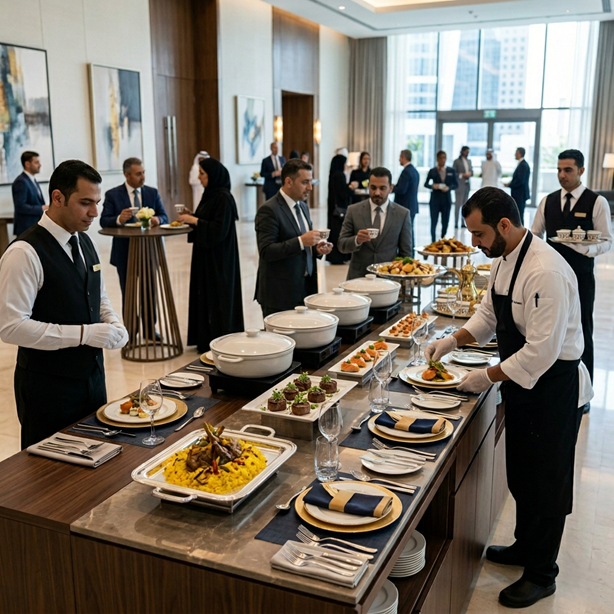
High-Level Catering Services
In the world of international diplomacy and high-level business, meals and dinners are not merely breaks for lunch or dinner. They are a strategic extension of the negotiating table and decision-making sessions. Providing catering services for official delegations, CEOs, and diplomatic missions is an art form in itself, combining meticulous logistics, a deep understanding of cultures, and high-level culinary creativity. Every detail, from the temperature of the dish to the angle of the fork, carries a subtle message reflecting the host’s appreciation for their guests.
The Kingdom of Saudi Arabia, within the framework of its ambitious vision to become a global hub for hosting major conferences, exhibitions, and diplomatic summits, has elevated the concept of fine catering to new heights. It is no longer simply about preparing exquisite food, but about crafting a complete sensory and cultural experience that adheres to international hospitality protocols while simultaneously honoring authentic Saudi identity.
From this, it becomes clear that success in this sector requires not only culinary skill but also complex logistical management and a high degree of foresight regarding guest needs. Since first impressions are fleeting, relying on specialized event management companies is the essential guarantee for delivering an experience befitting the delegation’s stature and leaving a lasting positive impact that serves the meeting’s objectives.
An important article explains which is better for events: restaurant bookings or catering services?
Pillars of Advance Planning: Cultural Diversity and Dietary Restrictions
The first steps to successfully organizing catering services for high-level delegations begin months before the event and involve gathering “food diplomacy data.” Cultures differ radically in their views on food, and what is considered a sumptuous celebratory dish in one country may be unacceptable or contrary to tradition in another. Therefore, planning teams must coordinate directly with the cultural attachés or public relations offices of visiting delegations to accurately determine their requirements.
Consideration of Religious Beliefs and Health Concerns
Religious beliefs are at the top of the priority list; Strict adherence to halal, kosher, or vegan food standards is essential for certain Asian delegations (such as Hindu and Buddhist). Additionally, allergen lists must be thoroughly checked (e.g., gluten, nut, or seafood allergies). A single mistake in this regard could not only ruin the meal but also cause a health crisis or significant diplomatic embarrassment for the host.
Menu Design: Balancing Globalism with Local Authenticity
When crafting a menu for a high-level delegation, executive chefs face an exciting challenge: how to create a menu that will impress a guest who has traveled the world and tasted the finest cuisines? The solution lies in blending classic French or Italian cuisine with innovative local touches.
The Rule of Diplomatic Hospitality: Presenting local cuisine with a contemporary flair is the best way to build bridges of cultural understanding. International guests are not looking for traditional French dishes they can eat in Paris; they are seeking to discover the identity of the host country in a sophisticated manner befitting the formal nature of the meeting.
Service Standards and International Protocol (Service Etiquette)
The service provided at high-level delegations differs significantly from that at ordinary banquets. There are three main styles used, depending on the formality of the occasion:
- French Service: The food is presented to the guest from the left, who then takes their own portion. This reflects great respect and respect for the guest’s privacy.
- Russian Service: The food is cut and prepared in the service rooms, and then the waiter presents the elegantly arranged meals to the guests. This service is characterized by speed and efficiency.
- Plated Service (American): This is the most common style at large conferences, where each dish is presented as a complete and carefully balanced work of art, with carefully measured calories and ingredients.
The timing of service is crucial. At diplomatic banquets, a “synchronized service” system is used. The hospitality staff places the dishes before all guests at the table simultaneously in a synchronized, almost dance-like motion. This ensures that no guest begins eating before the others and maintains the formal decorum of the occasion.
Read also: Catering Ideas Based on the Type of Corporate Event
Logistics and Food Security: The Invisible Line of Defense
Behind the scenes, catering for official delegations is managed with the precision of a high-level military operation. Food security is a top priority, especially when it comes to heads of state, ministers, or influential business figures. This includes rigorous supplier vetting and tracking the supply chain from farm to table.
Often, mobile kitchens or the kitchens of the host hotels are under direct security supervision, with samples of every ingredient taken before cooking and stored in temporary laboratories to ensure its safety. The catering company must also have a sophisticated logistics infrastructure, including refrigerated vehicles equipped with satellite temperature tracking systems to ensure that perishable foods are not subjected to any changes that could affect their quality or bacterial safety during transport to the event venue.
Stages of the Food Security Logistics Journey
This meticulous system is integrated through four essential logistical stages that guarantee the safety and excellence of the service; It begins with the sourcing stage, where reliance is placed exclusively on certified suppliers and ingredients undergo rigorous laboratory testing to prevent any potential contamination and ensure the highest quality raw materials used in cooking.
This is immediately followed by the preparation phase, which mandates the complete separation of production lines (whether for vegetarian, halal, or gluten-free dishes) to completely prevent cross-contamination and respect the strict dietary requirements of the guests. Next comes the transportation phase, using smart refrigerated trucks equipped with continuous temperature monitoring systems to maintain the freshness and piping hotness of the dishes according to the most stringent international health standards.
Finally, this process concludes with the presentation phase, which relies on simultaneous service under the direct supervision of international protocol experts to showcase absolute luxury while respecting the tight schedules of the delegations.
Design, Decor, and Ambition
The brilliance of catering services is not limited to the sense of taste; it begins with the eye. Table setting for high-level delegations is subject to strict guidelines. The spacing between seats must ensure privacy and ease of movement. The quality of the fabrics used for tablecloths (preferably natural silk or fine Irish linen) and the tableware, crafted from pure silver or fine crystal, all reflect the prestige of the occasion.
Natural flowers also play an important role, but with specific requirements: they should not have overpowering scents that might interfere with the aromas of the food and affect the guests’ enjoyment, and they should be placed low enough not to obstruct the view and visual communication between those seated face-to-face across the table.
Conclusion: Hospitality as a Tool of Soft Power
Investing in the details of catering services for high-level delegations is not a fleeting extravagance, but rather a strategic investment in strengthening international relations and building institutional reputation. When a high-level guest leaves an event with an impressive impression of the smooth organization, exquisite cuisine, and profound respect for their culture and privacy, this translates directly into successful political and economic agreements. This is the soft power that makes all the difference behind closed doors, mastered by those who understand that hospitality and its grandeur are a universal language that needs no translation.


Comments