
The Role of Arrival and Delegation Services in Event Success
The Role of Arrival and Delegation Services in Event Success
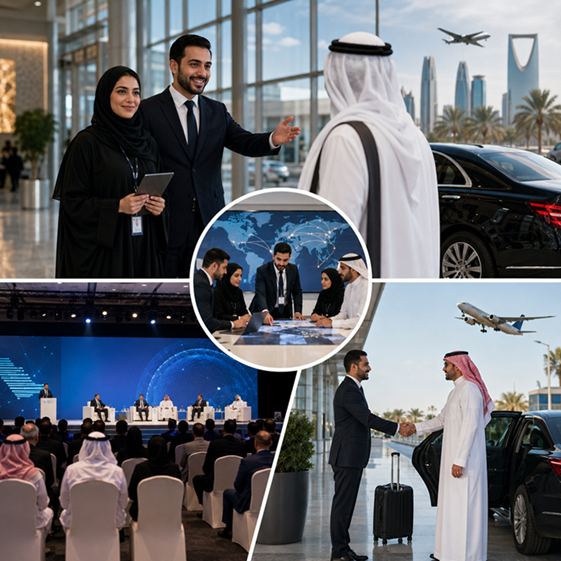
When you consider organizing an international conference, economic forum, or specialized exhibition, the first things that come to mind are choosing the right venue, setting up the platforms, and preparing the schedule of sessions and speakers. While these elements are important, practical experience confirms that the success of an event begins much earlier. A guest arriving from another country doesn’t see the platform first; they see the airport reception team, the transportation awaiting them, and the level of coordination that accompanies them from the moment they arrive until their participation in the event.
For this reason, event organization is no longer limited to managing what happens inside meeting and conference halls, but now includes managing the entire guest journey. This highlights the importance of combining event organization services with arrival and departure services within a single, integrated system. When all stages of the journey are overseen by one entity, the experience becomes smoother and more professional, while the chances of the event’s success and the achievement of its objectives increase.
Hidden Challenges Facing Event Organizers
Behind every successful event are dozens of logistical details that attendees may not notice, but which directly impact the event’s quality. There are arrival and departure flights, hotel bookings, daily transportation, participant registration, meeting scheduling, speaker reception, site visits, and other tasks that require meticulous coordination.
Often, these responsibilities are distributed among several different entities. One company might handle the conference organization, another might handle guest reception, and a third might handle transportation or reservations. This fragmentation can lead to communication gaps or delays in decision-making when unexpected changes occur.
When a guest is late for an important session due to transportation issues or is not greeted upon arrival, the negative impression reflects on the entire event, regardless of the quality of the venue’s organization. Therefore, finding a service provider capable of managing all these aspects within a single framework has become a strategic choice for many organizers.
Why is an integrated solution more valuable?
If you are planning an event, don’t just look for a company to organize the venue or provide technical equipment. Look for a partner who can manage the entire experience for guests and participants. When event planning, reception, and departure services are provided by a single entity, all stages of the work become interconnected and seamless.
The team that knows the flight schedules is the same one that knows the session schedule. The entity that coordinates guest transportation is the same one that manages the event’s executive program. This integration saves time, reduces errors, and allows for a faster response to any unforeseen circumstances.
It also gives the organizer a single point of contact instead of dealing with multiple service providers, which simplifies follow-up and ensures clear responsibilities at every stage of execution.
From Airport to Hotel: The Guest Experience Begins
The guest’s journey begins the moment they arrive at the airport. This is where their first impression of the organizing entity and the event they are attending is formed. A professional reception is not limited to holding a sign with the guest’s name; it includes managing the entire arrival process to ensure their comfort and ease of transfer.
When a guest finds someone to greet them, guide them, and assist them in reaching their accommodation, they immediately feel that there is an entity managing the details professionally. This feeling positively impacts their readiness to participate in the event and their overall evaluation of the experience.
For official delegations, VIPs, or international investors, this stage becomes even more crucial as it represents a significant part of the corporate image the organizer wishes to project to its guests and partners.
Read also: What is the importance of delegation reception and departure services?
Linking delegation management to the event program
One of the most important advantages of combining these two services is the ability to directly link guest movements to the event program. When the same entity is responsible for reception, transportation, and organization, it becomes easier to adjust schedules and handle changes without disrupting the event.
For example, if a keynote speaker’s flight is delayed, the reception, transportation, registration, and even some sessions can be quickly and efficiently rearranged because all the information is available to a single team. With multiple implementing entities, however, a lengthy series of communications and coordination processes may be required, potentially delaying decisions. This integration ensures that everyone works according to a unified vision and a single operational plan, which directly contributes to the event’s success.
Managing international delegations professionally
The Kingdom of Saudi Arabia is experiencing rapid growth in hosting international conferences, exhibitions, and forums. This has led to an increased need for specialized services in managing delegations arriving from around the world.
International delegations require not only high-level event organization but also professional management of all details related to travel, accommodation, transportation, and daily coordination. Guests’ expectations may vary depending on their cultural backgrounds, the nature of their participation, and the objectives of their visit.
When a company has experience in both event organization and delegation management, it is better positioned to understand participants’ needs and deliver a comprehensive experience that meets their expectations from arrival to departure.
Transportation and accompanying visits are integral to event success
Modern events are not limited to formal sessions. They often include field visits, side meetings, cultural and tourism programs, and networking activities.
The success of these activities depends heavily on the quality of logistical planning and the management of participants’ movement between different locations. When transportation and transfers are implemented within a unified plan directly linked to the event program, the experience becomes smoother, and the likelihood of delays or confusion is reduced.
This also helps guests make better use of their time and allows them to focus on their participation goals instead of getting bogged down in logistical details.
Seeing Off Delegations: The Stage That Shouldn’t Be Overlooked
Some organizers focus on the arrival phase and the event itself, while treating departure as a mere formality. However, the truth is that a guest’s last impression can be just as important as, or even more important than, their first.
When departure times are meticulously planned, appropriate transportation is provided, flights are monitored, and guests arrive at the airport on time, participants feel that the level of attention they experienced upon arrival continues throughout their visit.
Guests often remember these details when evaluating their experience or deciding whether to participate in future events. Therefore, farewell services are a fundamental element in building a complete and successful experience.
The Advantages of Combining Event Organization with Arrival and Delegation Services
This integrated model offers numerous advantages to organizers, most notably consolidating project management under one entity, reducing the potential for errors resulting from multiple suppliers, improving communication and decision-making speed, and increasing operational efficiency.
It also contributes to enhancing the guest experience by providing a seamless journey from the airport to departure, eliminating organizational gaps and conflicting responsibilities. Furthermore, this integration helps bolster the organizer’s image and project a high level of professionalism to participants and partners. Economically, this model allows for more efficient management of resources and budgets compared to dealing with multiple separate entities for each service.
One Partner for Managing the Entire Guest Journey
In today’s event world, success is no longer solely about staging a successful conference or exhibition; it’s about the organizer’s ability to manage the entire guest experience. This is why it’s crucial to choose a company with expertise in event organization and simultaneous arrival and departure of delegates.
When these two services are combined under one umbrella, countless disparate details transform into a cohesive system working harmoniously toward a single goal: delivering an exceptional participant experience and ensuring the event’s success at every level.
Conclusion
Successful events don’t begin with the opening session, nor do they end with the closing of the conference hall doors. It extends across a comprehensive journey that begins with welcoming the guest at the airport, continues through their accommodation and transportation, and includes their participation in the event, culminating in their smooth and comfortable departure.
This is why combining event organization with the reception and departure of delegations has become one of the most important factors for success in major events and international conferences. When a single entity manages all these details, execution efficiency increases, the guest experience improves, and organizers achieve more professional and impactful results.


Comments