
Criteria for Choosing the Right Venue for Your Next Conference
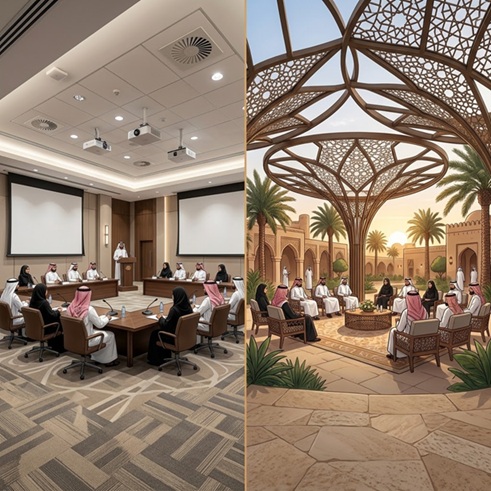
Criteria for Choosing the Right Venue for Your Next Conference: How to Select the Right Hall for Your Event’s Success
Choosing the right venue is one of the most crucial decisions affecting the success of your conference, from the initial planning stages until the last guest departs. The venue is more than just a space to accommodate attendees; it directly impacts the participant experience, ease of access, quality of organization, and the image the organizing company or organization projects to clients, partners, and guests.
Conference organizers have a variety of options, including well-equipped hotel ballrooms, independent venues, conference and exhibition centers, and outdoor spaces that can be adapted to host events. Each option presents its own advantages and challenges, depending on the nature of the conference, its objectives, the number of participants, and the available budget.
Therefore, selecting the right venue shouldn’t be based solely on aesthetics, but rather on a comprehensive set of criteria that ensure the conference achieves its goals and provides a professional experience for attendees.
Defining the Nature of the Conference Before Choosing the Venue
The first step in choosing a conference venue is defining the nature of the event itself. The appropriate venue for a business conference differs from the one suitable for a product launch, a medical conference, or a meeting of senior executives.
If the conference relies primarily on presentations and lectures, it’s crucial to choose a hall with good soundproofing, suitable projection screens, and professional sound and lighting systems.
However, if the conference includes workshops, breakout meetings, and panel discussions, it’s best to select a venue with multiple halls and sufficient space to divide participants into groups.
For conferences that combine formal sessions with recreational activities or dinners, a hotel or resort can be a practical choice as it offers multiple spaces within the same location.
Hotel Halls: A Practical Option for Integrated Conferences
Hotel halls are among the most popular choices for hosting conferences, especially when there are a large number of guests coming from different cities or countries.
One of the main advantages of this option is providing a range of services in one place. In addition to the conference hall, the hotel can provide accommodation, catering and hospitality services, parking, reception, and sometimes even meeting setup services and technical equipment.
This integration reduces the number of parties the organizer needs to deal with and facilitates smoother conference management. Hotels also offer a high level of comfort for guests, especially for conferences that last more than a day. Participants can move from their rooms to the conference hall without needing additional transportation.
However, hotel ballrooms can be more expensive than some other options, and some hotels impose restrictions on the use of external suppliers, catering services, or equipment—something that should be clarified before signing a contract.
Outdoor Venues: Greater Flexibility and a Different Experience
Outdoor venues can be an attractive option for conferences and events seeking a more distinctive experience or wanting to move away from the traditional hotel ballroom setting. These venues may include independent event centers, resorts, open spaces, cultural or entertainment sites, and other locations that can be adapted to host events.
Outdoor venues offer greater flexibility in designing the experience. In many cases, organizers can choose decorations, reception areas, seating arrangements, lighting, and temporary structures to align with the event’s visual identity. They can also be suitable for conferences that include special presentations, interactive activities, or outdoor receptions.
However, this option requires more meticulous logistical planning. The organizer may need to provide sound and lighting systems, generators, hospitality services, restrooms, registration and reception areas, parking, and a contingency plan in case of weather changes. Therefore, the venue rental price should not be compared solely to the price of a hotel ballroom; the total cost of setting up and operating the venue must be calculated.
Read also: Considerations for Choosing the Right Venue for Outdoor Events
Location and Accessibility
Geographic location is one of the most important criteria for choosing a conference venue. Even a luxurious ballroom may not be a suitable option if access is difficult or requires a long commute.
The conference location should be considered in relation to airports, major hotels, transportation hubs, and major roads. The nature of the participants should also be taken into account. If the conference targets businesspeople or international delegations, accessibility and the hotel’s location can be crucial factors. For large conferences, traffic flow, availability of sufficient parking, and the ability to manage entry and exit without congestion should also be considered.
Hall Capacity and Space Layout
Knowing the number of seats the hall can accommodate is not enough; the layout of the space must also be carefully considered. For example, a conference hosting 300 people requires not only 300 seats, but also a registration and reception area, a speaker’s podium, screens, aisles, hospitality areas, and possibly exhibition space.
It’s also essential to ensure the seating arrangement can be adjusted according to the session type. A stage setting might be suitable for lectures, while workshops require tables and small groups. Furthermore, it’s crucial to determine the actual maximum capacity of the venue after accounting for all equipment, rather than relying solely on the advertised capacity.
Technical and Audio Equipment
Technology has become an essential part of modern conferences, so it’s crucial to ensure the venue’s technical readiness before selecting it. Important criteria include the quality of sound systems, screens, projectors, internet connectivity, live streaming equipment, microphones, and lighting systems. It’s also necessary to determine whether these are included in the venue price or charged separately.
For conferences relying on digital presentations or remote participation, internet speed and connection stability should be tested, and the availability of a technical team capable of handling any issues that arise during the event should be confirmed.
Food and Hospitality Services
Hospitality services significantly impact the participants’ impression of the conference. Therefore, the venue should be able to provide food and beverages appropriate to the nature of the event and the number of attendees. Catering services are generally more readily available in hotel ballrooms, while outdoor venues may require contracting with a specialized catering company.
Details regarding the menu, meal times, coffee breaks, special dietary options, food presentation, and the number of staff required to serve guests should all be discussed.
An important article explaining the importance of catering services for high-level delegations
Accommodation and Transportation
If the conference is hosting participants from outside the city, providing accommodation near the venue becomes crucial. Hotels have a clear advantage here, as they combine accommodation with the conference hall in one location. When choosing an outdoor venue, nearby hotels should be considered, and organized transportation between them and the conference site should be arranged. It is best to include a clear transportation route in the organizational plan, especially for speakers, important delegations, and VIP guests.
Budget and Actual Costs
The budget is not just about the cost of renting the hall. There are many additional costs that can alter the comparison between options. The cost of technical equipment, decoration, hospitality, parking, transportation, security services, staffing, temporary setup, and any additional fees charged by the venue must be factored in.
An outdoor venue may initially seem cheaper, but it becomes more expensive once all the necessary services are added. Conversely, a hotel may seem more expensive, but it offers a significant portion of the services within a single package. Therefore, the total cost of the conference should be compared, not just the cost of renting the venue.
Flexibility in Design and Organization
The degree of flexibility varies from venue to venue. Some hotels impose restrictions on decor, suppliers, or setup times, while independent venues offer more customization. If the conference relies on a strong visual identity or innovative design, it is essential to confirm in advance the feasibility of installing the required screens, structures, signage, and decorations.
You should also determine the time the organizing team will have to access the venue before the conference, the time allowed for setup and technical testing, and the removal deadline after the event.
Safety and Emergencies
Safety and security standards should not be overlooked when choosing a conference venue. This includes clearly marked emergency exits, fire suppression systems, ambulance access, evacuation plans, and security services.
You should also ensure the venue’s ability to handle emergencies such as power outages, technical malfunctions, or adverse weather conditions, especially when holding events outdoors.
How to Choose Between a Hotel and an Outdoor Venue?
There is no single answer that suits all conferences. If the goal is to provide a comprehensive guest experience encompassing accommodation, dining, and meetings in one location, a hotel ballroom is often the most practical option.
However, if the aim is to offer a different experience, design a themed event, or provide more space for innovation and customization, an outdoor venue may be a better choice, provided the necessary logistical capabilities are available.
The final decision should be based on the nature of the audience, the number of participants, the duration of the conference, the budget, and the required services, not solely on the aesthetic appeal of the venue.
In conclusion
Choosing the venue for your next conference is a strategic decision that impacts the attendees’ experience, the efficiency of the organization, and the professional image of the organizer. While hotel ballrooms offer ease of operation and integrated services, outdoor venues provide greater flexibility and creativity but require more detailed logistical planning.
Therefore, the best conference venue is not necessarily the most luxurious or expensive, but rather the one that strikes a balance between location, capacity, facilities, comfort, services, budget, and the nature of the conference objectives.
The earlier these criteria are assessed, the easier it becomes to choose the right venue, negotiate services and prices, and build a seamless experience that leaves a positive impression on participants, speakers, and guests.


Comments