
Visitor Journey Mapping
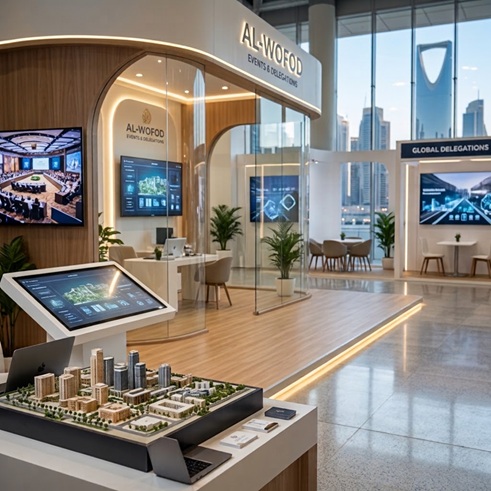
Visitor Journey Mapping
Participating in trade shows and conferences represents one of the most significant financial and operational investments for companies and organizations today. Despite the substantial budgets allocated to booth design, staffing, and the preparation of promotional materials, many such endeavors result in little more than a collection of random business cards—failing to deliver a genuine return on investment (ROI).
The primary reason for this shortcoming is treating the booth as a “static display space”—relying on the passive hope that visitors might wander by—rather than as a “carefully planned, dynamic path.” This is where “Visitor Journey Mapping” comes into play. It is an analytical and operational framework designed to engineer every step a visitor takes within the booth, transforming their presence from mere passing curiosity into an interactive journey that culminates in a purchase decision or the formation of a business partnership.
What is Visitor Journey Mapping?
A visitor journey map is a structural, visual representation of every “touchpoint” a visitor encounters—from the moment they first spot the booth from a distance, through direct interactions with staff or showcased products, to the point they leave the booth and the subsequent follow-up after the event.
In modern exhibitions, success is not measured solely by the size of the booth or the quality of its lighting; rather, it is defined by how that space is utilized to guide the visitor’s emotions, behaviors, and mindset through a series of distinct stages:
- The Awareness & Attraction Phase: Converting someone passing by in the aisle into an interested individual who decides to stop. Engagement & Exploration Phase: Providing a sensory or technical experience that illustrates the value of the product or service.
- Conversion & Action Phase: Initiating a practical discussion and collecting data, or closing an initial deal.
- Post-Event Follow-up Phase: Continuing the customer journey even after the exhibition concludes.
Space Engineering and Zoning
To transform the exhibition booth into a seamless conversion funnel, the space must be architecturally and functionally divided into zones with specific purposes, based on the “depth” of the visitor’s journey:
First: Outer Attraction Zone
This area encompasses the outer perimeter of the booth, facing the main aisles. Its sole objective is to interrupt the flow of visitor traffic (a “pattern interrupt”).
- Behavioral Design: Avoid placing large reception desks at the front, as they act as physical and psychological barriers that discourage visitors from entering.
- Effective Elements: Utilize vertical displays, focused lighting, or quick, interactive features designed to spark curiosity within the first three seconds of the booth coming into view.
Second: Middle Engagement Zone
Once a visitor steps inside the booth, they enter the middle zone—a space designed to engage the senses and stimulate thought.
- Behavioral Design: Allow visitors the freedom to move around without the pressure of an immediate, direct sales pitch.
- Effective Elements: Interactive devices, live product demonstrations, augmented reality (AR) displays, or stations where visitors can experience the service firsthand.
Third: The Inner Conversion Zone
This area targets high-quality leads who have demonstrated serious interest while in the middle zone.
- Behavioral Design: Provides a degree of privacy and psychological comfort, facilitating in-depth business discussions.
- Key Elements: Comfortable meeting tables, high-end hospitality services, and tools for presenting price quotes or preliminary contracts.
Designing Interaction Points and Visitor Psychology
A successful visitor journey relies on understanding human behavior within crowded exhibition spaces. Visitors often experience distraction and fatigue due to the sheer volume of exhibits; therefore, the journey must be intuitive and straightforward:
- Visual Clarity of the Message: Visitors should be able to grasp the company’s specialization and offerings within a few seconds. Complex marketing messages displayed on the exterior can deter visitors.
- Autonomy: Visitors generally prefer to explore independently before engaging with a sales representative. Providing access to digital or interactive content grants them a sense of control and encourages them to remain within the booth longer.
- Sensory Design: A combination of balanced lighting, unobtrusive sound, and open space creates a comfortable environment that invites visitors to stay longer, significantly increasing the likelihood of conversion.
Team Role Allocation and Facilitating the Conversion Process
Even the most professional design and the most luxurious architectural setup can lose their entire value if the on-site team is not fully and precisely aware of their specific roles within the visitor’s journey. The success of an exhibition pavilion does not depend solely on its aesthetic appeal; rather, it relies primarily on the seamless transition of visitors from one stage to the next. This requires a strategic distribution of tasks and responsibilities among team members, tailored to the specific zones of the pavilion and the function of each area:
First: The Greeters (Reception and Engagement Team)
Stationed at the outer perimeter and edges of the pavilion, this team ensures a prompt and welcoming initial interaction. Their role is to break down the initial psychological barrier, scan visitor badges to instantly capture essential data, and quickly assess the guest’s interests. This allows them to guide the visitor—smoothly and without delay—to the appropriate person or section within the pavilion, sparing them the confusion of navigating the space on their own.
Second: Product and Technical Solution Specialists
Positioned primarily in the central interaction zone, these experts take over from the reception team. They provide in-depth, detailed explanations of the solutions and services on display, address complex technical inquiries, and facilitate live demonstrations, presentations, and augmented reality (AR) experiences. This enhances the visitor’s understanding of the product’s technical value and prepares them for the next stage of the journey.
Third: The Sales and Opportunity-Capture Team (Sales Closers)
This team operates within the designated internal area for meetings and deal-making. They lead high-level commercial discussions with high-potential prospective clients, identifying their specific needs and budgets, outlining frameworks for future collaboration, or presenting initial price proposals—all with the aim of converting technical interest into concrete investment opportunities and binding contracts before the visitor leaves the booth.
Common Mistakes That Sabotage the Conversion Funnel
A visitor’s journey at an exhibition is often derailed by recurring organizational and design errors:
- The Counter Barrier: Placing a large reception desk at the front prevents visitors from entering and creates an unwelcoming impression.
- Overcrowding and Clutter: Packing the booth with too many products or pieces of furniture hinders natural traffic flow and overwhelms the visitor.
- Premature Sales Pitch: Sales staff rushing toward a visitor the moment they stop in front of the display often causes the visitor to walk away immediately.
- Lack of Data Collection Mechanisms: Relying solely on collecting paper business cards without noting the client’s level of interest or the specific services they require.
Measuring the Journey’s Success and Tracking Impact (Analytics & KPIs)
Transforming an exhibition presence into a sales funnel requires measuring performance based on precise data, rather than personal impressions. The effectiveness of an exhibition participation is determined by four key performance indicators (KPIs). The first is the “Capture Rate”—calculated as the number of visitors who enter the booth relative to the total foot traffic in the aisle—which serves to measure the appeal of the booth’s facade and visual elements. The second metric is “dwell time,” which is tracked via traffic analytics or smart cameras to gauge how visitors engage with displays and activities. The third is the “conversion rate,” calculated by dividing the number of qualified leads by the total number of pavilion visitors; this measures both team efficiency and the effectiveness of the visitor journey. Finally, there is the “cost per lead,” determined by dividing the total cost of participation by the number of qualified leads, providing a measure of the direct financial return on investment.
Read also: Best Practices for Preparing Effective Evaluation Reports
Conclusion
Designing a visitor experience at a trade show is more than just arranging decor and furniture; it is a comprehensive engineering process that integrates architectural design, human behavior, and sales strategies. When a pavilion is planned as a sequential path—beginning with seamless attraction and concluding with a productive business conversation—participation in an exhibition shifts from being a marketing expense to becoming a key driver of growth and a direct source of business opportunities.


Comments