
Essential Requirements for Organizing Hybrid Corporate Events
Essential Requirements for Organizing Hybrid Corporate Events
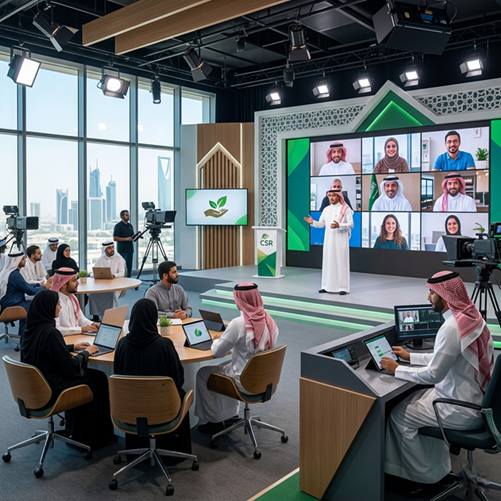
In 2026, organizations and companies are rethinking how they organize their events to adapt to a more flexible, digital, and responsible work environment. In this context, the hybrid model—which combines in-person experiences (seminars, conferences, team-building, product launches, etc.) with live online streaming—has become essential. In this guide, discover why you should adopt this model, how to organize it step-by-step, and how to measure its impact.
Why Choose a Hybrid Corporate Event in 2026?
With evolving work practices, the rise of remote work, the challenges of reducing carbon emissions, and the globalization of workforces, these factors have become powerful drivers of performance. They meet new expectations in internal communication, employee engagement, and corporate event strategy.
Accessibility and Flexibility: A High-Scale Model with All the Limitations
Hybrid events allow you to reach a wider audience without geographical constraints. Lower travel, logistics, and accommodation costs mean an improved return on investment. They are particularly well-suited for multi-site or international organizations. Hybrid events allow you to reach a wider audience without geographical limitations.
Reducing your carbon footprint: A benefit for your CSR strategy
Fewer trips, shared technology resources, less printing and waste: Hybrid events are environmentally friendly options. They support a credible CSR policy while simultaneously enhancing the company’s brand image.
Promoting inclusivity: An event accessible to all attendees
A well-designed hybrid event ensures that all remote workers, employees with disabilities, freelancers, and international partners participate without exception, providing an equitable experience aligned with the values of inclusivity.
Enhancing internal communication: A clear message for all teams
Hybrid events are excellent for fostering cohesion. They allow you to deliver powerful messages to all employees, whether on-site or remotely, in a dynamic and unified environment.
Key steps to organizing a successful corporate hybrid event:
Define your event’s objectives
Clarify the goals: Are they to promote team cohesion? Training? Awareness? Unity around a strong message? Your goals define the entire design: format, style, tools, and duration. Allocate sufficient time to clearly define your expectations in a detailed brief that you share with your service providers. This ensures that every decision (content, technical aspects, and logistics) aligns with a clear strategic vision.
Choose a venue specifically designed for a hybrid event.
A good hybrid venue should include:
- Excellent internet connectivity;
- Adjustable presentation platforms;
- Well-lit recording spaces.
Prefer venues with readily available or easily customizable technical infrastructure.
Choose a suitable digital platform
Zoom, LiveStorm, Hoppin, Teams, Webex – the choice depends on:
- Your audience size,
- the interaction tools required (chat, polls, Q&A);
- and ease of use and technical reliability.
Test the platform in real-world conditions before the event. Choose a user-friendly solution without complicated downloads. Ensure it provides detailed statistics, essential for tracking engagement.
Preparing Speakers for a Hybrid Format
It is crucial to familiarize speakers with the following:
- Position and on-camera presence
- Pace and energy management
- Ability to address both in-person and remote audiences.
A speaker who excels in in-person presentations may not be as engaging online: therefore, it is advisable to rehearse beforehand. Conduct rehearsals in realistic settings to assess their comfort level. Provide them with clear and dynamic visual support specifically designed for on-screen and stage presentations.
Create genuine interaction with remote participants to maintain engagement:
- Launch live polls
- Add interactive/managed chats
- Offer interactive quizzes or games
- Create remote discussion rooms or mini-workshops
- Appoint a dedicated facilitator to keep the event dynamic. You can also incorporate digital networking moments such as speed meetings or virtual panel discussions.
Ensuring Professional Recording and Broadcasting
Cameras in strategic locations, a video control room, even lighting, and a comprehensive graphic design: Engage experts to ensure a smooth, high-quality broadcast.
Good production provides visual comfort and an immersive experience, even remotely. Also, pay attention to transitions, branding, and visual identity to maintain consistency.
Plan a backup technical support plan
Anticipate all unforeseen possibilities:
- Backup line (4G, or alternative platform)
- Backup audio/video systems
- Immediate technical support team
Prepare an emergency plan that includes rapid actions in case of any disruption. Also inform speakers of backup solutions (such as delayed restarts or alternative secure channels).
Manage the logistics for a hybrid event
Design the decor and furniture for both formats
Set up cameras intelligently to capture images of speakers and the audience. Arrange the venue so that the experience remains engaging, even on screen. Pay attention to the clarity of materials and ease of digital navigation.
- Improve signage and animations for all audiences.
- Deliver a distinctive, interactive experience with a consistent visual identity, clear and easy-to-read signage (both online and on-site), and animations specifically designed to capture the attention of both audiences.
- Strengthen the balance between key moments to enhance participant engagement.
- Alternate between dynamic moments and interactive segments to avoid a “passive viewer” effect for remote participants. Plan animations tailored to each audience segment while maintaining a unified storyline.
Read more about how to organize hybrid events.
How do you measure the success of a hybrid corporate event?
Key performance indicators (KPIs) to track post-event:
- Participation rates (on-site and online);
- Direct interaction: questions asked, conversations, feedback;
- Satisfaction through separate surveys (in-person/digital);
- Data analytics (contact duration, bounce rate, rewatches);
- Internal impact and External: Social media mentions, comments, and the value of corporate social responsibility.
Strategy for Measuring the Success of Hybrid Events
To achieve an accurate assessment, one must begin with engagement rates, which are not limited to the number of registered attendees but also represent a balance between physical presence on-site and digital online reach. This metric reflects the appeal of the content and its ability to attract diverse audience segments.
Interaction and Digital Behavior Analysis
Direct interaction is the primary driver of success; it is measured by the volume of questions asked, the intensity of digital conversations, and the speed of live responses. This is where in-depth data analysis comes in, tracking “connection time” to determine the event’s ability to retain digital viewers, “bounce rate” to identify points of boredom, and “rewatch rates” which indicate the content’s value and sustainability.
Quality of Experience and Long-Lasting Impact
The assessment is incomplete without measuring satisfaction levels through detailed surveys that differentiate between the needs of those attending in person and the expectations of remote participants. Finally, strategic impact is measured by monitoring social media signals, qualitative feedback, and the event’s contribution to enhancing corporate social responsibility (CSR) value, transforming it from a fleeting gathering into a valuable corporate asset.
Read also: How Hybrid Events Have Proven Continued Success
Conclusion
Make your hybrid event a success by all measures. Connect with ALWOFOD experts to design an immersive, seamless, and impactful experience, whatever the event format. In 2026, a hybrid event is not just an alternative, but a powerful tool for boosting engagement, visibility, and performance. It combines the experience of face-to-face interaction and human connection with the flexibility and reach of digital media. With proper planning and appropriate technical collaboration, it becomes a strategic asset.


Comments