
Managing International Delegations in Saudi Arabia
Managing International Delegations in Saudi Arabia
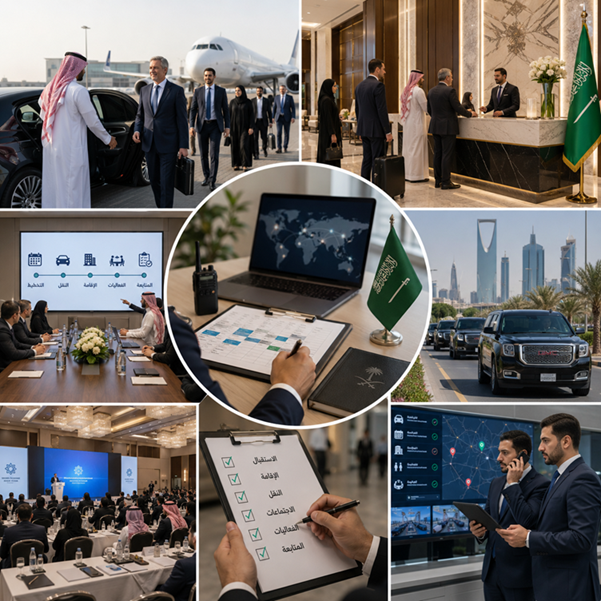
When people see an international delegation arrive in Saudi Arabia, they usually only see the final picture: cars waiting for the guests at the airport, a hotel ready to receive them, a well-organized meeting schedule, and events proceeding according to plan. But what most people don’t see is the sheer volume of work that takes place behind the scenes to ensure the success of the visit, from the initial planning stages until the departure of the last member of the delegation.
In reality, managing international delegations is not simply about providing reception, hotel reservations, or transportation. It is a comprehensive system of planning, coordination, and continuous follow-up among numerous entities and partners, all aimed at delivering a professional experience that reflects the level of organization and efficiency expected by the host institutions and organizations.
With the Kingdom’s significant expansion in hosting investment, trade, scientific, and sports delegations, delegation management has become an independent specialty requiring advanced organizational and logistical expertise to ensure the visit’s objectives are achieved and to leave a positive impression on the guests.
Read also: Why Delegation Visits Fail Despite High-Quality Official Programs
Planning Begins Long Before the Delegation Arrives
One of the most common misconceptions is that work begins only upon the arrival of guests at the airport. In reality, the planning phase may begin weeks or even months before the visit.
At this stage, information is gathered regarding the delegation, including the number of members, their nationalities, the objectives of the visit, and the nature of the scheduled meetings and events. A comprehensive timetable is also prepared, outlining all details related to transportation, accommodation, visits, and meetings.
Early planning is one of the most important factors for the success of any official or business visit, as it allows for addressing potential challenges before they arise and gives the team ample time to professionally coordinate all required services.
Coordinating Travel and Arrival Arrangements
After finalizing the overall plan, the stage of coordinating travel and arrival arrangements begins. This stage includes monitoring flight schedules and ensuring their compatibility with the visit’s itinerary, as well as preparing reception teams and designating meeting points within the airport.
This task may seem simple at first glance, but it requires meticulous monitoring of flights and any potential changes to departure or arrival times. Even a minor delay in one flight can disrupt the entire visit schedule if not handled quickly and flexibly.
Therefore, successful delegation management relies on continuous follow-up and direct communication with all relevant parties to ensure guests are received promptly upon arrival without any delays or confusion.
Selecting Appropriate Accommodation
Accommodation is not simply about booking a number of hotel rooms; it is a fundamental element that directly impacts the delegation’s experience and overall impression of the visit.
When selecting a hotel, several important factors are considered, such as its geographical location, proximity to meeting and event venues, the level of services it offers, and its ability to meet the specific needs of guests.
In some cases, private accommodations or executive suites are arranged to suit the nature of the delegation and the level of participating dignitaries. Coordination with the hotel is also undertaken in advance to ensure swift check-in procedures and the provision of all necessary services before guests arrive.
Managing Transportation and Field Movements
Transportation is one of the most critical elements in managing international delegations, as any delay or disruption at this stage can affect the entire daily program.
Therefore, a detailed transportation plan is prepared, encompassing all anticipated movements from arrival to departure. The appropriate types and numbers of vehicles, their routes, and their schedules are determined, taking into account distances, road conditions, and peak traffic times. Backup arrangements are also made to handle any emergencies, ensuring the program’s continuity even in the event of unforeseen changes. This aspect is particularly crucial when dealing with large delegations or those traveling between several cities within a short period, as it demands a high level of coordination and meticulous execution.
Coordination with Host Entities
One aspect often overlooked by guests is the extensive and ongoing coordination between the delegation management team and the host entities. Every meeting, field visit, or event requires advance arrangements, including confirming dates, preparing venues, welcoming participants, and providing various technical and logistical support.
Frequently, multiple program reviews are conducted prior to the event to ensure all parties involved are prepared. Schedules are also continuously updated as needed to accommodate any changes that may arise during the visit. This ongoing coordination is what makes the delegation’s experience seamless and well-organized, despite the numerous details and tasks being carried out simultaneously.
Managing Events and Meetings
International delegations often include official meetings, workshops, conferences, or business gatherings. This is where the role of event management becomes crucial as an integral part of delegation management. The team’s responsibilities extend beyond simply preparing the venue; they also include organizing registration, preparing informational materials, coordinating sessions, managing guest flow, and overseeing technical aspects related to audio, video, and presentations. The goal is to provide a professional environment that allows participants to focus on the visit’s objectives without being distracted by logistical details.
Addressing Unforeseen Challenges
No matter how meticulously planned, unforeseen challenges may arise during program execution.
A flight might be delayed, an important meeting might be rescheduled, or circumstances might necessitate a complete revision of the visit’s itinerary. This underscores the importance of having a specialized team capable of making swift decisions and providing suitable alternatives without compromising the guest experience.
True success in delegation management is measured not only by the team’s ability to execute the original plan, but also by its capacity to adapt to changes and maintain the program’s smooth operation under varying circumstances.
The Importance of Real-Time Monitoring During the Visit
Throughout the visit, monitoring and coordination processes continue uninterrupted. Teams track transportation, others liaise with hotels, and still others oversee meetings and events. This simultaneous work ensures that any emerging issues or needs are addressed immediately and contributes to maintaining the expected level of service throughout the visit. In many cases, the speed of response is the deciding factor between an ordinary experience and an exceptional one that leaves a lasting positive impression on delegation members.
Read also: The Benefits of VIP Reception Services
Why Has Delegation Management Become More Important Today?
The Kingdom of Saudi Arabia is witnessing rapid growth in the number of international conferences, exhibitions, forums, and events, alongside increasing investment and trade visits from around the world. With this expansion, organizations are realizing that the success of a visit depends not only on the content of meetings or events, but also on the quality of the guest experience from the moment they arrive until their departure. Therefore, delegation management services have become a strategic element that helps host organizations present a professional image reflecting their standing and supporting their organizational and investment goals.
Conclusion
When everything appears organized and seamless to a delegation, it doesn’t mean things are running smoothly automatically. It means there’s a team working behind the scenes around the clock to plan, coordinate, follow up, and resolve problems before anyone even notices them.
Managing international delegations is an integrated process that combines organizational expertise, logistical capabilities, and operational flexibility. It’s the factor that transforms a visit from a mere business program into a comprehensive professional experience that achieves the host organization’s objectives and leaves a positive impression on guests.
Therefore, investing in professional delegation management is no longer an optional extra; it has become a fundamental necessity for any organization seeking to organize successful visits and events that meet expectations.


Comments