
Media Coverage and the Creation of Visual Identity for Events
Media Coverage and the Creation of Visual Identity for Events
Today, events and conferences serve as strategic platforms that go beyond mere gatherings of professionals and the public; they have become vital tools for building brands, conveying corporate messages, and strengthening communication between organizations and their target audiences. In an era of intensifying competition and rapid technological advancement, the success of an event is no longer determined solely by the precision of its logistical organization or the quality of its speakers and programming. Instead, it depends directly and fundamentally on the quality of media coverage and the strength of the visual identity that accompanies the event—from the moment it is announced until well after it concludes. The integration of visual media, journalistic coverage, and on-site reporting breathes life into an event, creating an impact that endures over time.
The Concept and Strategic Importance of Visual Identity for Events
The visual identity of an event is defined as the collection of artistic and aesthetic elements that express the event’s philosophy and objectives. This includes logos, color palettes, typography, promotional designs, on-site installations, decor, and interactive displays. A visual identity is more than just a graphic or a selection of attractive colors; it is a comprehensive visual language that speaks on behalf of the event, reinforcing its presence in the minds of visitors and attendees.
The significance of a visual identity lies in its ability to leave a strong, lasting first impression on participants and members of the media. When a visitor enters a conference or exhibition venue, the first thing that catches their eye is the visual consistency—from the entrance gate and display screens to printed materials and identification badges. This coherence enhances the event’s credibility, lending it an air of professionalism and organization, which helps solidify a positive mental image among attendees.
Furthermore, a unified visual identity helps distinguish an event from others in the same field. In an annual calendar crowded with various conferences and forums, an innovative identity serves as a hallmark that keeps the event top-of-mind for the audience, ultimately boosting participation and engagement.
Read also: Strategic Print Materials: The Silent Language of Identity at Major Events
Stages of Designing and Implementing an Event’s Visual Identity
Creating a successful visual identity for an event requires a well-planned process, unfolding through several strategic stages to ensure the desired objectives are met:
- Initial Research and Study: This phase involves understanding the nature of the event, its mission, the target audience, and the key participants. During this stage, colors are selected to reflect the event’s character; for instance, blue tones—often associated with knowledge and technology—are well-suited for technical conferences, while earthy tones and greens are ideal for events focused on the environment and sustainability.
- Developing the Logo and Key Visual: The primary logo and the “key visual” serve as the cornerstone upon which all other design elements are built. It should be characterized by both simplicity and depth, and be adaptable for use across various digital and print media.
- Preparation of printed materials and on-site assets: This step includes designing backdrops for speaking platforms, signage, souvenirs, registration desks, and interior decor, ensuring a consistent visual identity throughout the venue.
- Digital content and custom applications: The visual identity extends to the event’s website, mobile applications, presentation templates for speakers, and designs for social media posts.
Professional Media Coverage: Elevating the Event from Local to Global
If the visual identity is the body and aesthetic presence of an event, then media coverage is its voice, reaching audiences across the globe. Media coverage goes beyond simply taking a few photographs or writing a basic press release; it is a comprehensive journalistic and technical framework that manages the dissemination of news, analyses, and discussions directly from the heart of the event. Media coverage tools for events encompass several integrated components:
- Written Press Coverage: Drafting and distributing press releases—before, during, and after the event—to national and international media outlets. These releases highlight key recommendations, new partnerships, and significant data or statistics emerging from the conference.
- Television Coverage and Live Streaming: High-quality live streaming via digital platforms and satellite channels has become an essential requirement, ensuring that those unable to attend in person can still participate. This includes setting up analytical studios on-site and conducting exclusive interviews with high-profile figures and experts.
- Digital Media and Social Media: Developing an immediate and continuous content strategy throughout the event, which includes posting tweets, short-form clips, and live coverage, while utilizing official event hashtags to steer discussions and boost engagement.
- Photography and Videography: Capturing high-resolution images that highlight the details of the event and audience interaction, as well as producing highlight reels that showcase key moments—assets that can later be used to promote future editions of the event.
Integrating Visual Identity with Media Coverage
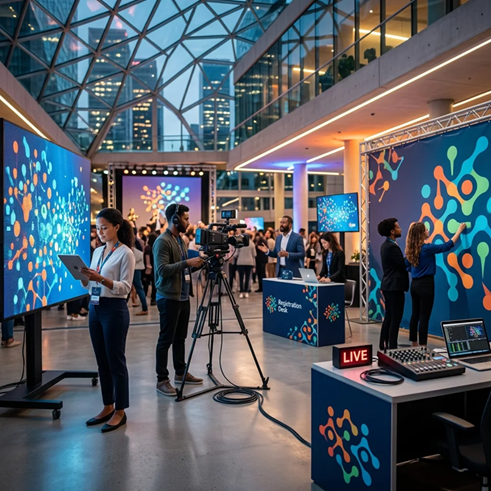
Seamless integration between media coverage and visual identity creates a truly comprehensive media experience. During press interviews or live broadcasts, consistent visual backgrounds and logos—visible within the frame—subtly reinforce the event’s identity in every image or clip shared.
When an event is supported by a comprehensive set of brand guidelines, media and photography teams can produce content that maintains a cohesive color palette and a unified visual style. This harmony ensures that any material published about the event—whether it be an infographic, a short video, or a press report in a specialized magazine—is instantly recognizable as belonging to that specific event.
Furthermore, providing a media center—outfitted with a cohesive visual identity and modern technical tools for attending journalists and media professionals—facilitates their coverage efforts. It enables them to report on the event’s proceedings with greater efficiency, while fostering a positive impression that contributes to the success of the articles and reports they produce.
Post-Event Evaluation and Impact Assessment
The work of media coverage and visual identity does not conclude when the event ends; rather, it transitions into a phase of impact assessment and continuous evaluation to ensure improvement for future events.
This phase involves gathering data on reach and engagement across digital platforms, tracking the number of articles and news pieces published in various outlets, and evaluating visual coverage—including the impact of the visual identity on the impressions of attendees and sponsors. The findings are consolidated into a comprehensive post-event report and a visual documentation booklet that highlights key achievements and statistics. This serves as a strategic reference document, essential for preparing future editions and securing new partnerships.
Media coverage and the creation of a visual identity are not merely secondary organizational details; they are the fundamental pillars by which the success of an event is measured in the modern world. A deliberate investment in an innovative visual identity and a comprehensive media plan transforms an event from a fleeting occurrence into an exceptional experience—one that remains etched in the audience’s memory and leaves a lasting institutional and media impact.
Conclusion
Professional media coverage and the meticulous crafting of a visual identity are far more than mere organizational tools to enhance the appearance of an event; they are the beating heart that gives an event its true value, ensuring it remains etched in the minds of participants and observers long after it concludes. The intelligent integration of a compelling visual landscape with comprehensive press and on-site coverage transforms an event’s objectives—initially just ideas and messages on paper—into a tangible reality and an inspiring, interactive experience.
When organizations and event planners invest with foresight in building a unique visual identity and executing a robust media strategy, they do more than just ensure the success of the current conference or exhibition. They also lay the foundation for a strategic legacy and a powerful public image—one that strengthens their market position and opens doors to new partnerships, paving the way for a more successful and sustainable future for all their upcoming events.


Comments