
the Ideal Venue for Your Next Event in KSA
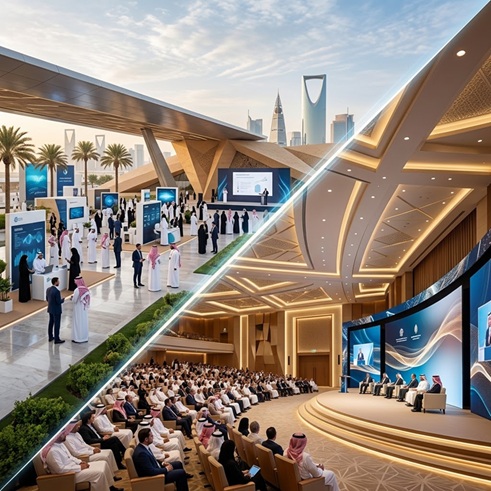
Nature’s Open Spaces or the Grandeur of Indoor Halls: How to Choose the Ideal Venue for Your Next Event in KSA?
In the modern business landscape of Saudi Arabia, corporate events are no longer merely fleeting occasions for ribbon-cutting ceremonies or standard speeches. Exhibitions, conferences, and annual gatherings for sectors such as banking, academia, and major corporations have evolved into strategic tools for reinforcing corporate identity and conveying clear messages to partners, investors, and target audiences.
When an organization decides to host a major event, the organizing team faces a pivotal choice: should they take the event outdoors—embracing the open air or carefully curated natural settings—or opt for the luxury and stability of indoor halls in world-class hotels and conference centers?
The choice between an outdoor venue and an indoor hall goes beyond aesthetics; it impacts the project budget, logistical risk management, attendee impressions, and even the level of human interaction and media coverage. This article offers an in-depth analysis and comprehensive comparison to help you make the decision that best aligns with your upcoming strategy.
An insightful article explaining corporate events and their various types.
First: Outdoor Events (Charm, Freedom, and Logistical Challenges)
In recent years, the Kingdom has witnessed a significant boom in urban planning and the development of open spaces, luxury parks, and sustainable landscapes. Outdoor venues and open spaces have become an attractive option for many organizations seeking to break away from corporate routine.
Exceptional Advantages and Opportunities
- Stunning Visual Impact and Unique Media Coverage: Outdoor spaces provide videographers and the press with excellent natural backdrops. Images and promotional content from open-air events—or those set amidst open architectural landmarks—exude a vibrancy and high energy that captivate audiences on social media platforms.
- Design Flexibility and Unrestricted Dimensions: Unlike indoor halls confined by walls and ceilings, open venues offer complete freedom to design stages, construct diverse exhibition stands, and maneuver the heavy machinery or massive installations often showcased by universities and industrial or technology companies.
- Breaking Down Barriers and Fostering Interactive Communication: Open environments eliminate psychological barriers between attendees. CEOs, academics, and clients interact more comfortably in open spaces, facilitating personal and professional networking in a seamless, unforced manner.
Operational Challenges and Risks
- Weather and Atmospheric Conditions: The primary challenge in the Saudi environment is the rapid fluctuation of weather conditions. Temperature swings, unexpected winds, or sudden dust storms can disrupt an event if fully prepared contingency plans are not in place.
- Technical Setup Complexities: Extending power grids, lighting, sound systems, and high-speed internet services to an outdoor location requires substantial operating budgets, backup generators, and dedicated support teams, as the ready-made infrastructure found in indoor halls is absent.
- Guest Management and Security: Controlling entry and exit points, securing VIPs, and managing crowd flow in an area that is not fully enclosed requires a more intensive security and logistical effort compared to indoor environments.
Second: Indoor Events (Luxury, Control, and Guaranteed Comfort)
Indoor halls and conference centers within international hotels and major complexes remain the cornerstone of the Kingdom’s traditional business sector, offering a sophisticated environment characterized by meticulous organization.
Advantages and Strengths
- Complete Control over Environment and Climate: An indoor hall ensures 100% stability. Presentations, air conditioning, external noise levels, and lighting are all fully controlled, regardless of the weather outside.
- Integrated Infrastructure and Ease of Setup: These halls come equipped with state-of-the-art technology, including giant display screens, directional audio systems, simultaneous interpretation booths, and breakout meeting rooms. This minimizes the time and effort required for technical setup.
- Protocol and Formal Organization: For banking sectors and educational institutions hosting high-profile figures or formal panel discussions, indoor halls lend an air of prestige and formality, ensuring the program runs smoothly and in an orderly fashion.
- Security and Attendee Management: Smart gates and enclosed registration desks facilitate visitor flow management and data registration, while providing a completely secure environment for sensitive content or private meetings.
Limitations and Challenges
- Monotony and Repetition: Recurring events held in the same venues can lead to boredom and fatigue among attendees, as most halls appear similar in décor and atmosphere, regardless of the event’s specific theme.
- Space and Height Constraints: Limitations regarding hall dimensions, ceiling height, and the placement of structural columns can restrict designers from creating large-scale décor or product displays that require extensive vertical or horizontal space.
Third: Strategic Comparison Based on Saudi Business Sector Standards
To enable decision-makers—whether in corporations, banks, or universities—to make an informed choice, the event should be evaluated against the following criteria:
Nature of the Event and Target Audience
If the event is an academic scientific conference, the announcement of financial results for a listed company, or the official launch of banking services, an indoor hall is undoubtedly the superior choice; such events require focus, quiet, and strict adherence to protocol.
Conversely, if the event is a youth recruitment forum, a corporate National Day celebration, or an interactive technology exhibition focused on activities and innovation, an outdoor venue offers an energy and vibrancy that perfectly aligns with these objectives.
Cost and Budget
Some might assume that booking an outdoor venue is less expensive than a luxury hall, but practical reality often proves otherwise. Outdoor venues require the rental of platforms, portable restrooms, power generators, outdoor air conditioning units, and extensive lighting systems. In contrast, indoor halls typically bundle most of these services into a single package, making the investment costs clearer and more predictable.
Timing and Seasonality
In Saudi Arabia, timing is a critical factor. The period from November to March sees high demand for outdoor events, taking advantage of the mild weather—a golden opportunity for open-air gatherings. Conversely, for the remainder of the year, the preference shifts entirely toward air-conditioned indoor halls to ensure guest comfort and protection from the elements.
Fourth: Sustainability and Modern Technology—Value-Added Standards in the Saudi Market
Selecting an event venue is no longer limited to logistics and weather considerations; it now reflects the organizer’s commitment to sustainability and innovation—two fundamental pillars of the contemporary Saudi business landscape.
- Sustainability and Social Responsibility: Today, major universities and banks are increasingly keen to showcase their eco-friendly practices. Outdoor spaces that utilize solar energy, on-site waste management technologies, and sustainable landscaping attract the attention of investors and partners, positioning the event as a practical model of environmental stewardship. Meanwhile, modern indoor halls offer advanced technologies for energy management and smart climate control, effectively reducing the event’s carbon footprint.
- Technological Integration and Mixed-Reality Experiences: Indoor venues facilitate the use of hologram technologies, immersive interactive screens, and multilingual live streaming, thanks to stable network connectivity and pre-installed infrastructure. Conversely, open-air spaces provide the ideal setting for large-scale drone displays and architectural 3D projection mapping, creating exceptional visual experiences that reinforce corporate identity at major events.
Conclusion
Success in organizing a corporate event is measured not merely by the beauty of the venue, but by how well it aligns with the message the organization wishes to convey.
- Choose an outdoor venue if: You aim to generate significant media buzz; you are targeting a younger demographic or employees for an interactive, celebratory event; and you have a professional logistics team capable of managing weather conditions and risks during temperate seasons.
- Choose an indoor venue if: The event requires a high level of formality, involves precise academic or financial discussions, or necessitates television coverage and live streaming; or if guest comfort and total control over time and costs are your top priorities.
Often, leading organizations opt for a hybrid approach—hosting formal sessions and exhibitions in indoor halls, followed by a dinner or awards ceremony in a luxurious, well-equipped outdoor area—thereby combining the best of both worlds into a single, unforgettable experience.
Read also: Best Outdoor Event Venues in Jeddah


Comments