
A Guide to Booth Logistics and Design
A Guide to Booth Logistics and Design
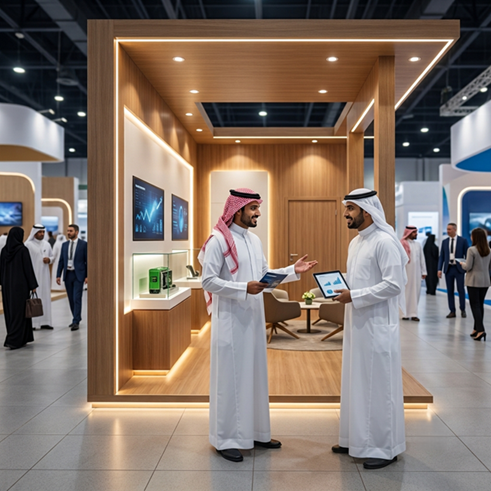
Participating in trade shows and conferences is one of the most important strategic investments for companies. While first impressions are formed through visual identity, the actual success of a booth depends on a delicate balance between the architecture of the space and the precision of logistical operations. This guide offers a comprehensive approach to managing and executing exhibition booths, from flow planning and architectural layout, through on-site logistics, to booth activation and team management.
First: Architecture and Flow Planning
Booth layout is not simply about arranging furniture; it’s about managing the movement of people within the space to enhance the visitor experience and facilitate teamwork.
Types of Architectural Layouts
- Island Layout: Open on four sides. It requires a prominent central focal point visible from a distance, while maintaining wide pathways to prevent crowding and congestion.
- Corner Layout: Open on two sides. It relies on guiding visitors diagonally from the two intersection points towards the main interaction area within the booth.
- Inline/Booth Layout: Open on one side. Requires careful utilization of depth and avoids placing barriers at the front to prevent visitor frustration.
Functional Zones
- Reception and Attraction Zone: The front line of the booth. Ensures unobstructed access and includes light-filled information counters for quick guidance.
- Interaction and Experience Zone: The central area dedicated to product displays or interactive screens. It should allow free movement without obstructing aisles.
- Negotiation and Meeting Zone: A semi-private or fully enclosed area, away from the noise of the main corridors, featuring high-quality lighting and comfortable furniture for extended discussions.
- Back and Services Zone: The enclosed room for storing logistics materials, catalogs, team bags, and the hospitality unit.
Second: Lighting, Technology, and Sensory Experience
The wooden or metal architecture of the booth is incomplete without complete control over the elements of the interior environment:
- General Lighting: 4000K diffused lighting (balanced white) to provide comfortable visibility and cover the entire space.
- Focus Lighting: 3000K to 5000K spotlights to highlight product features and the main booth logo.
- Screens and Media: High refresh rate LED screens to prevent visual interference when visitors or media are filming.
- Sound Management: Narrow-range directional speakers to focus sound within the booth without disturbing neighboring booths.
Read also: Comparison of Sound Equipment Types for Event Organization
Third: Logistics and Field Supply Chain Management
Logistics is the lifeblood and cornerstone of successful booth construction at exhibitions. It acts as the conductor, bridging the gap between theoretical designs and practical realities. Any disruption or obstacle in the supply chain—whether in timing, packaging, or shipping coordination—not only causes minor inconvenience but also directly delays the booth’s delivery on time and increases operational costs due to late fees and mandatory reshipment. Therefore, strict control over logistical operations is the true guarantee for maintaining the project budget and avoiding administrative and on-site surprises before the event begins.
Site Administration and Permits
Before moving any shipment or starting installation, ensure that the administrative file with the exhibition management is complete:
- Load plans approved by a consulting engineer to ensure the safety of the flooring.
- Height work permits for cranes and scaffolding at high installations.
- Fire safety approvals for materials used in decoration and cladding.
Packaging and Digital Labeling
- Pack all wooden and electrical components in sturdy wooden crates designed for reuse to protect them from damage.
- Number and label each crate with a QR code that includes the contents list, weight, and the container’s assembly guide to facilitate on-site component retrieval.
Disassembly and Storage After the Event
- Dedicate the first few hours after the exhibition close to disassembling and transporting electronic devices and screens to ensure their safety.
- Sort and classify reusable materials in an asset list for reuse in future events.
- Handle waste according to local exhibition regulations to avoid fines and facilitate site clearance.
Fourth: Operational Management and Pavilion Activation
Even the most glamorous pavilion will fail if daily operational processes are not well-organized and systematic.
Setup Timeline and Deadline
- 72 hours prior: Commencement of structural, flooring, and basic electrical installations.
- 48 hours prior: Installation of cladding, graphics, and main screens.
- 24 hours prior: Cleaning of the space, testing of technical and lighting systems, and delivery of marketing and hospitality materials.
- 2 hours prior to opening: Final inspection, hygiene check, and confirmation of team readiness.
Data and Lead Management
- Complete reliance on smart devices and barcode readers instead of collecting paper cards to ensure data organization.
- Category classification locally and at the moment of interaction according to a three-tier system:
- Highly Interested (Hot Lead): Immediate need and allocated budget; requires follow-up within 24 hours.
- Moderate Interest (Warm Lead): Clear interest requiring further information; follow-up within 5 days.
- General Inquiry (Cold Lead): General inquiries or information gathering that do not require immediate follow-up.
Fifth: Safety and Compliance with Architectural Standards
The pavilions are subject to strict oversight by the Occupational Safety and Health Department at the exhibition centers. All aisles within the pavilion must be at least 1.5 meters wide to facilitate access for people with disabilities and emergency routes. Underground electrical connections must not exceed 15 mm in height and must be covered with anti-slip protective mats.
- Stress Tests: Check the total electrical load before operation to avoid power outages during events.
- Emergency equipment: Provide fire extinguishers appropriate to the nature of the equipment (carbon dioxide extinguishers for appliances, foam extinguishers for solid materials) in the back room of the pavilion.
Sixth: Final checklist before opening
To ensure a smooth start to the event and avoid any unforeseen surprises or obstacles, a thorough and comprehensive inspection protocol is required. This proactive step not only guarantees the pavilion’s complete operational readiness before opening its doors to visitors but also gives the team complete confidence in the integrity of all engineering and technical details. This involves carefully and professionally verifying the following aspects:
- Structure and flooring: Ensure the stability of wooden partitions and the absence of protruding edges in the flooring that could cause tripping hazards.
- Electrical and technical: Conceal all cables away from walkways and ensure all screens and content have the auto-repeat function.
- Graphics: Ensure printed materials are free of air bubbles and that the backlighting on advertising panels is functioning correctly.
- Operations: Ensure sufficient stock of gifts and catalogs in the warehouse and test the functionality of field data readers.
- Cleanliness: Polish glass surfaces and screens, and thoroughly clean carpets before visitors arrive.
Successful booth design and logistics management requires a holistic approach that integrates architectural beauty with operational discipline. When the architectural vision of the space is combined with meticulous supply chain management and field execution, the booth transforms from a mere fleeting display platform into a powerful engine of business growth that achieves organizational goals and creates a memorable visitor experience.
Conclusion
Ultimately, successful exhibition participation is not measured solely by booth size or luxurious decor, but by the ability to achieve perfect harmony between intelligent architectural design and field logistical discipline.
Conscious visitor flow planning, meticulous control over setup and dismantling details, adherence to safety standards, and automated data collection are what transform a booth from a mere space within a showroom into a fully integrated work environment that delivers a high return on investment and leaves a lasting professional impression on brand visitors.


Comments