
A Guide to Organizing Hybrid Events and Conferences
A Guide to Organizing Hybrid Events and Conferences
In recent years, the events and conference industry has undergone a radical transformation; physical attendance at venues and centers is no longer the only way to reach audiences and engage with experiences. Instead, hybrid events have become the gold standard for organizations and entities keen on expanding their reach and transcending geographical boundaries.
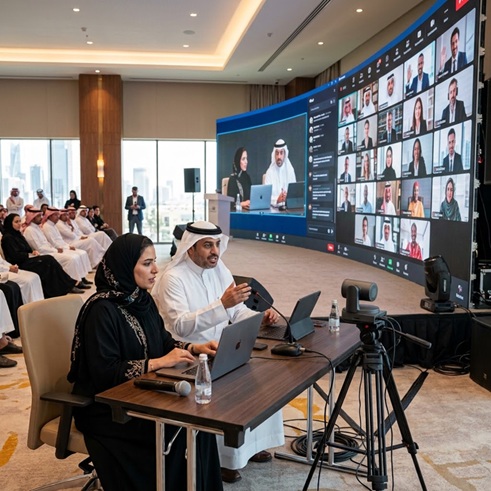
A hybrid event combines the in-person experience for attendees at the venue with an interactive digital experience for remote participants via virtual platforms. While this model offers immense opportunities to multiply attendance and boost return on investment, it also entails complex logistical and technical challenges. The primary challenge goes beyond mere audio-visual broadcasting; it involves creating a comprehensive, balanced experience that ensures all attendees—whether on-site or remote—can participate and engage with equal efficiency and seamlessness.
In this comprehensive guide, we explore the essential elements and operational pillars for successfully organizing hybrid events and conferences—ranging from infrastructure and technical solutions to agenda design and smart engagement tools.
Learn more about hybrid events and their key components.
First: Technical Setup and Infrastructure to Ensure Broadcast Stability
Technology and network infrastructure serve as the vital lifeline and fundamental pillar upon which the success of any hybrid conference is built. In this integrated model, the quality of the event is measured not only by the physical venue setup but also by the seamless technical experience delivered to viewers’ screens across continents. Any sudden broadcast interruption, drop in audio quality, or noticeable latency in video and data transmission not only distracts the audience and increases drop-off rates from the digital platform but also directly tarnishes the organizer’s reputation and undermines the conference’s professional credibility in the eyes of sponsors and participants.
Consequently, technical preparation is no longer merely an operational step within logistical planning; it has become a strategic process requiring meticulous care, careful analysis of all operational scenarios, and the anticipation of challenges before they arise. This approach ensures that common pitfalls are avoided and guarantees a seamless, flawless broadcast experience:
Network Connectivity and Bandwidth
A dedicated, wired internet connection (Dedicated Ethernet Line) must be allocated exclusively for live streaming, completely isolated from the Wi-Fi network available to the in-person audience. High, stable upload speeds are essential, alongside a backup internet line from a different provider that activates automatically in the event of a sudden failure in the primary network.
Specialized Audio and Lighting Engineering
It is often said that while an audience might tolerate average video quality, they will never tolerate poor audio. Omnidirectional and wireless microphones should be used for speakers and the in-person audience, integrated with audio mixers and echo-cancellation systems to prevent any audio echoes that could disturb remote viewers. Regarding lighting, it must be distributed evenly across the stage to suit the cameras without causing discomfort to the eyes of the in-person audience.
Camera Setup and Live Production Systems
To deliver an engaging visual experience, a multi-camera setup is essential. This includes a wide-angle main camera to cover the stage, mobile cameras to focus on the speaker and their facial expressions, and cameras aimed at capturing audience interaction. The live production team manages seamless transitions between these angles and integrates presentations and graphics directly into the video stream.
Virtual Event Platform
Selecting the right digital platform is a crucial step. The platform should feature a user-friendly interface, support multiple languages (or simultaneous interpretation), and handle a large number of concurrent visitors without performance lag, all while ensuring robust security for data and content.
Second: Designing an Agenda That Effectively Suits Both In-Person and Virtual Audiences
Designing an agenda for hybrid events requires a different approach than that used for traditional conferences. In-person attendees have greater stamina and an environment conducive to focus, whereas virtual audiences sit behind screens, often surrounded by home or office distractions. To strike a balance, the following strategies are recommended:
Considering Timeframes and Attention Spans
The duration of live sessions should be minimized, with each session ideally lasting no more than 30 to 45 minutes. Long, detail-heavy presentations can lead to viewer fatigue and a decline in engagement levels.
Planning Breaks and Parallel Activities
During physical breaks (such as coffee breaks or networking sessions), the virtual screen should not be left blank or display a static timer. Instead, organizers can host quick discussion sessions tailored to the digital audience, broadcast exclusive behind-the-scenes interviews, or present summaries of key points from previous sessions.
Flexible Scheduling to Accommodate Time Zones
If the conference targets an international audience, varying time zones must be taken into account. This can be achieved by making parts of the content available in pre-recorded formats or offering on-demand replays immediately after sessions conclude, thereby allowing participants worldwide to benefit from the material.
Defining Roles for Session Moderators
It is essential to designate both an on-site moderator for the physical venue and a virtual moderator for the online platform. These two individuals must coordinate closely to ensure that participants from both environments have equal opportunities to ask questions and engage in discussions.
Third: Smart Interaction Solutions and Tools to Boost Remote Attendee Engagement
The true success of a hybrid conference is measured by its ability to bridge the gap between in-person and virtual audiences, ensuring that remote participants feel like an integral part of a live event rather than mere passive viewers of a broadcast. This is achieved through the use of smart interaction tools:
Live Polling and Q&A Platforms
Utilizing smartphone apps and integrated platforms that allow both audiences to submit questions and vote in real-time. Session moderators can display poll results instantly on main venue screens and on the devices of online participants, creating a unified and immediate engagement experience.
Virtual Networking Breakout Rooms
Providing digital networking spaces that enable online attendees to interact with one another—or even connect with in-person attendees using the event app. Dedicated breakout rooms can be set up around specific topics to facilitate the exchange of ideas and the building of professional relationships.
Virtual Exhibition and Interactive Booth Technologies
To enable sponsors and exhibitors to reach all audience segments, 3D virtual exhibition platforms can be designed to replicate the experience of visiting physical booths. Virtual visitors can download digital brochures, watch product demonstrations, and engage in live video conversations with company representatives.
Incorporating Gamification
To maintain high levels of enthusiasm throughout the conference, a points and rewards system can be introduced for the most active participants on the platform—such as those who complete surveys, ask questions, or visit virtual booths. This effectively boosts retention and engagement rates among virtual attendees.
Read also: How have hybrid events proven their enduring success?
Conclusion
Organizing hybrid events and conferences is no longer merely an alternative option or an exceptional solution; it has become a strategic necessity driven by the demands of the digital age and the need for operational flexibility. Success in this arena requires early planning, investment in reliable technical infrastructure, and the development of an agenda that accommodates the distinct needs of each audience segment, alongside the smart use of innovative engagement tools.
When these elements come together, the hybrid event transforms from a standard conference into a comprehensive, border-spanning platform that creates a rich experience, meeting the expectations of all participants—wherever they may be.


Comments