
Common Challenges in Organizing Indoor Events and How to Overcome Them
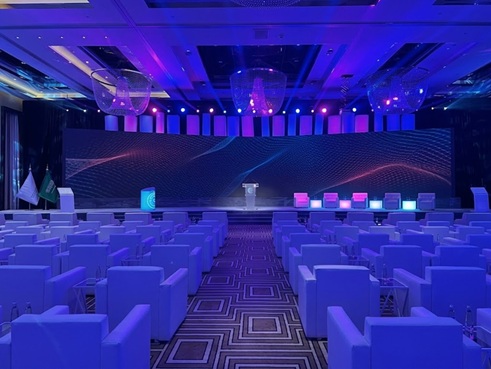
Common Challenges in Organizing Indoor Events and How to Overcome Them
Events, conferences, and corporate gatherings are integral to the communication and relationship-building strategies between companies and their target audiences. While indoor venues—such as hotel ballrooms or specialized centers—offer a well-equipped and comfortable setting, organizing events within these enclosed spaces entails various logistical and technical challenges.
Success in organizing an indoor event depends not only on preparing the agenda and hosting speakers but also—and crucially—on the ability to manage on-site details and handle unexpected issues with flexibility and professionalism. Below is an overview of the most common challenges encountered during indoor event organization, along with practical solutions and strategies to avoid them and ensure the event’s success.
Read also: How to Choose the Perfect Venue for Your Next Event in the Kingdom?
First: Venue Selection and Challenges Regarding Space and Capacity
Capacity is one of the most critical factors when planning any event. Misjudging the space can lead to adverse outcomes that affect the attendees’ impressions and overall experience:
- Overcrowding and Congestion: When a venue is too small for the actual number of attendees, the space feels cramped and difficult to navigate. This leads to poor ventilation and rising temperatures, negatively impacting guest comfort and their ability to fully engage with the event’s program.
- Excessively large spaces: Conversely, renting a massive hall for a limited number of attendees creates the impression of poor turnout and a failure to attract an audience; it also diminishes the intimate interaction between speakers and attendees.
- Inflexible furniture layout: Some venues dictate a fixed arrangement of seating or display platforms, limiting organizers’ options for implementing visual branding or creating dedicated networking areas and interactive workshop zones.
How to overcome this issue: A careful assessment of expected attendance should be conducted based on pre-registration data, incorporating a safety margin of no more than 10–15%. It is also advisable to conduct a site visit before signing a contract to verify actual dimensions and confirm the feasibility of rearranging furniture and seating to suit the event’s nature.
Second: Technical Equipment and Infrastructure
Modern events rely heavily on audiovisual technology; any malfunction in this area can disrupt the event’s flow and detract from its overall appeal:
- Sound and distribution issues: Problems such as echoes, audio dropouts, or uneven sound levels between the front and back of the hall are common. These issues are exacerbated in venues with high ceilings or sound-reflecting glass walls.
- Inadequate connectivity and Wi-Fi: Interactive events or those involving live streaming require robust, high-speed internet coverage. Public venue networks often suffer from slow connections due to the heavy load caused by numerous attendees accessing the network simultaneously.
- Inadequate Screens and Lighting: Screens in the hall may be too small for the venue’s size, or interior lighting may cause reflections that make viewing presentations difficult from the back rows.
How to Overcome This Issue: It is essential to conduct a comprehensive test (sound and tech checks) of all equipment, microphones, and screens well in advance of the event—ideally the day before or early on the morning of the event. Additionally, arrangements should be made with venue management to provide a dedicated internet line for organizers and live streaming, separate from the public network available to attendees.
Third: Guest Flow and Registration Management (Crowd Management)
The guest arrival phase shapes the first impression of the event; any hiccups in the reception process negatively impact the visitor experience from the very start:
- Slow Registration and Security Screening: A large number of attendees gathering simultaneously at registration desks creates bottlenecks at entrances, especially if badge-printing or data-verification systems are slow or experiencing service interruptions.
- Lack of Wayfinding Signage: In large centers or hotel ballrooms, attendees may struggle to locate the specific hall, restrooms, or hospitality areas, leading to confusion and frustration.
- Poor Organization of Hospitality and Catering Areas: Disorganized coffee breaks can lead to long queues and wasted break time, delaying the start of subsequent agenda items.
How to Overcome This Issue: It is advisable to adopt rapid electronic registration technologies using QR codes and to distribute registration stations based on alphabetical order or attendee categories. In addition, clear signage must be placed at all entrances and passageways, and a trained team should be deployed at strategic points to guide guests smoothly.
Fourth: Logistical Coordination with the Host Venue Management
Logistical disputes and confusion often arise from a lack of direct, detailed communication between the event organizing team and the venue management:
- Set-up and break-down schedules: Failure to allocate sufficient time to prepare the venue and construct display stands prior to the event, or delays in clearing the venue afterward, can result in financial penalties or place immense stress on the team.
- Safety restrictions and specific requirements: Some venues impose strict limitations on the use of certain décor materials, noise levels, or external power generators—restrictions that may conflict with the organizers’ plans if not reviewed in advance.
- Shortage of venue technical staff: Relying entirely on venue technicians can be risky, as they may not always be present on-site to address sudden technical issues during the event.
How to address this issue: A clear, documented Service Level Agreement (SLA) must be incorporated into the contract. This should specify exact times for venue handover (arrival and departure) and outline the services included. Additionally, a resident sound engineer and lighting technician should be present in the venue throughout the event to respond quickly to any emergencies.
Fifth: Emergency and Crisis Management in Indoor Venues
No event organization plan is complete without establishing scenarios for handling potential risks and crises:
- Power Outages: A power failure is a serious risk that can completely disrupt the event and potentially damage sensitive electronic equipment.
- Medical Emergencies: Instances such as fainting or sudden physical distress among attendees require rapid, measured intervention without causing panic among other guests.
- Safety and Evacuation Procedures: If the organizing team is unfamiliar with the building’s emergency exits and evacuation plan, it poses a severe risk should an emergency requiring venue evacuation occur.
How to address this issue: Ensure the presence of backup generators that activate automatically during power outages and provide a first aid kit, along with a certified paramedic or safety officer on-site. Furthermore, the organizing team must be trained on the emergency exit layout and rapid evacuation protocols.
Read also: Potential issues when organizing events in outdoor venues.
Conclusion
Organizing indoor events and conferences is a balancing act that combines artistry with logistical precision. Overcoming potential issues requires more than just resources; it demands early planning, on-site oversight, and the ability to anticipate challenges before they arise. By investing in high-quality technical equipment, training the team, and establishing transparent communication with venue management, organizers can deliver an exceptional experience that satisfies attendees and successfully achieves the event’s objectives.


Comments