
Latest Technologies Used in Managing and Registering Exhibition and Conference Visitors
Latest Technologies Used in Managing and Registering Exhibition and Conference Visitors
The Meetings, Incentives, Conferences, and Exhibitions (MICE) industry has undergone a radical transformation in recent years, rapidly and completely shifting from traditional paper-based registration and manual confirmation methods to smart, integrated digital systems. Visitor registration platforms are no longer limited to simply entering personal data or printing entry badges; these systems have become the cornerstone of ensuring event success and enhancing the participant experience from the moment they receive an invitation until they leave the venue.
In this age of data and speed, visitor time is the primary indicator of quality for any conference or trade show. Long queues at entrances or errors in attendance data create an unprofessional impression that casts a shadow over the entire event. Therefore, modern visitor management and registration technologies have become a crucial factor, contributing to increased operational efficiency, enhanced security levels, and providing accurate, real-time analytics that enable organizers and sponsors to measure return on investment with pinpoint accuracy.
Smart Technologies in Registration and Entry Management Systems
Self-Registration and Self-Service Kiosks
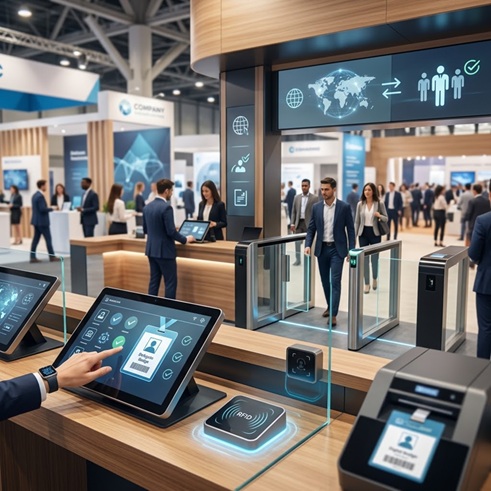
Self-service kiosks are among the most widespread and effective technologies for reducing congestion at entrances. These devices utilize simple, interactive touch interfaces that allow visitors to scan a QR code received via email or text message. The kiosk then prints an entry badge within seconds. This mechanism minimizes waiting times and reduces the operational costs associated with employing large numbers of reception staff.
Facial Recognition Technology
The use of artificial intelligence has elevated entry technologies to unprecedented levels through facial recognition algorithms. This technology allows pre-registered visitors to pass through smart gates simply by looking at the camera, without needing to present paper IDs or mobile devices. This system ensures the highest levels of security and prevents card misuse, while also providing a seamless, contactless entry experience.
Smart Gates and Speed Gates
Smart gates integrate high-speed mechanical devices with digital sensors to manage the flow of attendees. These gates work seamlessly with the event’s unified database, opening automatically upon reading authorized data via light scanning or near-field communication (NFC) technology. They prevent unauthorized entry, ensuring smooth traffic flow even at large events that attract tens of thousands of visitors daily.
Important article explaining the university events budget management guide
Real-Time Tracking and Interaction Technologies in Exhibition Halls
Smart Cards and Radio Frequency Identification (RFID & NFC) Technology
Modern entry cards have transcended their traditional role as identification cards, transforming into smart, interactive tools thanks to embedded RFID and NFC chips. These chips allow visitors to exchange contact information with exhibitors with a single click and register their attendance at various conference sessions simply by passing by sensors. They also enable organizers to monitor attendance in each booth or hall in real time without compromising individual privacy.
Bluetooth Beacons
Bluetooth beacons utilize Bluetooth Low Energy (BLE) signals to communicate with the official event app on visitors’ smartphones. This technology provides an interactive map for navigating the expansive halls and sends personalized notifications to visitors based on their location within the exhibition, such as alerts to upcoming panel discussions or directions to company booths that align with their registered interests.
Mobile Applications and Unified Interactive Platforms
Event mobile apps have become the primary operational hub for visitors. These applications are no longer limited to displaying agendas and speaker lists. They now include advanced interactive tools such as B2B matchmaking, note-taking, participation in live polls, and the ability to ask questions of speakers. These applications also integrate with digital wallets for storing entry tickets, completely eliminating the need for paper documents and supporting environmental sustainability strategies.
Visitor Data Analysis and Operational Decision Support
The value of visitor registration technologies extends beyond simply expediting entry procedures. They also enable the collection and analysis of attendance data, empowering exhibition and conference organizers to make more informed decisions. Digital dashboards allow for real-time monitoring of visitor numbers, booth and session traffic, peak times, and movement patterns within the event venue. This information facilitates the redeployment of staff, optimizes crowd management, and identifies areas requiring additional services or guidance. Furthermore, data can be used post-event to measure engagement levels and enhance the visitor experience for future events, thereby increasing operational efficiency and maximizing return on investment.
Real-World Examples and Live Applications of Modern Technologies in Saudi Arabia
The Kingdom of Saudi Arabia occupies a leading global position in adopting the latest event management technologies, in line with the objectives of Vision 2030 to enhance the exhibitions and conferences sector and make it a major regional and international hub for large-scale events. This has been clearly demonstrated in numerous national and international events hosted by the Kingdom:
LEAP Technology Conference – Riyadh:
LEAP witnessed the full adoption of smart, fast gates and instant badge printing technologies at self-service kiosks, in addition to crowd management via artificial intelligence platforms that analyzed the movement of hundreds of thousands of visitors with pinpoint accuracy. This made the entry and movement experience a global model for major technology events.
The Digital World Forum and Exhibitions of the General Authority for Exhibitions and Conferences:
The General Authority for Exhibitions and Conferences in the Kingdom applies stringent digital standards, including unified platforms for pre-registration and integration with national digital services. This ensures the highest levels of verification, security, and speed of procedures for local and international delegations.
The International Defence Exhibition and World Tourism Organization Exhibitions in Riyadh:
Advanced RFID technology was adopted for authentication and tracking attendance at high-level closed sessions, along with facial recognition algorithms to ensure the smooth entry of VIPs and official delegations without delay.
Read also: Managing Events Under Pressure
Factors for Successful Implementation of Modern Technologies in Exhibition Management
The successful implementation of these advanced technologies requires comprehensive planning and a clear strategic vision from the organizers. Among the most prominent factors that ensure maximum benefit from digital systems are:
- Robust Infrastructure: Providing a high-speed and reliable communications and internet network within the exhibition halls to ensure uninterrupted data synchronization between registration devices and main servers.
- Data Protection and Security: Full compliance with the Personal Data Protection Regulation (PDPL) in the Kingdom of Saudi Arabia and international regulations, to ensure the encryption of attendee data and its protection against any breaches.
- Software Integration (API Integration): Seamless integration between the registration system, Customer Relationship Management (CRM) systems, marketing vendors, and electronic payment gateways to provide a unified and continuous data flow.
- Training Field Staff: Ensuring the team’s readiness to handle any inquiries or unexpected technical issues, providing prompt support to visitors in a positive and professional manner.
Conclusion
Modern technologies for registering and managing exhibition and conference attendees are no longer merely organizational tools; they have become the decisive element in creating an exceptional first impression that reflects the professionalism of the organizer and the event’s quality. The shift towards smart, AI-powered systems and real-time communication solutions opens new horizons for collecting analytical data and developing future event editions based on attendees’ actual behaviors and needs. With the massive investments and tremendous technological advancements witnessed in the Kingdom of Saudi Arabia, the national events industry continues to set new standards of excellence and innovation on an international level.


Comments