
Managing Events Under Pressure
Managing Events Under Pressure: How to Handle Last-Minute Changes and Surprises
Managing conferences and corporate events is one of the most dynamic and complex fields in the business world, where strategic objectives intersect with on-the-ground logistical details within a tight timeframe. No matter how meticulous the advance planning, how many hours of preparation, or how well-crafted the action plans, the nature of live events remains susceptible to numerous unforeseen variables and last-minute surprises. The crucial difference between a successful event that leaves a lasting impression and one hampered by on-the-ground chaos lies not in the absence of crises or changes, but rather in the team’s flexibility, the speed of decision-making, and the quality of the mechanisms employed to address these changes professionally and seamlessly.
The Nature of Unforeseen Changes in Corporate Events
Event organizers may encounter a variety of changes in the 24 hours leading up to the event, or even during its proceedings. These variables range from last-minute agenda changes and sudden shifts in VIP protocols to unexpected technical challenges or malfunctions in presentation and audio systems, as well as adjustments to transportation and related logistics. These challenges necessitate that event organizers immediately transition from a “quiet planning” approach to a “field crisis management” approach, requiring the highest levels of operational control and discipline.
Logistical Flexibility and Updating Reception Protocols
One of the most critical changes in major events is the sudden alteration of the VIP guest list or the arrival of additional official delegations without prior notice. Addressing this situation requires a flexible organizational structure for reception and protocol teams, capable of quickly and discreetly redistributing allocated spaces and seating in the main hall. This necessitates providing additional, pre-prepared rest areas and logistical support to accommodate unexpected increases, along with training the reception team in the tactful and swift procedures for rearranging seating arrangements and ensuring compliance with the highest standards of diplomatic and institutional protocol.
Managing Schedules and Content Under Pressure
An event’s schedule may be disrupted by the late arrival of a keynote speaker or a panel discussion running longer than planned. In such cases, the panelist and content manager must have a clear vision of alternative, short-term solutions. These solutions include adjusting break times, shortening speaker introductions, or coordinating directly with the next speaker to provide a flexible segment to bridge the time gap. These on-the-ground measures ensure the smooth flow of the event and prevent interruptions or gaps that could negatively impact the audience experience and impressions.
Simultaneous Communication and Field Operations Management
Effective communication is the cornerstone of managing any unforeseen crisis during an event. The absence of a unified and rapid communication channel between senior management, technical teams, logistics personnel, and hospitality staff immediately leads to conflicting decisions and the escalation of minor problems. Therefore, successful event management networks rely on closed communication circuits and dedicated radios, with a single field leader assigned to each area of operation. This system enables real-time updates, critical guidance, and rapid implementation of solutions without disrupting the overall experience for the audience and guests.
Last-Minute Technical Infrastructure Management Strategies and Engineering Support Solutions
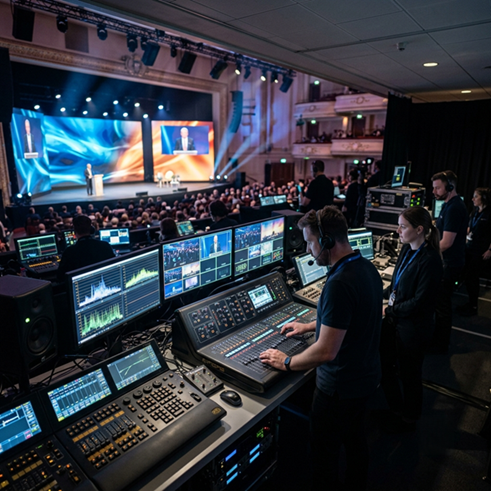
Technical and engineering infrastructure is the lifeblood of any corporate event and is the most vulnerable to sudden changes and on-site complexities that require immediate engineering solutions. Last-minute technical challenges encompass a variety of scenarios, from power outages and live broadcast signal interruptions to software incompatibility issues with interactive display systems and simultaneous interpretation systems in main halls. To ensure uninterrupted operation, certified engineers and technicians rely on the principle of “system redundancy,” which involves providing backup power lines and equipment that operate in parallel with the primary systems. Addressing emergency audio or video failures requires integrated digital signal processors and automatic switching protocols for backup systems, eliminating the need for time-consuming manual intervention.
Read also: Secrets to Successfully Organizing International Events
In addition, wireless network and internal communication equipment is a fundamental pillar for transmitting big data. Therefore, having field network engineers capable of bandwidth allocation and digital load management ensures that live broadcasts don’t crash or audience interaction platforms go down. Managing interactive platforms and giant LED screens also requires an engineering team capable of addressing technical variations in content formats presented by speakers in the final minutes, along with performing rapid stress tests on visual processors. Relying on accredited companies with specialized engineering and technical staff—not just ordinary operational teams—ensures accurate diagnosis and the application of corrective solutions behind the scenes with exceptional flexibility. This level of technical discipline and software readiness minimizes exceptional downtime for travel, maintains the integrity of the event’s physical and digital flow, provides comprehensive protection for complex systems, and guarantees a flawless audio-visual experience for VIPs and participating delegations.
Maintaining Organizational Calm and Projecting a Positive Image
The psychological state and behavioral discipline of the organizing team directly impact the overall impression of the event. Even in the most critical moments or during a technical glitch on stage, the team must maintain the highest levels of composure, smiles, and tact. Displaying confusion in front of the audience or speaking loudly to resolve errors damages the organizer’s reputation more than the technical glitch itself. The audience typically doesn’t notice minor logistical changes unless the organizers themselves draw attention to them through panicked behavior.
Establishing Contingency Plans and Proactive Response
To ensure a rapid response to changes, solutions shouldn’t be considered only after a problem arises. Instead, a “risk scenario matrix” should be developed during the initial planning phase. This matrix includes alternative plans for technical systems (such as backup generators and broadcast equipment), immediate alternatives for catering and hospitality services, and contracting with specialized logistics management companies that possess the operational capacity and field fleet that can be deployed quickly to address any shortages or emergencies.
The Role of a Professional Logistics Partner in Ensuring Event Stability
Employing specialized event management and logistics companies provides a genuine safety net for organizations and organizers. The accumulated experience of professional companies enables them to anticipate early signs of crises before they occur and implement corrective responses behind the scenes without guests noticing any disruption. This role extends to managing transportation protocols, coordinating the movement of VIPs, and maintaining complete on-site control of meeting rooms and exhibition spaces.
A Featured Article Explaining the Importance of Product Launch and Customer Acquisition Events for Startups
Conclusion:
In conclusion, last-minute changes and surprises remain an integral part of the dynamics of event management. Addressing these challenges requires not only technical and logistical preparation but, more importantly, a flexible work ethic, effective communication, and the ability to make bold and swift decisions. When an organization has a well-trained team and a highly prepared logistics partner, every unexpected event can be transformed from a threat to its success into a genuine opportunity to demonstrate exceptional efficiency and deliver a stunning organizational experience that exceeds all expectations.


Comments