
Technological Integration in International Conference Security
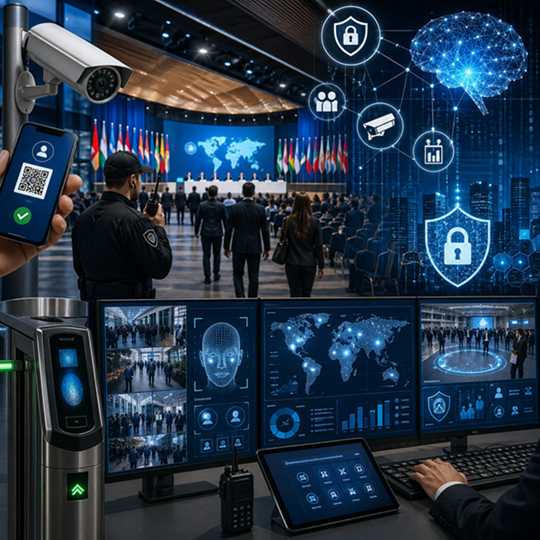
Technological Integration in International Conference Security
Technological integration in international conference security refers to the application of advanced technologies to enhance security protocols and ensure the safety of participants in large-scale events. As international conferences have become increasingly complex and large-scale, particularly following high-profile security incidents, reliance on manual security measures has shifted towards more sophisticated, technology-driven solutions. This evolution has been crucial in addressing the growing risks associated with global gatherings, making technological integration a central aspect of event planning and management.
The remarkable advancements in security technology, especially since the late 1990s, have led to significant improvements in how events are secured. Innovations such as AI-powered surveillance, advanced recording systems, and instant communication tools enable organizers to effectively detect and respond to potential threats. Furthermore, the integration of artificial intelligence and data analytics has revolutionized risk assessment, allowing for proactive measures that enhance participant safety and mitigate the various risks associated with modern conferences.
Early Developments in Conference Safety
In the early 1980s, the rise of international conferences marked a turning point in safety considerations, particularly in the wake of high-profile incidents of violence and terrorism. For example, the 1985 bombing of a conference in a European city highlighted the vulnerabilities of large gatherings, prompting organizers to reassess their security strategies and invest in more effective security measures, including crowd management and emergency response systems.
The Rise of Technology-Based Safety Solutions
The late 1990s and early 2000s witnessed a radical shift as technology began to play a crucial role in enhancing conference safety. The advent of digital communication tools and surveillance technologies enabled the immediate detection and rapid response to potential threats. By the early 2000s, many conferences had begun integrating sophisticated registration systems that included background checks, helping to identify potential risks associated with attendees.
Read also: Hosting International Delegations in Saudi Arabia
The Role of Artificial Intelligence and Emerging Technologies
In recent years, the integration of artificial intelligence and other emerging technologies has fundamentally changed the landscape of safety at international conferences. AI-powered tools have enhanced predictive analytics, enabling organizers to assess risks and prepare more effectively for various scenarios. The benefits of these technologies extend beyond improved physical security to include addressing cybersecurity concerns and ensuring the protection of sensitive information exchanged during conferences.
As integrated security continues to evolve, conference organizers are increasingly relying on cloud solutions and advanced monitoring technologies to create safer environments for attendees. This trend reflects a broader shift in the concept of safety, moving from reactive measures to proactive, technology-driven strategies that anticipate and mitigate risks before they materialize.
Ongoing technological advancements promise to reshape the future of safety at international conferences, making them more secure and responsive to emerging threats. As these trends evolve, collaboration among stakeholders in the sector becomes increasingly crucial to ensure the effective implementation of innovative safety applications across various events.
Benefits of Technological Integration
Technological integration in international conference safety offers numerous benefits, enhancing both security measures and the attendee experience. As the field of security technology evolves, the ability to utilize advanced systems becomes essential to address complex and emerging threats.
Improved Communication and Coordination
Technological integration also facilitates communication during events. Mobile alert systems provide attendees with real-time updates, ensuring they are informed of the latest developments during emergencies or critical incidents.
Furthermore, interoperability between different agencies and security personnel enables coordinated efforts in monitoring and effectively addressing potential threats. This collaborative approach is crucial, especially during large international conferences where various stakeholders, including local law enforcement and emergency services, must work seamlessly together.
Enhancing Trust and Compliance
With the increasing prevalence of technological solutions, such as biometric access control systems, the importance of maintaining privacy while ensuring security is paramount. Providing participants with the option to consent or decline the use of biometric procedures fosters trust, as individuals are reassured that their data is not mandatory and can be managed according to their preferences. Balancing security requirements with privacy considerations not only enhances the overall experience but also fosters a sense of security and comfort among participants.
Enhancing Security Procedures
Integrating modern technologies into traditional security strategies significantly improves the effectiveness of safety protocols. Advanced technologies, such as artificial intelligence (AI) and machine learning (ML), enable the rapid detection of potential security breaches, minimizing physical and financial losses. By 2026, there will be a strong focus on leveraging AI-powered detection tools, which facilitate rapid incident response and help prevent security threats before they escalate.
Proactive Risk Management
Emerging trends in security technology encourage proactive risk management, allowing regulators to implement measures that not only respond to incidents but also deter them. This includes installing visible security devices, such as access control systems and surveillance equipment. Integrating these technologies with existing systems also helps identify vulnerabilities and enhance security effectiveness without revealing major vulnerabilities.
Cost-Efficiency
Investing in advanced security technologies can lead to long-term cost savings by reducing incidents that result in financial losses. A comprehensive approach that combines physical security, cybersecurity, and IT security technologies can mitigate risks more effectively, ultimately reducing the likelihood of costly breaches. By prioritizing integration and efficiency, regulators can create a safer environment while managing operating costs more effectively.
Challenges and Limitations
Reliability Issues in AI Systems
Integrating advanced technologies, particularly general-purpose AI systems, presents significant reliability challenges. Failures in these systems can have serious consequences, including the generation of false or fabricated information, faulty software, and misleading medical advice. These failures can lead to physical or psychological harm and expose users and organizations to reputational damage, financial losses, or legal liability.
Furthermore, the complexity of AI behavior complicates prediction and monitoring, particularly in high-risk environments where the cost of errors is high.
Technical and Institutional Challenges
The high costs of developing sophisticated AI models hinder their replication and testing by third parties. It is estimated that developing such models could cost hundreds of millions of dollars, with costs rising at an alarming rate, potentially exceeding $1 billion by 2027. This financial constraint limits the ability of independent researchers to study and critique technical decisions, thus limiting the understanding of the reliability and integrity of AI systems.
Cybersecurity Vulnerabilities
As live events and AI systems become increasingly interconnected, these systems are becoming attractive targets for cyberattacks. The availability of open and accessible networks presents a challenge in maintaining robust security measures. Events such as the UEFA Euro 2024 football championship have highlighted security vulnerabilities in this sector, underscoring the need for strong cybersecurity measures.
Specific security vulnerabilities associated with AI systems, such as data leaks and remote code execution, further complicate efforts to ensure their secure deployment.
Balancing Safeguards and Performance
Balancing robust safeguards with maintaining the performance and utility of AI systems is a critical challenge for policymakers. The varying ways AI developers share information about their safeguards adds another layer of complexity, making it difficult to assess the effectiveness of these measures across diverse applications.
Therefore, there is a critical need for “layered defense” strategies that combine multiple security mechanisms, including input/output filters, to mitigate potential risks.
Read also: Factors influencing the organization of business events and conferences


Comments