
The impact of welcoming and bidding farewell to businessmen
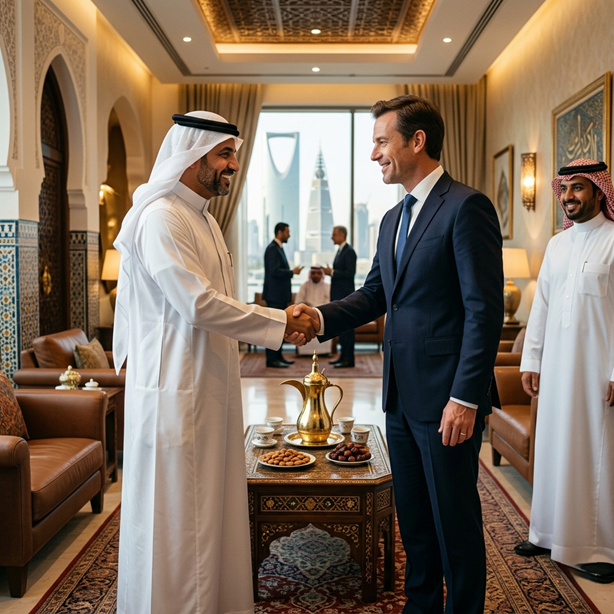
The impact of welcoming and bidding farewell to businessmen in Business Culture
The welcoming and bidding farewell to businesspeople in Saudi Arabia is an important aspect of its rich cultural heritage and long-standing business practices. These rituals are rooted in deeply ingrained Bedouin customs and Islamic teachings, reflecting the importance of hospitality, respect, and personal relationships in professional interactions. In a society where building trust and understanding is fundamental to business success, these welcoming and bidding farewell traditions are not merely formalities; they are essential elements that shape the course of business relationships in the region.
Historically, these practices have evolved alongside Saudi Arabia’s trade routes, facilitating cultural exchange and highlighting the value of personal connections in commerce. Serving Arabic coffee and engaging in conversation exemplify how hospitality rituals are integrated into business meetings, fostering an environment conducive to open dialogue and collaboration. As the Kingdom continues to modernize, the importance of these customs remains vital, underscoring the need for foreign businesspeople to adapt their practices to local expectations.
The cultural significance of these welcoming and bidding farewell rituals extends beyond mere tradition; they are integral to building trust and establishing long-term partnerships in Saudi Arabia. Personal relationships are often prioritized over formal qualifications, underscoring that the success of negotiations hinges on the warmth and hospitality extended during these initial encounters.
Historical Context
The custom of welcoming and bidding farewell to businessmen in Saudi Arabia is deeply rooted in its rich cultural and historical traditions. This hospitality is profoundly influenced by centuries-old Bedouin customs and Islamic teachings, which emphasize respect, generosity, and the importance of community relations. Bedouin hospitality extends beyond simply providing material comforts; it is considered a sacred duty to ensure the well-being of guests, reflecting a deeply ingrained cultural value that persists to this day.
Historically, the trade routes that traversed the Arabian Peninsula during the 15th century played a pivotal role in shaping Saudi identity and its hospitality customs. As merchants and travelers traversed these routes, their exchanges extended beyond mere goods to encompass cultural practices, including elaborate greetings and farewells that underscored the importance of cultivating strong personal relationships.
Building Trust and Relationships
The emphasis on hospitality also contributes to building trust among business partners. Engaging in these traditional practices allows hosts and guests to build a personal rapport, enhancing the chances of fruitful negotiations and successful partnerships. Research indicates that understanding cultural contexts, including hospitality norms, is crucial for effective negotiation, helping to set realistic expectations and contribute to the development of effective strategies. This cultural approach underscores the belief that personal relationships significantly impact business outcomes in Saudi Arabia.
Welcoming Practices
In Saudi Arabia, guest welcoming practices, particularly in a business context, are rooted in cultural customs and traditions that value respect, hospitality, and building personal relationships.
The Importance of Greetings
Greetings are a fundamental aspect of welcoming guests, as they form the first impression and set the tone for the interaction. This exchange reflects not only a polite gesture of appreciation but also a commitment to fostering positive relationships. In business settings, greetings may also include a handshake, which tends to be longer and more deliberate than in Western contexts. Close friends or elders may exchange a kiss on the cheek, while a handshake between men and women is only appropriate if initiated by the woman.
Simple Rituals and Gestures
Welcoming is not limited to verbal exchanges; it includes meaningful rituals and simple gestures. For example, it is customary to begin meetings by offering Arabic coffee and dates, a symbol of hospitality and a desire to connect on a personal level before delving into business discussions.
These traditions are not mere formalities; they are fundamental to building rapport, which is essential for successful negotiations. Ignoring these rituals may be perceived as hasty or disrespectful, demonstrating a lack of understanding of local customs.
Respecting Cultural Norms
Consideration and respect are vital when receiving guests. This includes adhering to appropriate dress codes, which generally recommend modest clothing that covers the shoulders and knees. Furthermore, hosts should demonstrate inclusivity by being considerate of their guests’ needs, such as providing high chairs for children or offering assistance to the elderly. In addition, understanding and respecting cultural norms surrounding gender interactions is crucial, as these norms can influence the dynamics of the welcoming process.
Building Relationships Through Dialogue
Friendly conversation plays a vital role in the welcoming process. Discussions about family, health, sports, or travel are integral to building trust and understanding in the Saudi business environment. Foreign visitors are encouraged to engage in these topics, as they demonstrate openness and a willingness to connect personally, which is often valued more than a formal agenda.
By recognizing and implementing these welcoming practices, individuals can ensure their interactions in Saudi Arabia are respectful, meaningful, and conducive to building long-term professional relationships.
Learn about the Importance of Welcoming Delegations to Scientific Conferences
The Stages of Farewell
In Saudi Arabia, farewells are deeply intertwined with cultural rituals and business etiquette, reflecting respect and the importance of personal relationships in the workplace. Farewell practices vary, but they typically include formal communication, gestures, and rituals that honor the departing person and the relationships built over time.
The Cultural Significance of Farewell Rituals
Farewell rituals hold deep significance in Saudi culture, serving as an opportunity to reflect on shared experiences and express gratitude. These rituals contribute to strengthening community bonds, as they acknowledge the transition of individuals in their professional lives. The concept of collective consciousness, as proposed by thinkers such as Joseph Campbell and Carl Jung, plays a crucial role here, as the emotional impact of farewells resonates across diverse cultures and backgrounds.
Formal Farewell Communication
When an employee leaves the business world, various formal documents can be used to facilitate the farewell process. These include farewell letters, which are among the most important forms of communication.
- Opening Greeting: A formal greeting using culturally appropriate phrases, such as “As-salamu alaykum” (Peace be upon you), to demonstrate respect and goodwill.
- Departure Announcement: A clear statement regarding the person’s last day of work.
- Expressing Gratitude: Acknowledging the time spent together and praising colleagues for their support and cooperation.
- Shared Memories: Recalling significant team achievements and positive experiences shared during the work period.
- Future Plans: A brief overview of the person’s next steps, if they wish to share them.
- Contact Information: Providing professional contact information for future communication.
These elements ensure that the farewell is respectful, maintains the essence of professional relationships, and is mindful of customs and traditions.
Farewell Rituals and Social Interactions
In addition to formal communication, farewells often include personal gestures. A common practice is a group gathering where colleagues express their well-wishes and gratitude. This gathering is not merely a formal social event; it reinforces bonds and underscores the importance of personal relationships in Saudi business culture. The concept of “wasta,” which emphasizes the value of connections and loyalty, highlights the significance of these farewell gatherings.
As part of farewell ceremonies, rituals such as the Farewell Tawaf, performed by pilgrims before departing Mecca, symbolize a respectful farewell and appreciation for the shared journey. Similar sentiments are reflected in the farewells of businesspeople, which focus on gratitude and community ties.
Impact on Business Relationships
In Saudi Arabia, cultural customs surrounding the welcoming and seeing off of businesspeople play a significant role in shaping business relationships. These customs are rooted in the Kingdom’s supportive culture, which emphasizes cooperation, mutual trust, and personal relationships as essential elements of the business environment. Welcoming and seeing off visitors is not merely a formality; it reflects the importance of personal connections and respect, two pivotal elements in building long-term partnerships.
The Importance of Personal Relationships
The importance of personal relationships in Saudi business culture cannot be overstated. Establishing a friendly rapport through a formal welcome often sets the tone for business negotiations and discussions. In many cases, the initial moments of interaction influence the overall trajectory of the business relationship, as trust is the cornerstone of successful negotiations in the region. Business leaders who demonstrate genuine warmth and hospitality are more likely to find their efforts reciprocated, paving the way for more fruitful collaboration.
Read also: Visit and Delegation Services in Saudi Arabia
Building Trust Through Greetings
Building trust is crucial in Saudi Arabia, where business transactions often rely on personal relationships. The welcoming process often involves a degree of formality, including traditional greetings that foster social connections. This formality conveys respect and underscores a willingness to invest in the relationship, increasing the likelihood of successful negotiations.
As trust develops through these personal interactions, parties may be more inclined to engage in transparent discussions and share important information that can benefit both sides.
Cultural Intelligence and Adaptability
Successful businesspeople in Saudi Arabia must possess a high level of cultural intelligence to effectively navigate welcoming and farewell ceremonies. Understanding the nuances of these interactions, including appropriate gestures and phrases, significantly enhances the impression of professionalism and respect.
The ability to adapt communication styles is also essential, as it allows negotiators to align their methods with the expectations of their Saudi counterparts, thus improving the outcomes of negotiations.


Comments