
Audiovisual Engineering Impact the Success of Your Event
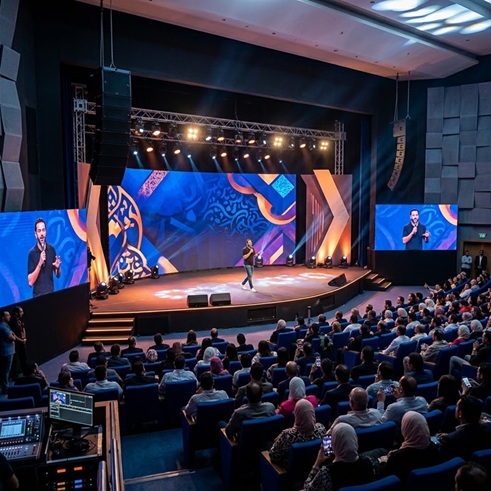
How Does Audiovisual Engineering Impact the Success of Your Event?
Audiovisual (AV) engineering for live events encompasses the planning, design, and operation of integrated sound, video, lighting, and control systems to create cohesive, engaging experiences. Situated at the intersection of event production, communication, and technology, this field directly influences speaker clarity, audience engagement, branding, and overall event outcomes.
By orchestrating sound, visuals, and atmosphere, AV engineering shapes how information is received and retained, while balancing considerations of reliability, cost, and complexity.
Effective AV work begins with meticulous planning and design that account for venue capabilities, audience size, and program objectives. Early site assessment, the integration of display screens and live streaming, and careful attention to lighting, acoustics, and the operational environment ensure the seamless execution of diverse events—ranging from conferences to hybrid broadcasts.
Industry best practices emphasize centralized control, standardized workflows, and advance training as key factors for reliability and consistency, even as venues and event formats evolve alongside technology.
Audiovisual Engineering: A Key Driver of Event Success
In a world where digital technology constantly reshapes our expectations, the strategic deployment of AV equipment demonstrates the power of innovation to enrich human communication and redefine interaction within events. Audio-visual engineering plays a pivotal role in orchestrating immersive experiences, enabling presenters to communicate with clarity and impact through the synchronization of sound, lighting, and visuals.
The production control backbone—comprising mixing consoles, video switchers, signal processors, and cabling—acts as the event’s central nervous system, ensuring:
- Seamless transitions between various presentation elements.
- Precise timing for the execution of effects and segments.
- A smooth, professional flow of the presentation.
This invisible infrastructure empowers technicians to deliver a polished, professional, and stress-free production.
Planning and Design: The Foundation of AV Production
The planning and design phase of AV production begins with a comprehensive pre-project assessment, including:
- Site inspection and precise measurements.
- Requesting detailed schematics (in 2D and 3D via AutoCAD) to accurately define the project scope.
- Analyzing expectations, potential constraints, load limits, venue characteristics, and system configurations.
Balancing Functionality and Aesthetics
Effective lighting design must strike a balance between functional and aesthetic requirements; this is often achieved through:
- Uplighting: To set the mood and visually separate the stage area.
- Backlighting (hair lights) and accent lighting: To ensure speakers stand out clearly against the background.
Consequently, these elements must be considered early on during site visits and initial discussions regarding the overall concept.
Integration with the Event Environment
An integrated approach emphasizes the need for LED lighting and audiovisual systems to blend seamlessly with the event’s overall aesthetic, while offering the flexibility to:
- Complement decorative elements.
- Conceal rigging and mounting hardware.
- Adapt shapes to suit unconventional designs.
This ensures the technology remains visually unobtrusive, allowing the visual elements to shine.
Defining clear objectives from the outset helps tailor the audiovisual design to the target audience and facilitates the subsequent measurement of success; reviewing the achievement of these goals post-event can indicate overall effectiveness and guide future planning.
Audiovisual production success relies not only on equipment selection but also on coordinated planning, skilled personnel, and disciplined on-site execution. Industry standards advocate for fully integrated systems and centralized control to minimize risk, while regarding early coordination and rehearsals as fundamental to ensuring reliable performance.
This client-focused approach—prioritizing quality execution—treats audiovisual systems as an integral part of the event environment rather than a standalone package. This ensures efficient load-in and installation processes, adherence to venue constraints, and continuous oversight from the setup phase through to dismantling and removal.
Sound Engineering: Ensuring Purity and Clarity at Events
Sound engineering plays a pivotal role in ensuring the smooth operation of events and maintaining audience engagement.
The Importance of Soundchecks and Checklists
Soundchecks are a crucial part of the preparation process, enabling teams to:
- Test microphones and adjust audio levels.
- Rehearse transitions before the event begins.
- Identify and address potential issues early on.
An effective event-day checklist helps ensure system readiness, test playback sources, verify connections, and conduct a final sound test with presenters—thereby minimizing the risk of technical failures during the event.
Acoustics and Venue Coverage
Sound quality and management directly impact speech clarity and the overall success of a presentation. Venue acoustics—specifically how sound travels and interacts with the space—play a fundamental role in clarity; phenomena such as echo, reverberation (resonance), and background noise can hinder comprehension.
Simple in-venue tests, such as speaking or clapping, can provide practical insights into the space’s acoustic properties and help guide system design and configuration.
Proper venue acoustics and carefully selected equipment help mitigate these issues and enhance communication clarity. Speaker placement and system design are critical to ensuring consistent audio coverage. Effective distribution, combined with careful planning and testing, helps avoid common errors, such as:
- Assuming system efficiency without actual verification.
- Using systems with insufficient capacity.
- Over-reliance on wireless microphones.
- Selecting equipment based solely on cost.
Adopting an integrated approach—one that considers venue acoustics, audience size, and the presenter’s movement—helps prevent issues such as feedback (whistling), uneven sound distribution, and poor speech intelligibility, resulting in more reliable performance at the event site.
Visual Engineering: Creating an Interactive Visual Experience
Video engineering for live events encompasses the planning, capture, processing, and display of visual content to ensure a seamless, engaging, and interactive experience for the audience.
Broadcast Control and Content Management
The video switcher (or vision mixer) is a crucial component of this process, enabling technicians to transition smoothly between various input sources, such as:
- The presenter’s laptop.
- Pre-recorded video.
- Live camera feeds (to create a broadcast-quality presentation).
This real-time control relies on a robust content management and playback system; software such as PlaybackPro handles video clips, slides, and graphics, feeding them to the video switcher and ensuring reliability throughout the event.
Signal Flow and Display Technologies
The quality of the video output is closely linked to signal flow and the precision of the technical setup. A clear understanding of signal flow is crucial for both audio and video engineers, as it dictates how sources are captured, processed, and displayed during a presentation.
In large venues, projected images may fade or lose clarity for distant viewers, making the choice of display technology vital for ensuring consistent image quality for all attendees.
LED screens address this challenge by offering:
- Higher brightness levels suitable for various lighting conditions.
- Wider viewing angles for the audience.
- Scalability and adaptability to the stage setup.
- Maintained image clarity and color accuracy from any vantage point.
Read also: The Role of Photography Quality in Event Success
Lighting Engineering: Shaping Atmosphere and Enhancing Brand Identity
Lighting engineering at corporate events is far more than a decorative element; it is a strategic tool that shapes the atmosphere, directs attention, and reinforces brand messaging.
A masterfully executed lighting plan combines technical expertise with creative vision, aligning the visual design with corporate objectives and the audience experience. As lighting design evolves, planners are adopting a holistic approach—integrating equipment knowledge, rehearsals, and narrative goals—to produce a cohesive and memorable event.
Operational Performance and Sustainability
Effective lighting contributes to both aesthetics and operational performance. Key sustainable and cost-effective lighting practices for events include:
- Using energy-efficient LED technologies.
- Implementing precise scheduling for turning lights on and off.
- Remotely controlling lighting intensity.
Beyond sustainability, thoughtful lighting design enhances brand image, helps manage attendee flow, and ensures clear visibility of speakers, exhibits, and interactions—effectively making lighting a tool that extends the event’s impact well beyond its conclusion.
Components of Successful Lighting Design
Key components and technologies form the foundation of successful lighting design in corporate settings:
- Uplighting and diffused lighting: Commonly used to highlight architectural features, create a distinctive atmosphere, and ensure adequate visibility across stages and halls.
- Spotlights: Used to highlight focal points such as speakers, products, or presentations.
- Ambient lighting: Helps integrate various event spaces into a cohesive environment—defining the tone for networking, sessions, and receptions—and can be adjusted to suit changing moods or activities throughout the program.
Read also: The Role of Proper Lighting in the Success of Exhibition Stands
Measuring the Success of Audio-Visual Engineering (Key Performance Indicators – KPIs)
Measuring the success of audio-visual (AV) delivery for any event relies on multiple performance indicators, covering preparation, execution, and post-event evaluation:
- Preparation and Proactive Maintenance: Key inputs include pre-event equipment performance assessments to identify issues beforehand and the establishment of proactive maintenance routines to prevent malfunctions during live sessions.
- Operational Reliability and Readiness: These are critical KPIs, focusing on pre-show equipment testing and calibration, as well as equipment configuration to optimize audio and visual output for the specific venue and audience size.
- On-Site Management Indicators: These track the speed and effectiveness of issue resolution during the event, supported by quick-reference guides for common AV problems and clear team coordination to ensure smooth operations.
- Presentation Quality: Monitoring audio and video clarity, ensuring speech intelligibility and image sharpness, and minimizing latency or interference (as AV quality directly impacts the level of professionalism and sponsor value).
- Audience Engagement: Assessing engagement through post-event feedback, attendee reactions to AV elements, and the extent to which interactive features (such as screens or surround sound) capture attention and foster participation. Post-Event Evaluation: This comprises a set of key performance indicators (KPIs) that gather feedback from attendees and participants regarding the audio and visual experience. It helps assess the event’s effectiveness and identify areas for improvement, thereby informing future planning and the development of sustainable audiovisual strategies.
Conclusion
Audio-visual engineering is far more than just a collection of technical equipment and hardware; it is the vital link connecting an event’s concept to its direct impact on the audience. From initial engineering planning and acoustic analysis—through lighting setup and video broadcast management—to performance monitoring and experience evaluation, integrated engineering ensures a professional event that leaves a lasting impression.
Are you planning your next event?
Invest in early audio-visual engineering to guarantee an immersive, seamless experience free from technical issues. Contact our team of experts today to assess your venue and design the optimal audio-visual system for your event!


Comments