
Strategies for Attracting Investment via Specialized Exhibitions
Strategies for Attracting Investment via Specialized Exhibitions: How Should Your Company Manage Its Presence at Major Events?
The Kingdom of Saudi Arabia continues to solidify its position as a leading regional and international hub for business tourism, conferences, and specialized exhibitions. Major economic events held in key cities—such as Riyadh, Jeddah, and Al Khobar—have become fertile ground for exchanging expertise, forging strategic partnerships, and attracting capital. For organizations and companies, participation in these gatherings is no longer a fleeting experience limited to booking space and distributing promotional materials in traditional ways; it has evolved into a precise strategic process. This process demands comprehensive planning and integration across operational, logistical, and marketing dimensions to secure a genuine share of investment and reinforce the company’s leadership position. The modern investment landscape compels both growing and established enterprises to redefine their roles at exhibitions; the goal is no longer merely to maintain a nominal presence among exhibitors, but to craft a holistic experience that begins months before the event and yields positive, long-lasting results.
Advance Planning and Defining Target Segments
Transforming an exhibition presence into tangible investment opportunities relies primarily on moving away from haphazard approaches and instead adopting carefully considered, actionable plans. This phase begins with thorough research into the event landscape, identifying the types of potential investors, partners, and business leaders to be targeted. The goal is to gain a precise understanding of their needs and expectations, enabling the formulation of tailored messages that address these aspirations while clearly and professionally showcasing the organization’s operational and financial capabilities. Effective advance planning requires a deep analysis of the exhibition’s past editions and an understanding of the participating delegations and competing companies; this allows the team to craft marketing messages grounded in reliable data. By prioritizing objectives and precisely addressing partner expectations, every interaction at the exhibition becomes a genuine, well-considered opportunity to establish memoranda of understanding and sustainable partnerships—moving beyond generic pitches that might fail to capture the interest of serious investors. This planning phase also entails preparing investment and executive presentations in various formats suited to both corporate executives and financial investors, ensuring that the right information reaches the right audience seamlessly and flexibly within the available timeframe.
Designing Exhibition Stands as Compelling Investment Showcases
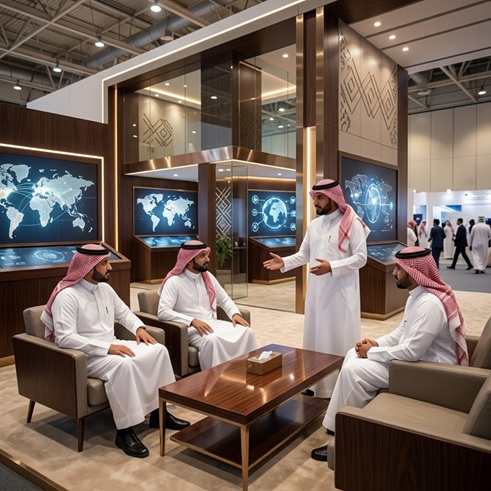
The initial impression formed by investors and visitors is shaped by the structural and visual design of the company’s stand within the exhibition hall. The stand serves as a central focal point, reflecting the organization’s identity and brand strength amidst a crowded landscape of competitors and exhibitors. Designing the pavilion requires a delicate balance between modern aesthetics and logistical functionality. It involves a smart layout that provides open spaces for general interaction and visitor reception, alongside quiet, intimate areas dedicated to private meetings and high-level negotiations with VIPs and potential corporate partners. The use of harmonious lighting, the strategic utilization of vertical and horizontal space, and the selection of materials that reflect the quality of the services and projects on offer all contribute to creating an environment that is both welcoming and conducive to business. Professional design transforms the company’s allocated space from a mere exhibition stand into a comprehensive operations and reception hub; it meets all hospitality, negotiation, and presentation needs while showcasing the company’s financial and operational strength within a competitive market.
Integrating Interactive Technologies and Digital Displays
Incorporating innovative digital display solutions—such as interactive screens, virtual and augmented reality (VR/AR) technologies, and 3D presentations—helps simplify the explanation of massive projects and complex future plans through engaging visuals. This tech-driven approach enables investors to easily grasp the scale and economic viability of the opportunity, giving the pavilion a distinct competitive edge that captures attention and encourages decision-makers to pause and engage in dialogue. Interactive media enable investors and business professionals to access intricate engineering, financial, and operational project details without the need to review lengthy documents during the event. This saves time and allows discussions with company representatives to focus more effectively on investment scope and partnership terms. Furthermore, digital solutions facilitate the smart, automated collection of data on interested parties and visitors, enabling marketing teams to efficiently categorize and utilize this information for high-impact follow-ups immediately after the event concludes.
An insightful article on balancing printed materials with digital solutions in event organization.
Executive Presence and Impactful Corporate Representation
A successful strategy extends beyond the confines of the exhibition booth to include the active, influential presence of company leadership in panel discussions, workshops, and seminars accompanying the event. Sharing leadership insights and ideas helps build corporate trust and solidifies the company’s reputation as a trusted authority in its sector. The participation of executives as keynote speakers or subject-matter experts in both closed and open discussions lends the organization prestige and a voice in shaping industry trends—qualities highly valued by investors who seek to engage with leaders possessing clear strategic vision and foresight. This executive presence is reinforced by parallel public relations campaigns, digital media coverage, and professional platform engagement; this amplifies the impact of participation and draws the attention of media outlets and potential partners to the activities and agreements announced during the event.
Logistics Management and Hospitality Experience for VIP Delegations
The intellectual engagement is complemented by high-level, integrated logistics management for the company’s guests—including investors, VIPs, and official delegations. This encompasses everything from airport reception and luxury transportation via a modern, comfort- and safety-equipped fleet, to facilitating hotel reservations at event-designated venues and organizing field tours and private meetings outside official proceedings. Such logistical precision and exceptional hospitality—characterized by meticulous attention to detail—leave a profound positive impression on investors. It facilitates negotiations by fostering a comfortable environment conducive to decision-making and the signing of memoranda of understanding. Advanced logistical services include training reception and escort staff in VIP etiquette and protocol, alongside providing immediate linguistic and organizational support to resolve any issues guests may encounter during their stay; this embodies corporate professionalism and reinforces confidence in the company’s ability to competently manage major projects and strategic alliances.
Effective Post-Exhibition Follow-Up to Realize Returns
The post-event phase serves as the true litmus test for confirming success and converting verbal interest into tangible return on investment. This stage demands rapid, organized action to sort and classify the data and investment opportunities gathered during the exhibition. Direct and rapid communication with potential partners—coupled with the timely delivery of detailed dossiers and tailored follow-up reports—helps maintain the momentum generated during the event and prevents opportunities from slipping away to competitors. The strategic follow-up process entails holding internal team evaluations to identify key points of interest for investors and drafting final contracts and memoranda of understanding (MoUs) based on initial discussions held at the exhibition venue. Adhering to a structured follow-up timeline demonstrates the company’s discipline and professionalism, thereby increasing the likelihood of converting initial contacts and exploratory meetings into long-term, fruitful investment partnerships.
Read also: Comprehensive Evaluation Strategies and Key Metrics
Conclusion
Ultimately, managing one’s presence at major events and conferences with a strategic vision—integrating logistical quality with excellence in marketing and design—transforms the event from a mere operational expense into a sustainable investment that drives long-term corporate expansion and growth. Success in specialized exhibitions is no longer a matter of chance or casual impressions; rather, it is the result of robust, integrated management that aligns with the aspirations of Saudi Vision 2030 to develop the business tourism and conference sector while solidifying the standing of both national and global enterprises.


Comments